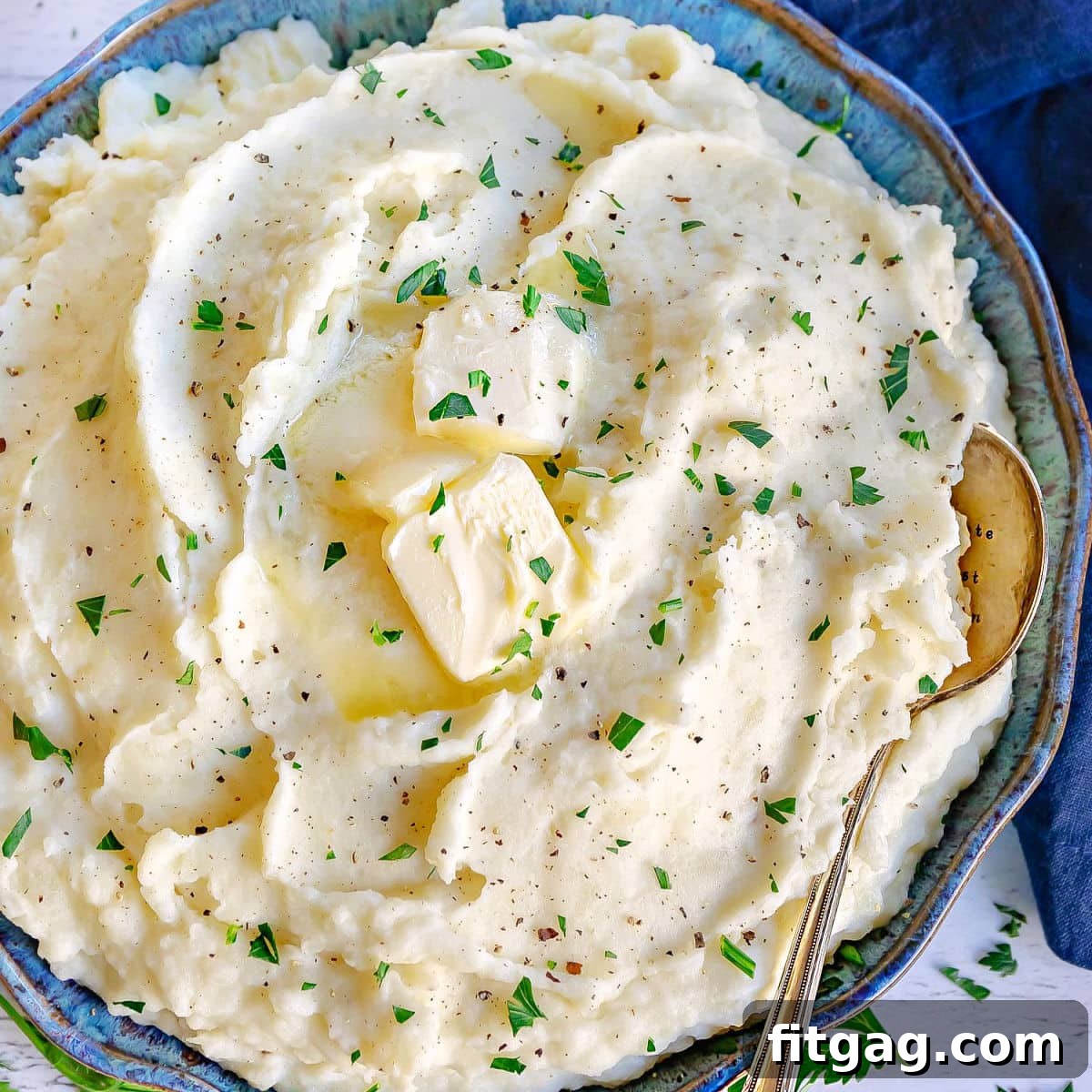
The Ultimate Guide to Making the Best Creamy Mashed Potatoes
Prepare to elevate your side dish game with this ultimate recipe for the best mashed potatoes you’ll ever taste! Forget bland, lumpy spuds; we’re talking about a dreamy, velvety, and perfectly seasoned creation bursting with rich flavor. This guide will help you craft homemade mashed potatoes so irresistible, they’re guaranteed to become the most requested accompaniment at your family table, from everyday dinners to holiday feasts.
Looking for more sensational potato side dishes? Don’t miss these other crowd-pleasers: Loaded Scalloped Potatoes, Garlic Roasted Potatoes, or this incredible Twice Baked Potato Casserole!
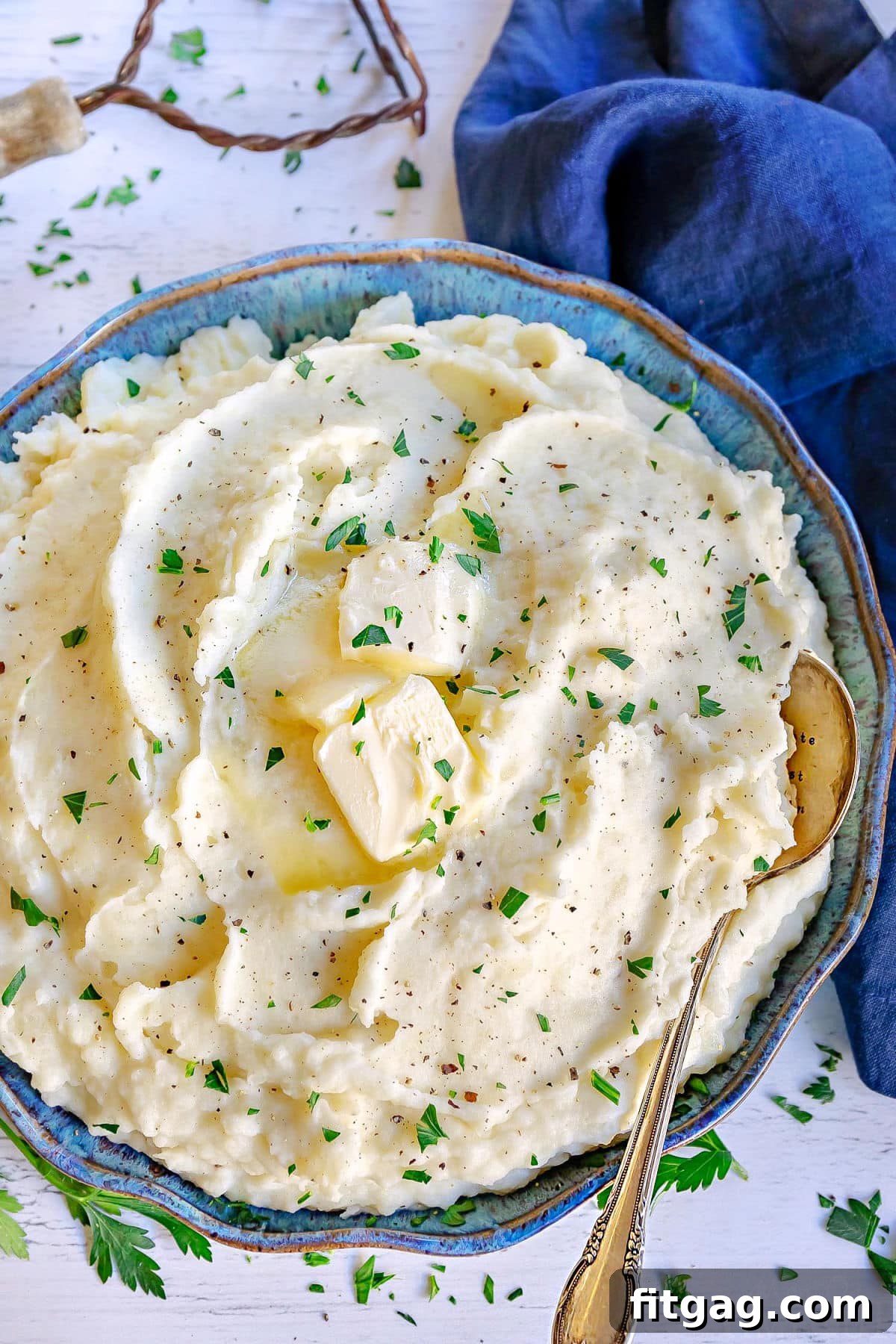
Why These Mashed Potatoes Are Unbeatable
Mashed potatoes are a timeless comfort food, but this recipe takes them from simply good to absolutely unforgettable. What makes them stand out? It’s a combination of carefully selected ingredients, precise technique, and a secret touch of rich dairy that transforms humble potatoes into a culinary masterpiece. Each bite is a harmonious blend of creamy texture, buttery richness, and subtle tang, making them the perfect complement to almost any meal. Whether you’re preparing a casual family dinner or hosting an elaborate holiday gathering, these mashed potatoes are the ideal choice, promising a decadent finish that will impress everyone.
Today, we’re not just sharing a recipe; we’re unveiling the tips and tricks for achieving ultra-fluffy potatoes. These aren’t complicated steps, but rather simple adjustments that make a world of difference in the final product. Get ready for truly the best mashed potatoes you’ve ever experienced!
Mastering the Best Mashed Potatoes Recipe
While the concept of mashed potatoes seems simple, achieving perfection lies in paying close attention to detail. This recipe prioritizes quality ingredients and a methodical approach, resulting in mashed potatoes that are consistently creamy, rich, and perfectly seasoned. The generous additions of butter and cream ensure a luxurious texture and deep flavor, making them the ultimate side dish.
Mashed potatoes embody comfort food at its finest: they are smooth, airy, and, of course, the ideal vehicle for any gravy. Whether you’re smothering them with savory turkey gravy, the rich pan drippings from chicken fried steak, or a hearty pot roast gravy, these potatoes are designed to absorb every last drop of flavor. No matter the pairing, they are an essential part of any comfort meal.
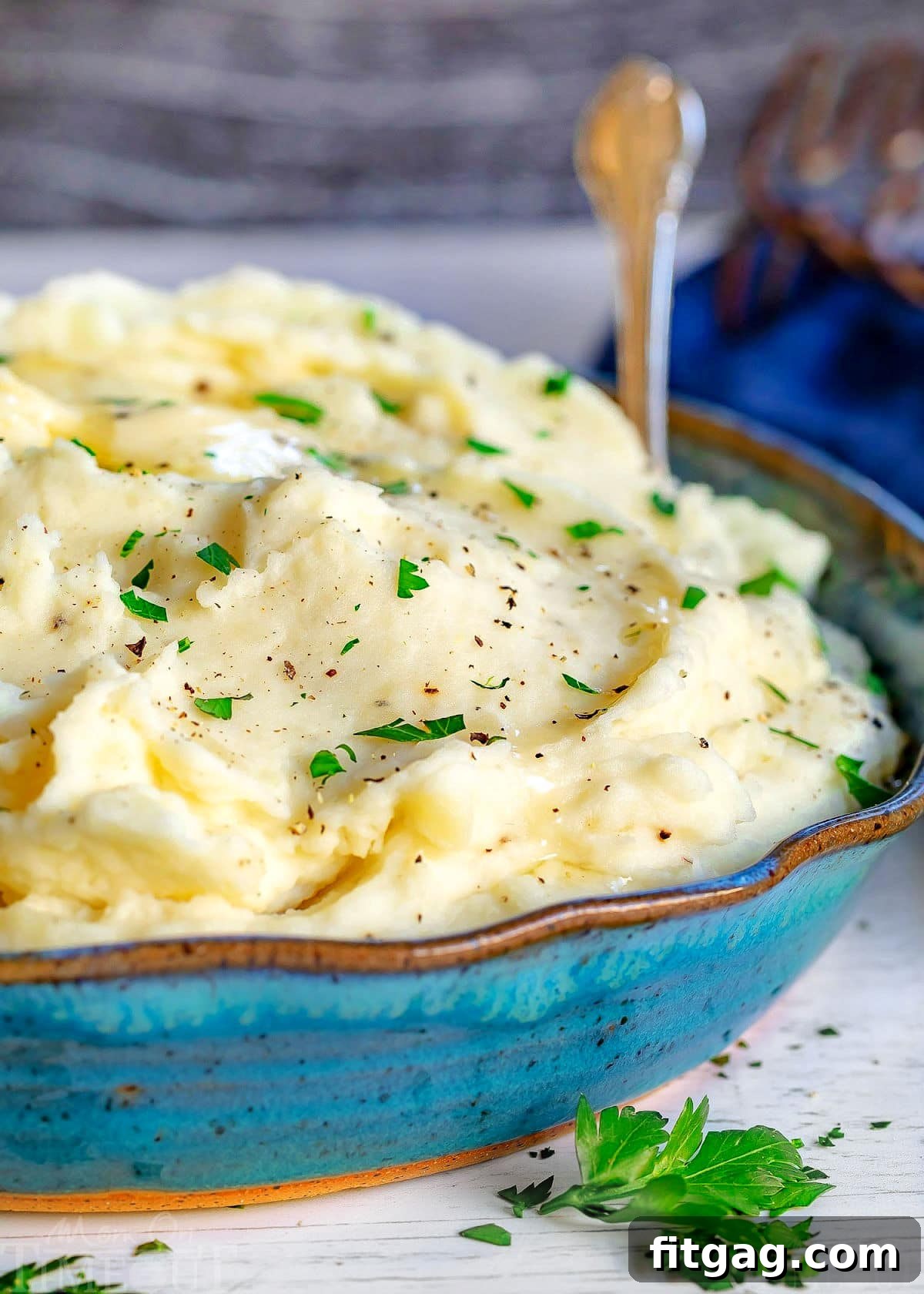
Perfect Pairings: What to Serve with Mashed Potatoes
Mashed potatoes are incredibly versatile and pair beautifully with a wide array of main courses. Their creamy texture and comforting flavor make them a natural complement to many dishes. Here are some of our absolute favorite recipes to serve alongside these glorious, creamy potatoes:
- Chicken Fried Steak: The ultimate comfort food duo.
- Garlic Herb Roast Chicken: A classic pairing that never disappoints.
- Salisbury Steak Recipe: Hearty and flavorful, perfect with a dollop of mash.
- Swedish Meatballs: The rich sauce is divine over fluffy potatoes.
- French Onion Pork Chops: A sophisticated yet comforting match.
- Roasted Turkey or Ham: The quintessential holiday accompaniment.
- Pot Roast: Soaking up all those delicious juices.
- Grilled Steaks or Chops: A simple yet satisfying combination.
Choosing the Best Potatoes for Mashing
The type of potato you choose is fundamental to the texture and flavor of your mashed potatoes. For the ultimate fluffy and creamy results, I highly recommend using Russet or Yukon Gold potatoes. Both varieties are starchier than waxy potatoes, which means they break down easily and absorb butter and cream beautifully without becoming gluey.
Russet Potatoes vs. Yukon Gold Potatoes:
- Russet Potatoes: Known for their high starch content and dry, mealy texture, Russets yield incredibly light and fluffy mashed potatoes. They are excellent at absorbing butter and cream, making them a top choice for a classic, airy mash.
- Yukon Gold Potatoes: These have a naturally buttery flavor and a slightly creamier texture than Russets. Their skin is thinner, and often, we even leave it on for a more rustic feel and added nutritional value. When unpeeled, the skins provide just enough texture to keep the mashed potatoes interesting without being obtrusive.
You can also achieve amazing flavor by using a combination of Russet and Yukon Gold potatoes. While red potatoes can also be used, be aware that they typically produce a denser, less fluffy mash due to their lower starch content.
Selecting Quality Potatoes
No matter the variety, selecting fresh, good-quality potatoes is crucial. When shopping for your spuds, give them a quick inspection:
- Firm to the Touch: The potatoes should feel solid and not give easily when gently squeezed. Avoid any that feel soft or squishy.
- Free of Green Spots: Green areas on potatoes indicate the presence of solanine, a natural toxin that can be bitter and harmful in large quantities. While small green spots can be cut away, it’s best to avoid potatoes with significant greening.
- No Sprouting: Sprouts mean the potato is past its prime and has begun to convert its starches into sugars, which can affect texture and flavor.
- Minimal Blemishes: Small knots or superficial imperfections are generally fine, but steer clear of potatoes with large bruises, cuts, or soft spots, as these can lead to waste.
Essential Ingredients for Your Perfect Mashed Potatoes
This recipe relies on just a handful of ingredients, but remember that the quality of each component directly impacts the final deliciousness. High-quality ingredients are the secret to truly exceptional mashed potatoes. Here’s a closer look at what you’ll need; for exact measurements, scroll down to the full recipe card.
- Potatoes: As the star of the show, choose wisely! As mentioned, Yukon Gold or Russet varieties are highly recommended for their ideal starch content and ability to absorb flavors and achieve that desired fluffy consistency.
- Butter: Butter is indispensable for flavor and richness. Whether you opt for salted or unsalted, make sure it’s high-quality dairy butter, not margarine. Salted butter will require less additional salt later, but always taste and adjust your seasoning to perfection. Cube your butter and allow it to soften at room temperature for easier incorporation.
- Milk and Heavy Cream: A blend of whole milk and heavy cream provides unparalleled richness and creaminess. The full fat content is key for a decadent texture. Always warm your milk and cream before adding them to the mashed potatoes; this ensures they are easily absorbed without cooling down your perfectly cooked potatoes. Half-and-half can be used as a substitute for both, if preferred.
- Sour Cream or Cream Cheese: This is a key ingredient for an extra layer of creaminess and a subtle, delightful tang that balances the richness. Use full-fat sour cream or cream cheese for the best results and a truly luxurious mouthfeel.
- Seasoning: Salt and freshly ground black pepper are fundamental for enhancing all the natural flavors. Begin with a modest amount (e.g., half a teaspoon of each) and continuously taste as you mash, adding more as needed. Don’t be shy about seasoning to your preference – it makes all the difference!
How To Make The Best Mashed Potatoes: A Step-by-Step Guide
Achieving that silky-smooth, melt-in-your-mouth texture isn’t difficult when you follow these simple steps. The magic truly happens with the perfect blend of butter, warmed milk, heavy cream, and a touch of sour cream, culminating in an incredibly rich and velvety finish. While the process is straightforward, paying attention to our tips below will ensure you create truly the best mashed potatoes every time!
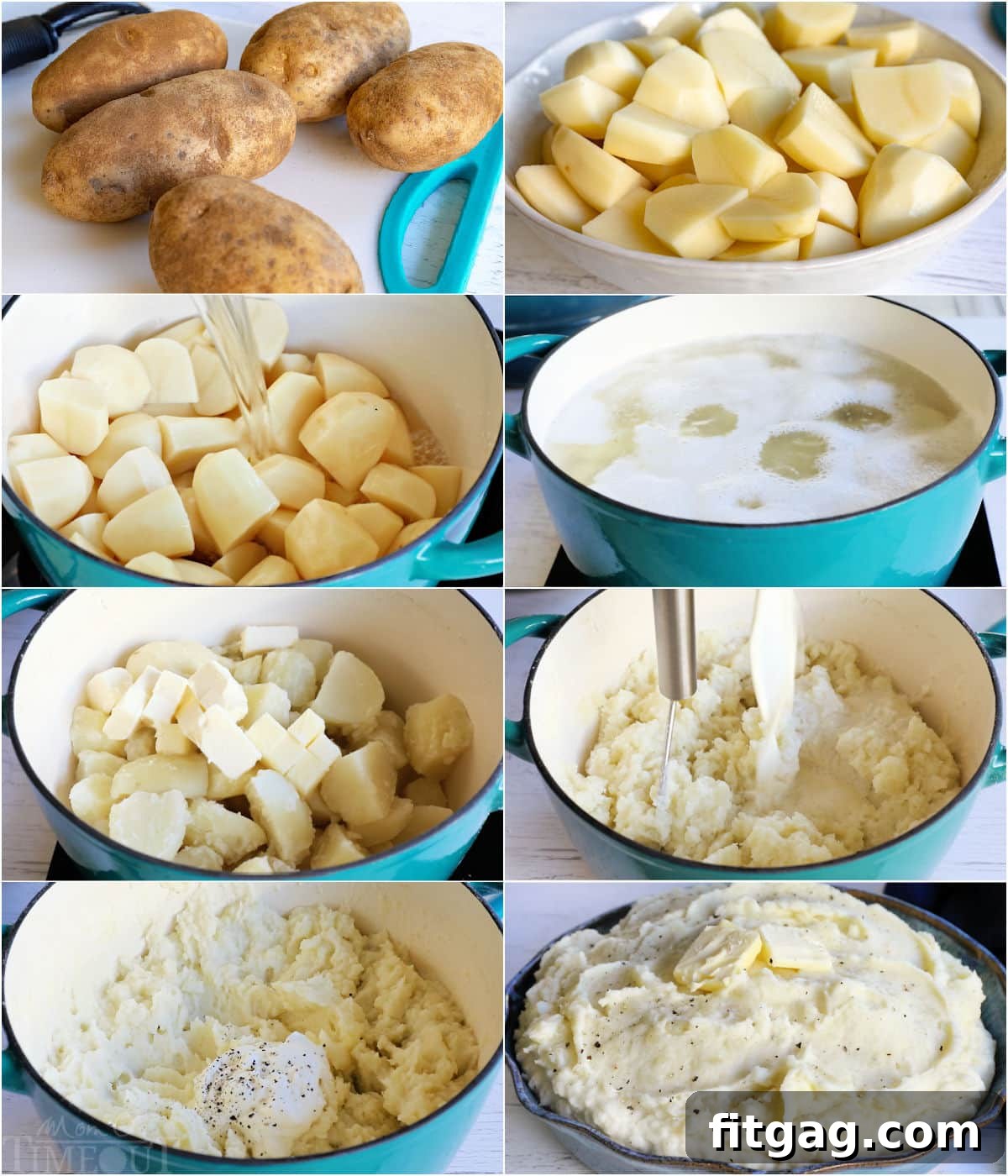
- Prepare the Potatoes: Start by peeling your chosen potatoes. If using Yukon Golds and you prefer a rustic touch, you can leave the skin on – just ensure they are thoroughly scrubbed clean with a vegetable scrub brush. Rinse the peeled (or unpeeled) potatoes well.
- Cut Uniformly: Cut the potatoes into halves or quarters, depending on their size, aiming for roughly equal pieces. Uniformity ensures even cooking.
- Boil with Cold, Salted Water: Place the cut potatoes in a large Dutch oven or stockpot. Cover them with cold water by at least one inch. Add a generous amount of salt to the water – this seasons the potatoes from the inside out.
- Cook to Fork-Tender: Bring the water to a boil, then reduce heat to a simmer and cook until the potatoes are just fork-tender. This usually takes about 15-20 minutes, depending on potato size. Be careful not to overcook, as this can lead to waterlogged, mushy potatoes.
- Drain and Dry: Immediately drain the potatoes thoroughly. Return them to the hot, empty pot. Let them sit in the pot for about 5 minutes over very low heat (or off the heat) to allow any residual moisture to evaporate. This crucial step prevents watery mashed potatoes.
- Warm the Dairy: While potatoes are cooking or drying, gently heat the milk and heavy cream in a small saucepan over low heat, or warm them in the microwave. They should be hot, but not boiling.
- Mash with Butter: Add the softened, cubed butter to the warm, dried potatoes. Begin mashing with your favorite potato masher or a potato ricer until they reach your desired consistency.
- Incorporate Warm Dairy: Gradually add the hot milk and cream, a little at a time, continuing to mash gently until the potatoes are smooth and creamy. Avoid over-mashing once the liquid is added, as this can activate starches and lead to a gummy texture. You may not need all the liquid; add until your desired consistency is reached.
- Add Sour Cream and Season: Finally, fold in the sour cream (or cream cheese) and season generously with salt and pepper to taste. Mix just enough to combine. Serve immediately, topped with extra butter and fresh herbs if desired!
Looking for an alternative way to make mashed potatoes? Try my Instant Pot Mashed Potatoes for a quick twist on this recipe!
Optional Garnishes for Mashed Potatoes
While this mashed potato recipe is absolutely perfect on its own, adding a garnish can elevate its presentation and introduce delightful bursts of fresh flavor. Here are some wonderful ideas to make your mashed potatoes even more special:
- Freshly ground black pepper: For a subtle kick and visual appeal.
- Slices of butter: A pat of butter melting on top adds a luxurious touch.
- Sliced chives or green onions: For a mild oniony freshness and vibrant color.
- Freshly chopped parsley: A classic garnish that adds brightness.
- Any fresh herbs, finely chopped: Think rosemary, thyme, or dill for aromatic notes.
- Roasted garlic cloves: Mash them into the potatoes for a sweet, mellow garlic flavor, or serve them whole on top.
- Crispy bacon bits: For a smoky, savory crunch.
- A sprinkle of paprika: Adds a touch of color and a hint of warmth.
Recipe Variations: Customize Your Mashed Potatoes
The beauty of this mashed potato recipe lies in its adaptability. You can easily switch things up to create a unique flavor experience every time you make them! The possibilities are endless. Here are some fun and delicious ways to customize your easy mashed potato recipe:
- Cream Cheese Swap: Replace the sour cream with an equal amount of full-fat cream cheese for an extra-rich, ultra-creamy, and slightly tangy potato dish.
- Garlic Mashed Potatoes: For a robust garlic flavor, boil a few peeled garlic cloves along with your potatoes. Alternatively, stir in a generous amount of sweet, mellow roasted garlic after mashing.
- Loaded Mashed Potatoes: Transform them into a hearty side by mashing in your favorite shredded cheese or a cheese blend (like cheddar or Monterey Jack), crispy bacon bits, and sliced green onions.
- Richer Dairy Options: For an even richer flavor profile, swap out some or all of the whole milk for additional heavy cream, or use evaporated milk for a denser, sweeter taste.
- Sweet Potato Mash: For a delightful alternative, use sweet potatoes instead of regular potatoes. The cooking method remains largely the same, resulting in a naturally sweet and vibrant mash.
- Spicy Mashed Potatoes: Add a zesty kick by stirring in additional seasonings like Cajun Spice Mix or Old Bay seasoning. A pinch of chili flakes or a dash of hot sauce can also add a pleasant heat.
- Herbed Mashed Potatoes: Freshly chopped herbs like rosemary, thyme, chives, or dill can be mashed directly into the potatoes for an aromatic boost.
- Caramelized Onion Mashed Potatoes: Fold in some slow-cooked caramelized onions for a sweet and savory depth of flavor.
Storage, Freezing, and Reheating Information
Mashed potatoes are often best fresh, but they store and reheat surprisingly well, making them an excellent make-ahead option. Proper storage ensures they retain their creamy texture and delicious flavor.
Refrigerator Storage:
Leftover mashed potatoes should be stored in an airtight container in the refrigerator for up to 3 days. This helps to prevent them from drying out and absorbing other odors.
Freezing Mashed Potatoes:
For longer storage, mashed potatoes can be frozen. Allow them to cool completely before transferring them to a freezer-safe, airtight container or heavy-duty freezer bag. They will keep well in the freezer for up to one month. To use, thaw them in the refrigerator overnight before reheating.
How to Reheat Mashed Potatoes:
When reheating, mashed potatoes tend to thicken. You’ll likely need to add a splash of milk, cream, or even a pat of butter to restore their original creamy consistency. Stir frequently to ensure even heating and to reincorporate moisture.
- Stovetop: Place the mashed potatoes in a saucepan over low heat. Add a tablespoon or two of milk or cream, stirring frequently, until heated through and creamy again.
- Microwave: Transfer the mashed potatoes to a microwave-safe dish. Cover loosely and reheat at 50% power in 60-second intervals, stirring well between each interval, until hot. Add a little hot milk or butter if they seem too thick or dry.
Make Ahead Mashed Potatoes for Stress-Free Meals
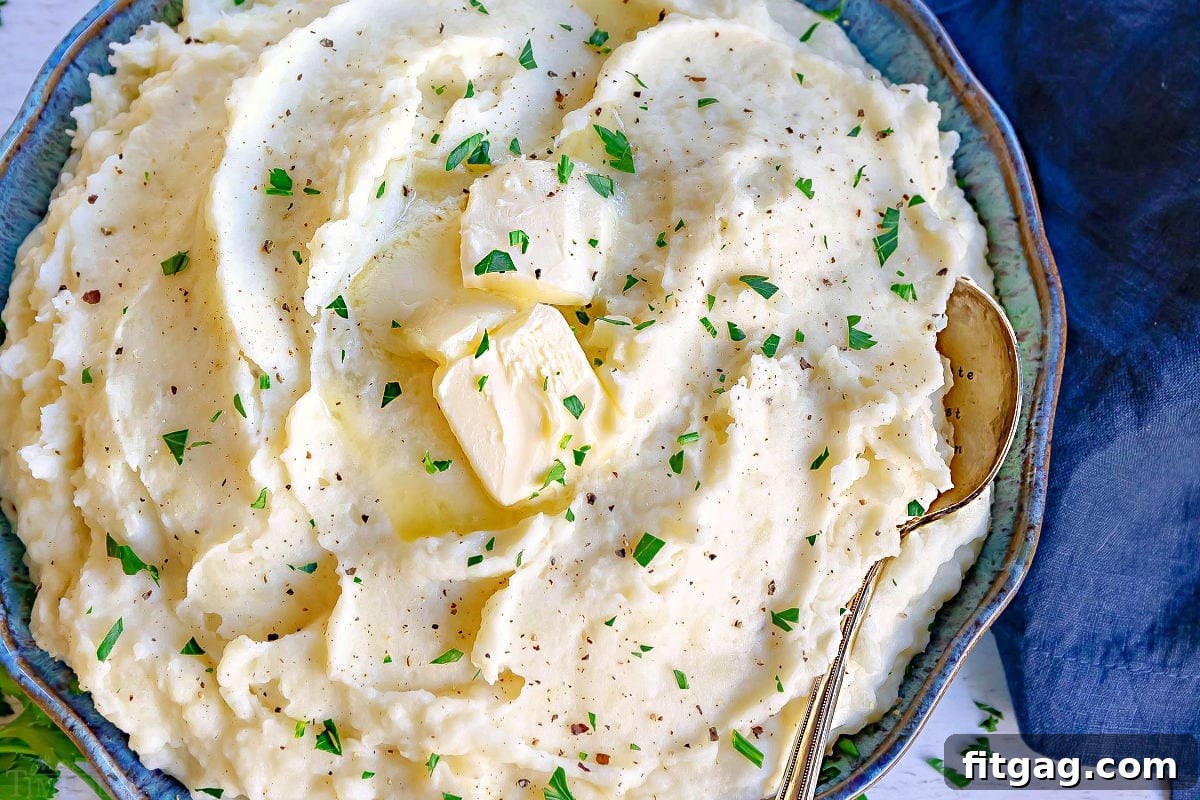
This recipe is perfectly suited for making ahead, which can be a huge time-saver, especially during busy holidays or meal prep. Follow the instructions for preparation and mashing in the recipe card below. Once cooled, transfer the mashed potatoes to an oven-safe or microwave-safe bowl or dish and cover tightly. Storing them covered prevents a skin from forming and keeps them moist.
For best results, remove the potatoes from the refrigerator an hour before reheating to allow them to come closer to room temperature. This promotes more even and quicker reheating.
Reheating Make-Ahead Mashed Potatoes:
- To reheat in the oven: Cover the dish tightly with foil and bake at 350°F (175°C) for about 30 minutes, or until thoroughly heated through. Stirring occasionally will help them heat more quickly and evenly. Add a splash of warm milk or cream if needed to regain creaminess.
- To reheat in the microwave: Cover the dish and reheat at 50% power in 60-second intervals, stirring vigorously after each interval. Continue until heated through. If the potatoes are too thick, stir in a bit of hot milk or cream.
- Reheat in the slow cooker: Transfer the mashed potatoes to a slow cooker and set it to low. Depending on the size of your slow cooker and the quantity of potatoes, this could take 2 to 3 hours to heat up completely. Stir occasionally to prevent sticking and to distribute heat. Add additional hot milk or cream as needed to achieve the desired consistency.
Frequently Asked Questions about Mashed Potatoes
Here are answers to some common questions about making the perfect mashed potatoes:
What type of potatoes should I use for mashing?
For the best fluffy and creamy mashed potatoes, Russet or Yukon Gold varieties are highly recommended. Russets offer a wonderfully starchy, airy texture, while Yukon Golds provide a naturally buttery flavor and creamy consistency. You can’t go wrong with either!
Do I have to peel the potatoes?
Peeling is generally recommended for super smooth, creamy mashed potatoes. However, if you prefer a more rustic texture and don’t mind a little bit of skin, especially with thin-skinned Yukon Gold potatoes, you can certainly leave the peels on after thoroughly scrubbing them clean.
Can I make this recipe ahead of time?
Absolutely! Mashed potatoes are an excellent make-ahead side dish. There’s a dedicated section above detailing how to prepare them in advance and, importantly, how to successfully reheat them while maintaining their delicious texture.
Can I add flavors to these mashed potatoes?
Yes, certainly! Mashed potatoes are incredibly versatile for flavor customization. Check out the “Recipe Variations” section above for ideas like adding roasted garlic, fresh herbs, various cheeses, or even bacon to personalize your recipe.
Why are my mashed potatoes gummy or gluey?
Gummy mashed potatoes are usually a result of over-mashing. When potatoes are mashed too vigorously or with an electric mixer, their starches are over-processed, releasing too much gluey pectin. For best results, use a hand masher or a potato ricer and mash just until smooth, avoiding overworking the potatoes once liquids are added.
Can I use only milk instead of milk and heavy cream?
While you can use only milk, especially whole milk, for a lighter mash, the combination of whole milk and heavy cream provides a richness and creaminess that is hard to beat. Heavy cream contributes significantly to the decadent texture and flavor of truly exceptional mashed potatoes.
Expert Tips and Tricks for the Best Homemade Mashed Potatoes
Achieving consistently perfect mashed potatoes comes down to a few key techniques. Follow these expert tips for an unforgettable side dish every time:
- Cut Potatoes Uniformly: Cut your potatoes into similar-sized pieces (quarters work well) for quicker and more even cooking. This prevents some pieces from being overcooked while others are still hard.
- Don’t Overcook: Cook potatoes just until they are fork-tender. If you cook them beyond this point, they can become waterlogged and mushy, leading to a less flavorful and textured mash.
- Evaporate Moisture: After draining, return the cooked potatoes to the hot, empty pot. Let them sit for about 5 minutes. The residual heat will help evaporate excess moisture, crucial for fluffy, non-watery mashed potatoes.
- Choose the Right Mashing Tool: I highly recommend using a hand potato masher or a potato ricer. Avoid using a hand mixer or stand mixer, as these can easily over-process the potatoes, releasing too much starch and resulting in gummy or gluey mashed potatoes.
- Avoid Over-Mashing: Even when mashing by hand, be mindful not to overwork the potatoes. Mash just until your desired consistency is reached. Once liquids are added, minimal additional mashing is best to prevent gumminess.
- Cube Softened Butter: Cut your softened butter into small cubes before adding it to the hot potatoes. This allows it to melt and incorporate more quickly and evenly with less mashing.
- Heat the Dairy: Always warm your milk and cream before mixing them into the potatoes. Hot liquids absorb more easily and keep your mashed potatoes hot, preventing them from cooling down prematurely.
- Add Liquids Slowly: Pour in the warmed milk and cream gradually, a little at a time, until your desired consistency is achieved. You might not need all of the liquid. This gives you control over the final texture.
- Taste, Taste, Taste!: This is perhaps the most important tip. Always taste your mashed potatoes before and after seasoning. Add salt and pepper incrementally until the flavor is perfectly balanced to your liking.
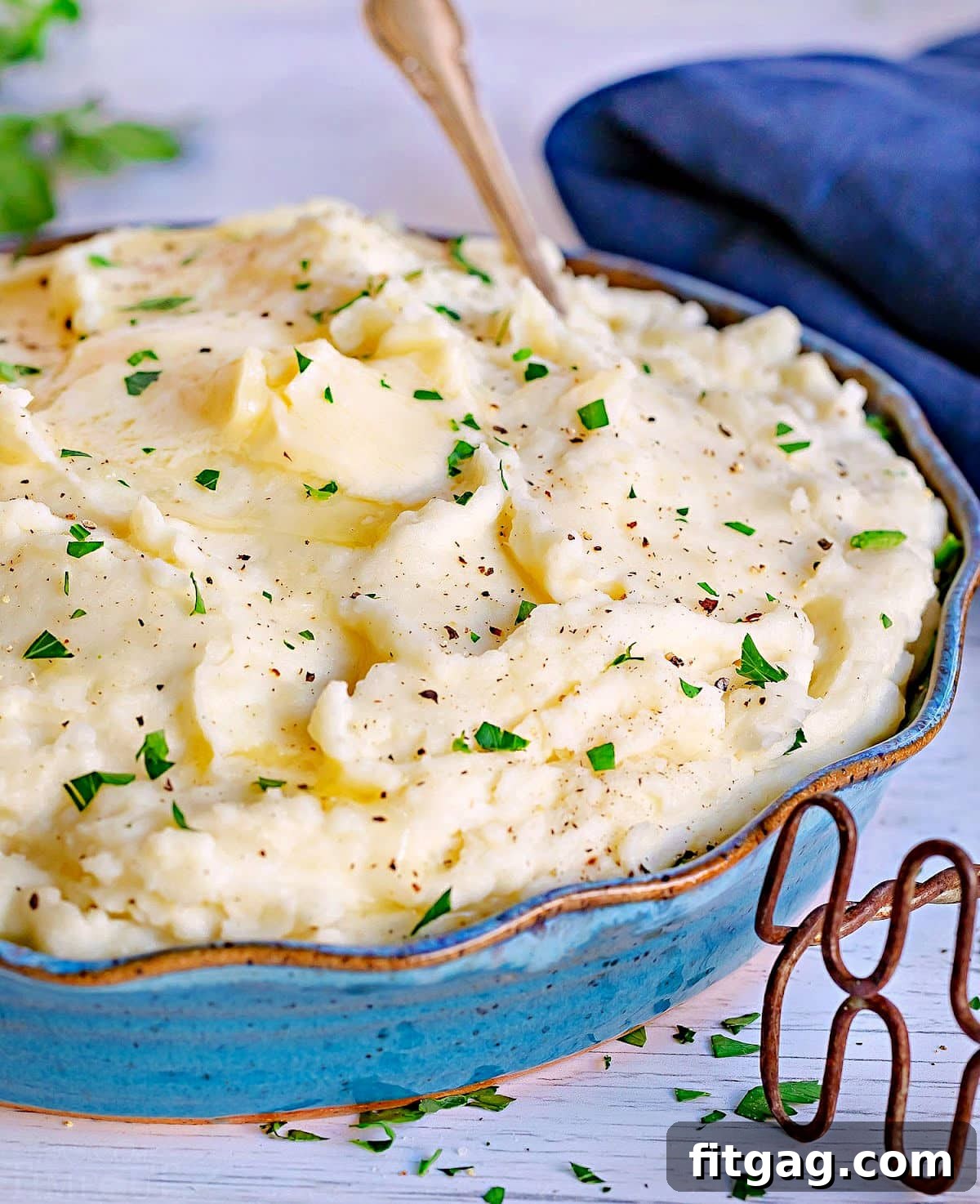
- Serve Warm: Mashed potatoes are always best served hot and fresh. A dollop of extra butter melting on top just before serving adds an inviting touch.
More Delicious Side Dishes You’ll Love
If you enjoyed these ultimate mashed potatoes, be sure to explore more of our favorite recipes designed to complement any meal:
- Baked Sweet Potato: A healthy and flavorful alternative.
- Corn Casserole: Sweet, creamy, and irresistible.
- Green Bean Casserole: A holiday classic everyone loves.
- Cranberry Sauce: The perfect tangy-sweet addition to any roast.
- Turkey Gravy: Essential for pouring over your perfect mashed potatoes!
- Garlic Parmesan Roasted Broccoli: A simple, flavorful vegetable side.
- Honey Glazed Carrots: Sweet and tender, a great addition to any plate.
The Best Mashed Potatoes Recipe
The BEST Mashed Potatoes
These Mashed Potatoes are my favorite side dish of all time. Fluffy, creamy, and rich, this easy mashed potatoes recipe is sure to become a family favorite! This easy-to-follow recipe produces the best mashed potatoes you’ve ever tried!
Course: Side Dish | Cuisine: American | Keyword: best mashed potatoes, mashed potato recipe, mashed potatoes, mashed potatoes recipe
Prep Time: 15 minutes | Cook Time: 20 minutes | Servings: 12
Calories: 263 kcal | Author: Trish – Mom On Timeout
Ingredients
- 5 pounds potatoes (Russet or Yukon Gold, preferred)
- 12 tablespoons butter (softened and cubed, salted or unsalted is fine)
- ¾ cup whole milk (warmed)
- ½ cup heavy cream (warmed)
- ¼ cup sour cream (or cream cheese)
- Salt and pepper to taste (start with half a teaspoon of each and add more as needed)
Instructions
- Peel the potatoes and rinse thoroughly. Cut the potatoes into halves or quarters, depending on their size, ensuring pieces are roughly uniform.
- Place potatoes in a large Dutch oven or stockpot. Cover potatoes with cold, salted water, ensuring the water covers the potatoes by at least one inch.
- Bring the water to a boil, then reduce heat and cook just until the potatoes are fork-tender, about 15-20 minutes. Drain the potatoes completely and return them to the hot, empty pot.
- While the potatoes are cooking, gently heat the whole milk and heavy cream in a small saucepan over low heat or in the microwave until warm.
- Allow the drained potatoes to sit in the hot pot for about 5 minutes so any additional moisture can evaporate. This step is key for fluffy mashed potatoes.
- Add the softened, cubed butter to the potatoes and mash with a hand masher or potato ricer until your desired consistency is reached.
- Gradually add the hot milk and cream, a little at a time, continuing to mash gently until the potatoes are smooth and creamy. You may not need all of the liquid; adjust to your preferred consistency.
- Finally, stir in the sour cream (or cream cheese) and season generously with salt and pepper to taste. Mix just enough to combine and serve warm.
Video
For a visual guide, watch the video on how to make these delicious mashed potatoes:
Watch Mashed Potatoes Recipe Video (Original video from 2019-11-20)
Notes
- This recipe can easily be doubled, tripled, or halved to suit your needs.
- Storage Information: Leftover mashed potatoes can be stored in an airtight container in the refrigerator for up to 3 days. To reheat, warm in a saucepan or microwave, adding a bit of milk or butter to restore creaminess.
- To Freeze: Allow cooled potatoes to transfer to a freezer-safe, airtight container or bag and freeze for up to one month. Thaw in the refrigerator and reheat as directed, adding extra liquid as needed.
- Make Ahead Mashed Potatoes: Prepare as instructed, then transfer cooled potatoes to an oven-safe or microwave-safe dish and cover tightly. Reheat in the oven (350°F for 30 min, covered), microwave (50% power, 60-sec intervals), or slow cooker (low heat, 2-3 hours) with added warm milk for desired consistency.
Tools Needed
- Vegetable Scrub Brush
- Potato Peeler
- Potato Ricer (or Hand Masher)
Nutrition Information
(Per Serving)
- Calories: 263 kcal
- Carbohydrates: 25g
- Protein: 6g
- Fat: 17g
- Saturated Fat: 10g
- Cholesterol: 48mg
- Sodium: 133mg
- Potassium: 818mg
- Fiber: 5g
- Sugar: 1g
- Vitamin A: 550IU
- Vitamin C: 22mg
- Calcium: 89mg
- Iron: 6mg
Originally published November 20, 2019.