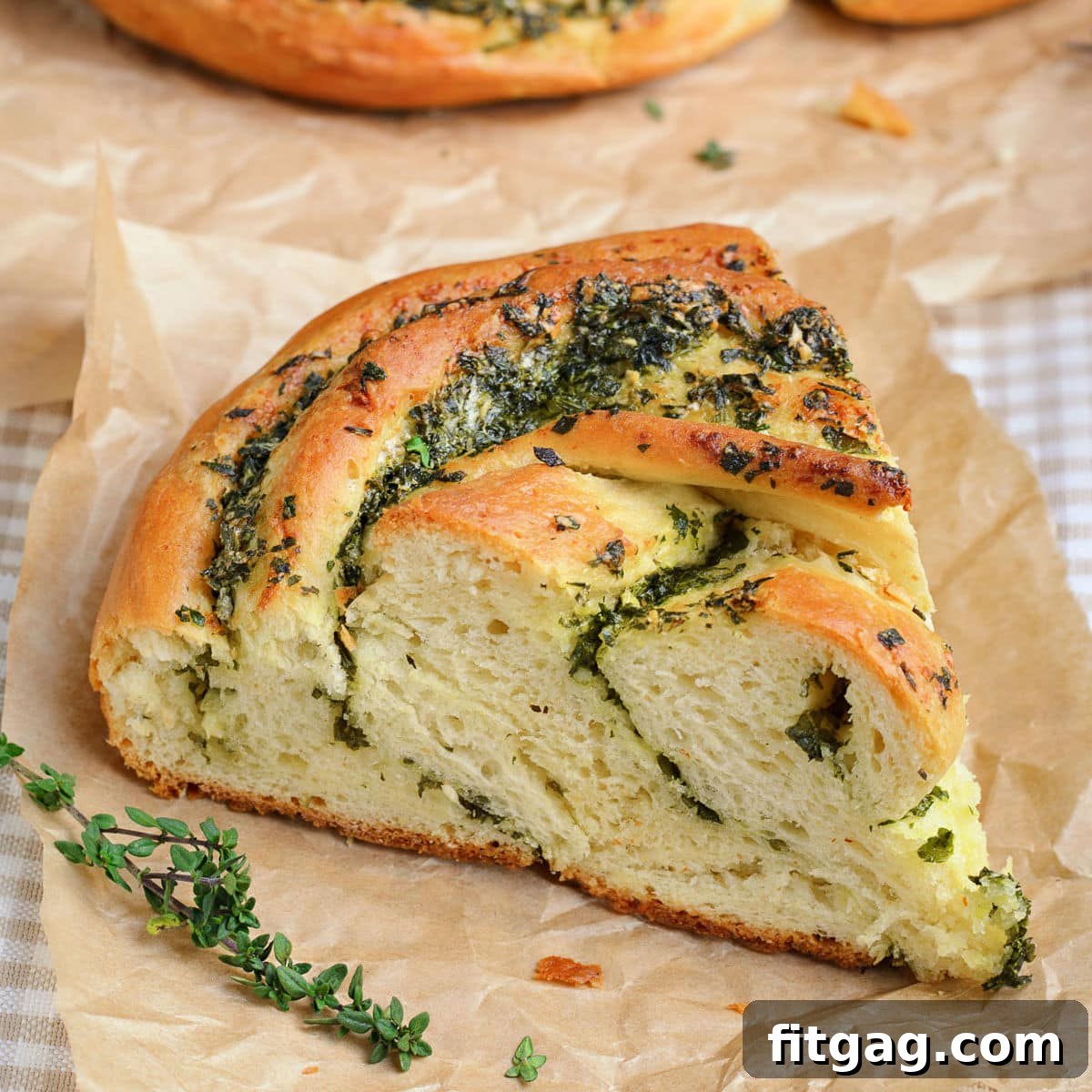
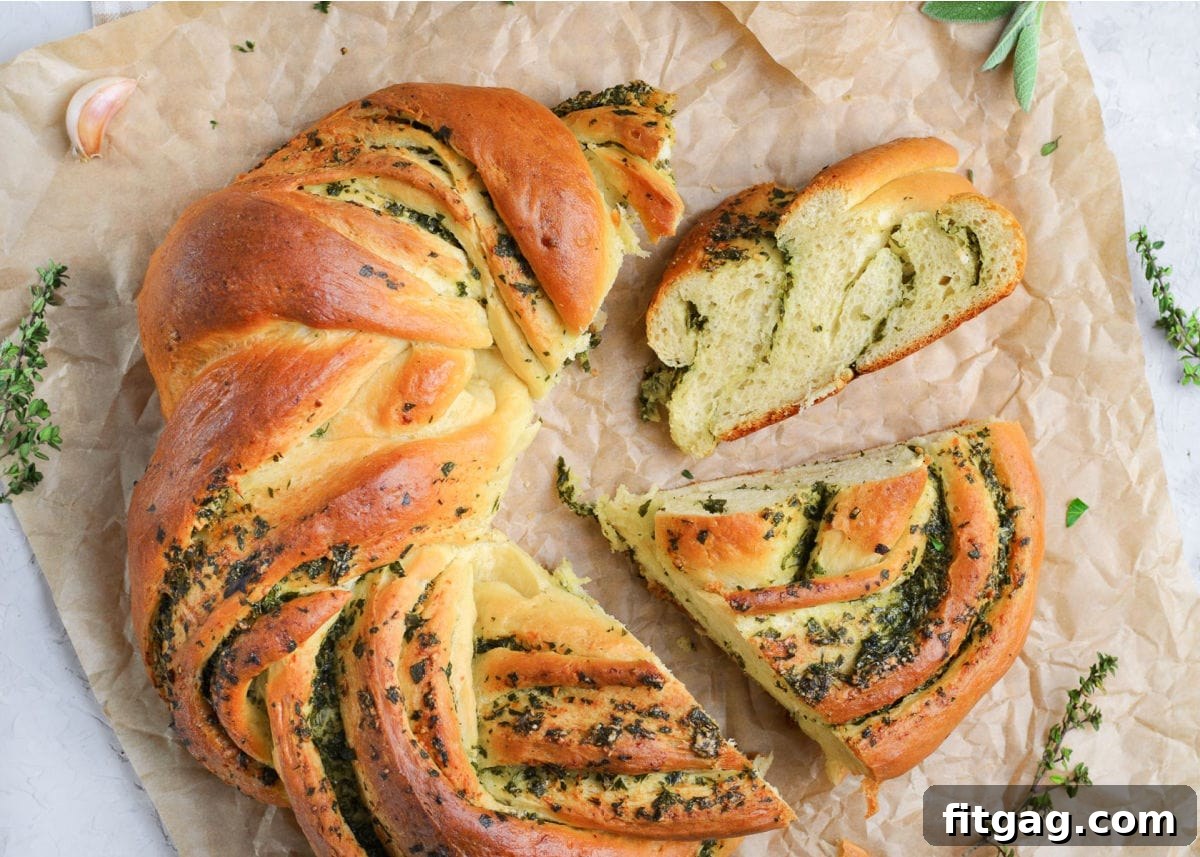
Prepare to be amazed by this **Garlic Herb Bread Wreath**, a culinary masterpiece that is as delightful to behold as it is to taste! Crafted with a generous blend of aromatic Parmesan cheese, pungent garlic, and vibrant fresh herbs, this bread is designed to impress. While it looks incredibly sophisticated, making it is surprisingly straightforward, making it an ideal choice for both grand holiday feasts and effortless weeknight meals. If you love the rewarding experience of baking your own bread, be sure to explore our recipes for fluffy dinner rolls and perfect biscuits!
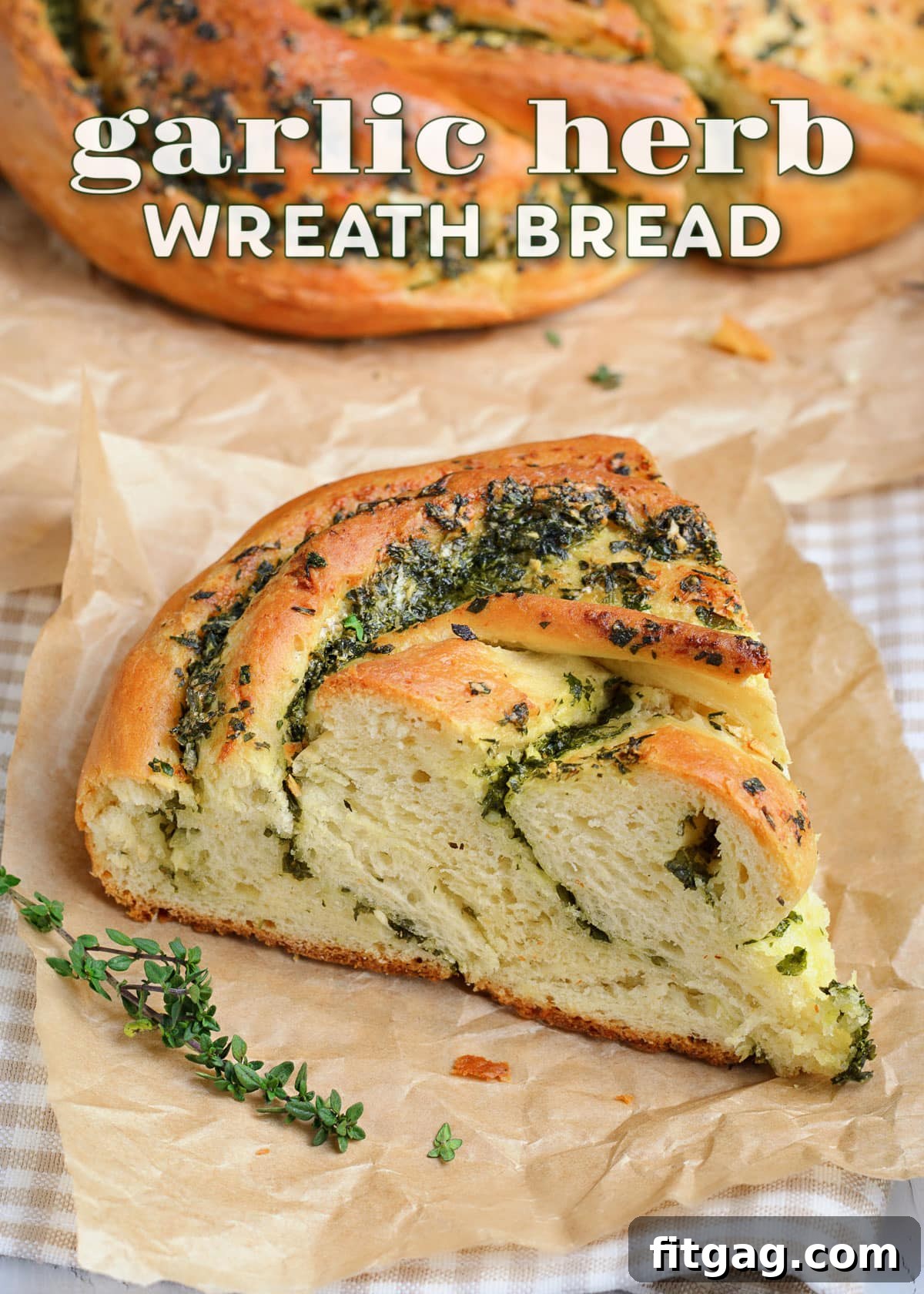
Why This Garlic Herb Bread Wreath Will Become Your New Favorite
This remarkable Garlic Herb Bread Wreath is a true showstopper, adding an element of elegance and incredible flavor to any dining table. Its intricate, braided appearance belies its simple preparation, making it a fantastic addition for festive holidays and special gatherings. Yet, don’t let its fancy look intimidate you – it’s perfectly suitable to serve alongside a comforting Slow Cooker Spaghetti Sauce on a quiet weeknight.
The secret to its impressive presentation lies in a clever twisting technique that forms a beautiful wreath. We’ll guide you through each step, and you’ll discover just how manageable it is. Imagine the delight on the faces of your friends and family as they admire your baking prowess! You can decide whether to share the secret of its surprising ease, or let them believe you spent hours crafting this culinary masterpiece.
Whether you’re seeking the ideal accompaniment for a lavish holiday dinner or simply want to elevate a casual meal, this garlic herb bread delivers pure perfection. The harmonious blend of pungent garlic and fresh, aromatic herbs creates a flavor profile that is utterly irresistible, making every bite a memorable experience. Its tender crumb and rich filling make it far superior to store-bought options, providing a truly gratifying homemade touch.
What Exactly Is Garlic Herb Bread Wreath?
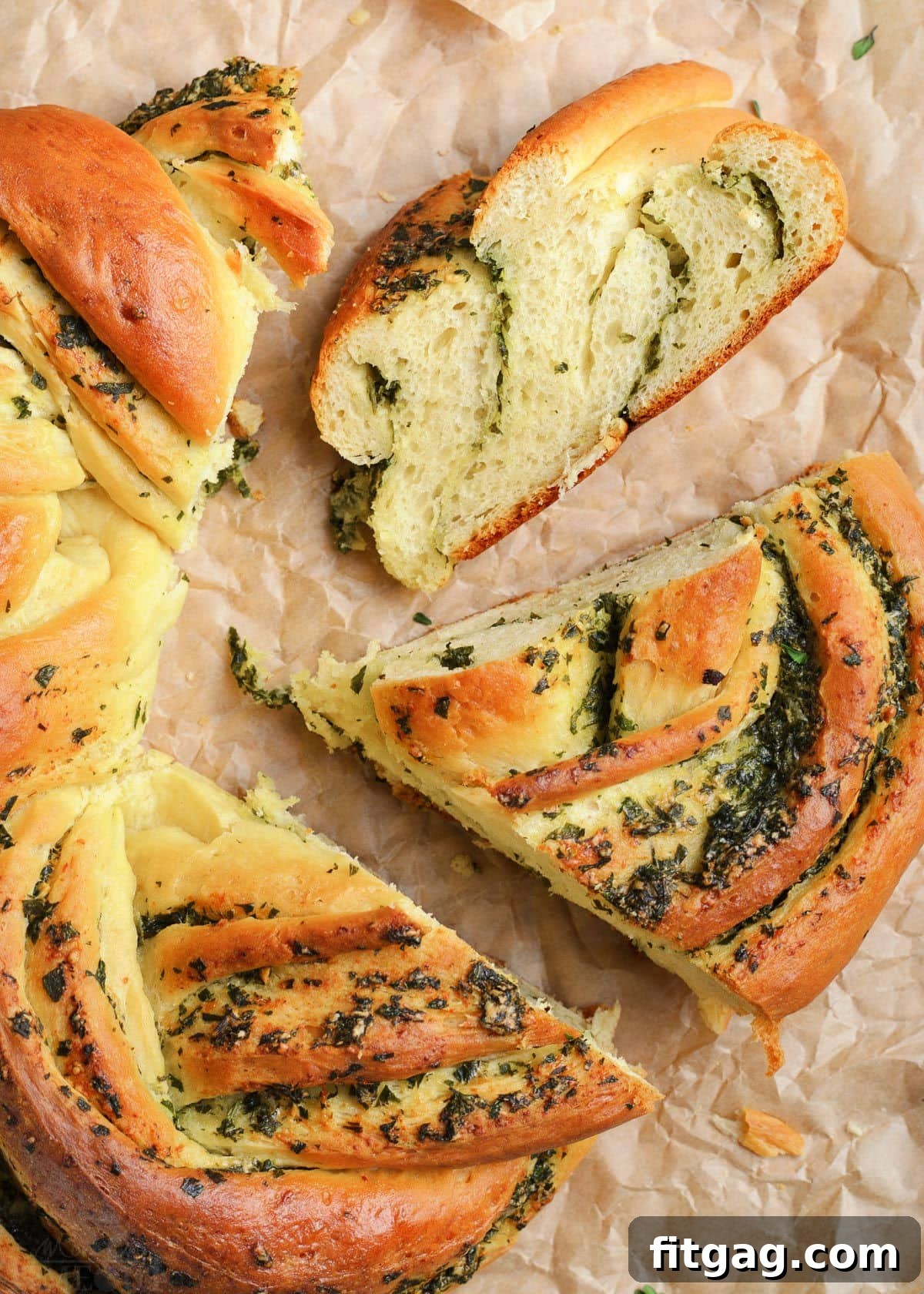
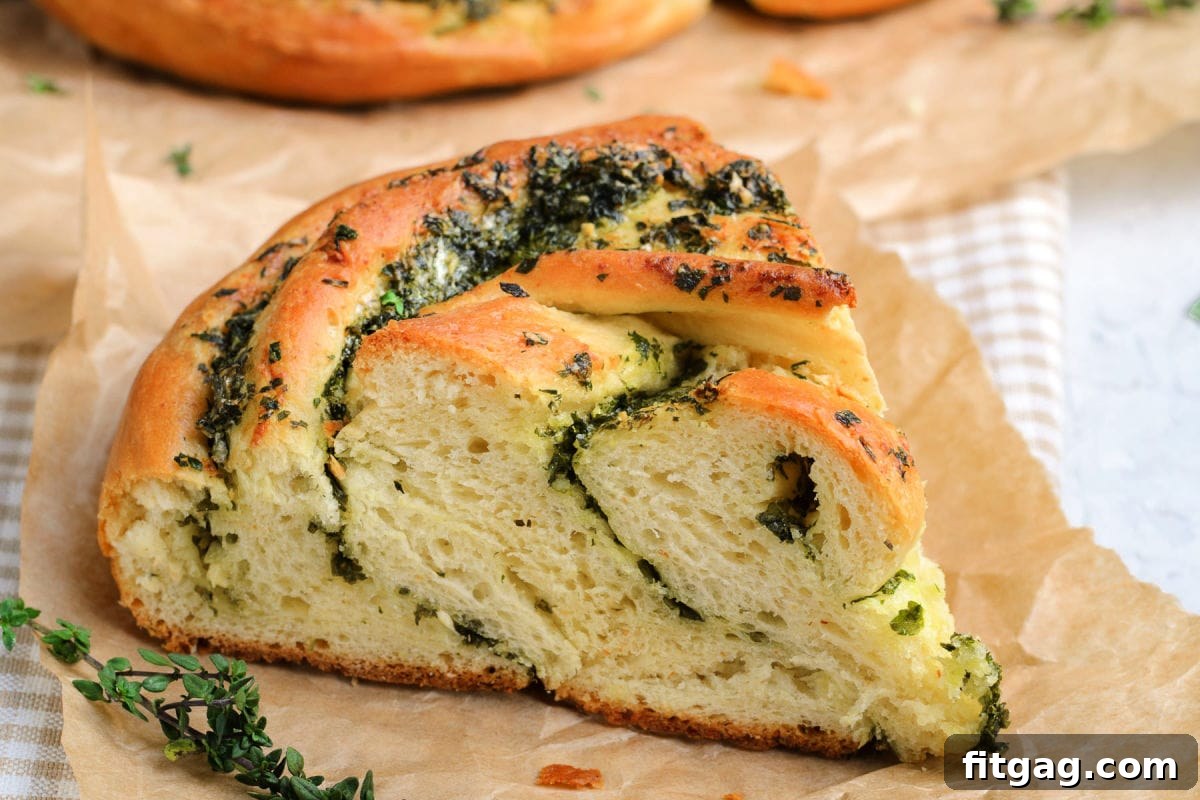
At its heart, Garlic Herb Bread Wreath is a delightful yeast-risen bread, characterized by its soft, airy crumb and golden crust. What sets this particular recipe apart is the generous inclusion of a rich, buttery filling infused with finely minced garlic, a medley of fresh herbs, and savory Parmesan cheese. This flavorful mixture is expertly spread over the dough, which is then rolled, sliced lengthwise, twisted into an elegant braid-like pattern, and finally shaped into a beautiful wreath before baking.
The result is a show-stopping savory bread that’s bursting with flavor. It serves as an exceptional side dish for a wide array of meals, from hearty pasta dishes and comforting soups to various main courses. Its pull-apart segments make it incredibly user-friendly for sharing amongst a crowd. It’s also fantastic as an appetizer on its own, perhaps with a side of warm marinara sauce for dipping, making it a versatile addition to any menu.
Perfect Pairings: What to Serve with Your Garlic Herb Bread Wreath
This versatile Garlic Herb Bread Wreath makes an excellent companion to countless meals. Its rich flavor and delightful texture complement both robust and lighter dishes, making it an incredibly flexible side. Here are some of our favorite pairings that truly shine with this bread:
- Lazy Day Lasagna: The cheesy, garlicky notes are a natural fit for classic Italian comfort food. The bread is perfect for soaking up rich tomato sauce.
- Zuppa Toscana Soup: Dip this crusty bread into a creamy, savory soup for an unforgettable experience. The herbaceous flavors complement the Italian sausage beautifully.
- Chicken Fried Steak: A surprising but delicious pairing, the bread adds a fresh, herbaceous contrast to this hearty classic, balancing the richness of the gravy.
- Turkey Chili: Use slices of the wreath to scoop up flavorful chili or simply enjoy alongside. It adds a welcome texture and zest.
- Stuffed Shells: Another fantastic Italian pairing, where the bread acts as a perfect vehicle for sauces and complements the creamy, cheesy shells.
- Hearty Roasts: Whether it’s a Sunday roast chicken, pork loin, or beef, the savory bread complements roasted meats beautifully, providing a fragrant counterpoint.
- Fresh Salads: A vibrant salad with a tangy vinaigrette dressing provides a refreshing contrast to the rich bread, making for a perfectly balanced meal.
- Soup and Salad Combo: The ultimate comforting meal, made even better with warm, fragrant garlic herb bread. It’s a complete and satisfying spread.
- Grilled Dishes: Pair it with grilled chicken, fish, or vegetables for a summer meal upgrade. The herbs in the bread echo the fresh flavors of the grill.
Essential Ingredients for Your Garlic Herb Bread Wreath
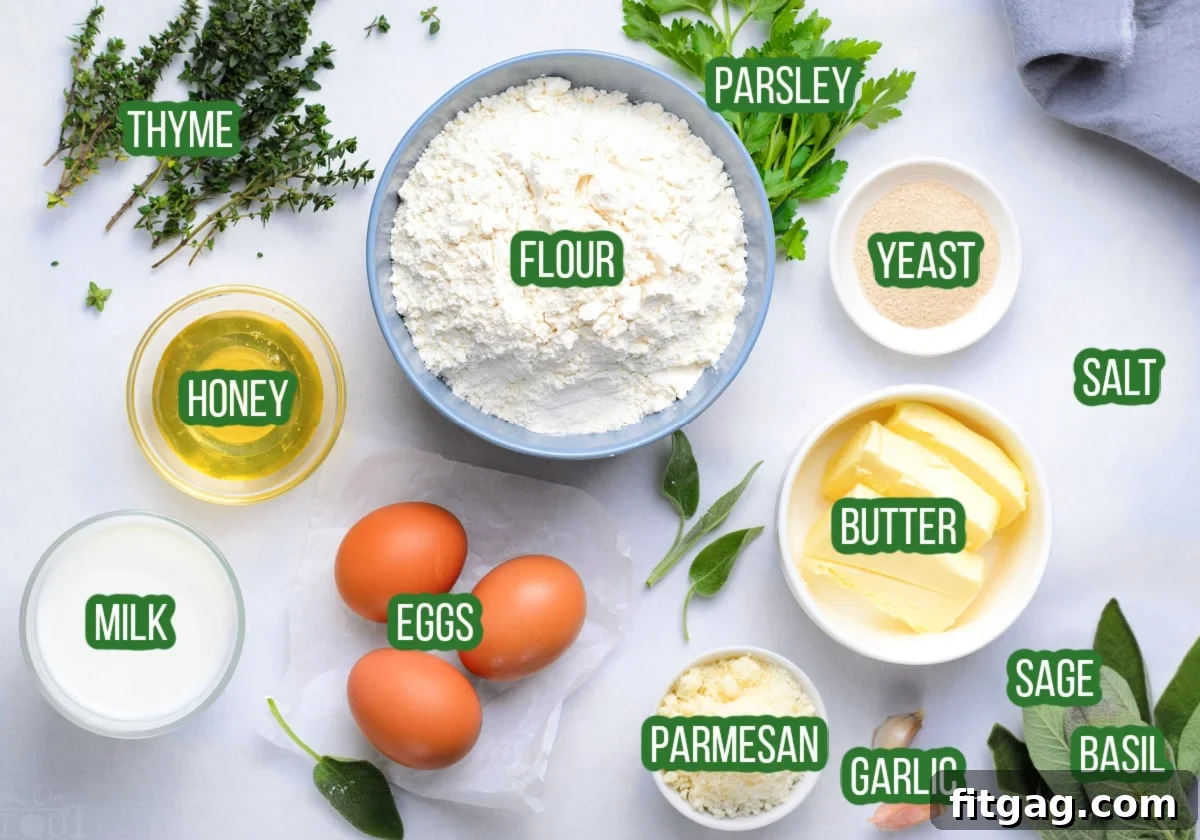
While this stunning bread might appear complex, the ingredient list is quite straightforward, relying on common pantry staples and fresh, flavorful additions. Each ingredient plays a vital role in achieving the perfect taste and texture. Below is a quick overview of what you’ll need. For precise measurements and detailed instructions, refer to the full printable recipe card at the bottom of this post.
- All-Purpose Flour: This is the primary structural component of our dough. Using good quality all-purpose flour will yield a wonderfully soft, yet sturdy bread.
- Milk: We recommend using whole milk for its higher fat content, which contributes to a more tender crumb and richer flavor in the finished bread. It’s crucial for the milk to be warmed to between 100°F and 110°F; this ideal temperature range ensures the yeast is properly activated without being killed by excessive heat.
- Instant Yeast: This type of yeast is a baker’s best friend, as it doesn’t require prior proofing. It can be mixed directly with the dry ingredients, speeding up the bread-making process and making it more forgiving for beginners.
- Salt: More than just a seasoning, salt is essential for balancing the sweetness and richness, enhancing the overall taste of the bread, and regulating the yeast activity, preventing over-rising.
- Honey: This natural sweetener acts as immediate “food” for the yeast, helping the dough to rise beautifully. It also imparts a subtle sweetness and a lovely golden hue to the crust, complementing the savory herbs perfectly.
- Eggs: Three large, room temperature eggs are incorporated into the dough. They contribute significantly to the bread’s rich golden color, provide structure, and add to the bread’s overall richness and tender texture.
- Butter: Used generously in both the dough and the irresistible filling, butter is key to providing amazing flavor, essential moisture, and a tender, melt-in-your-mouth crumb. Ensuring the butter is softened (but not melted) is crucial for easy and even incorporation.
- Parmesan Cheese: For the most authentic and robust flavor, freshly grated Parmesan cheese is highly recommended for the filling. Pre-grated varieties often contain anti-caking agents that can hinder melting and affect the texture.
- Garlic: Minced fresh garlic is the pungent heart of our savory filling. Two cloves provide a robust, aromatic punch that permeates the bread. A garlic press simplifies this step, or you can finely mince it by hand for maximum flavor release.
- Fresh Herbs (Parsley, Basil, Sage, Thyme): A vibrant quartet of finely chopped fresh herbs – parsley, basil, sage, and thyme – brings a bright, aromatic freshness and depth of flavor to the bread. This combination is highly recommended for its balanced profile, but feel free to adjust based on your preferences. If you’re not a fan of one, you can omit it or substitute with another favorite like fresh oregano or rosemary. The use of fresh herbs is paramount here, as their vibrant essential oils provide a depth of flavor and aroma that dried herbs simply cannot match.
Crafting Your Own Garlic Herb Bread Wreath: A Step-by-Step Guide
Despite its intricate appearance, this garlic herb bread is surprisingly simple to make from scratch. The key to success is familiarizing yourself with the process before you begin. Take a moment to read through these instructions a few times to get a clear understanding of each step and anticipate what’s next. We’ve broken down the recipe into three main parts: preparing the dough, creating the flavorful filling, and finally, assembling and baking your beautiful wreath, ensuring a smooth and enjoyable baking experience.
Phase 1: Preparing the Dough
A soft and pliable dough is the foundation of this delicious bread. Follow these steps carefully to ensure a perfect rise and texture, which are critical for an airy and flavorful final product:
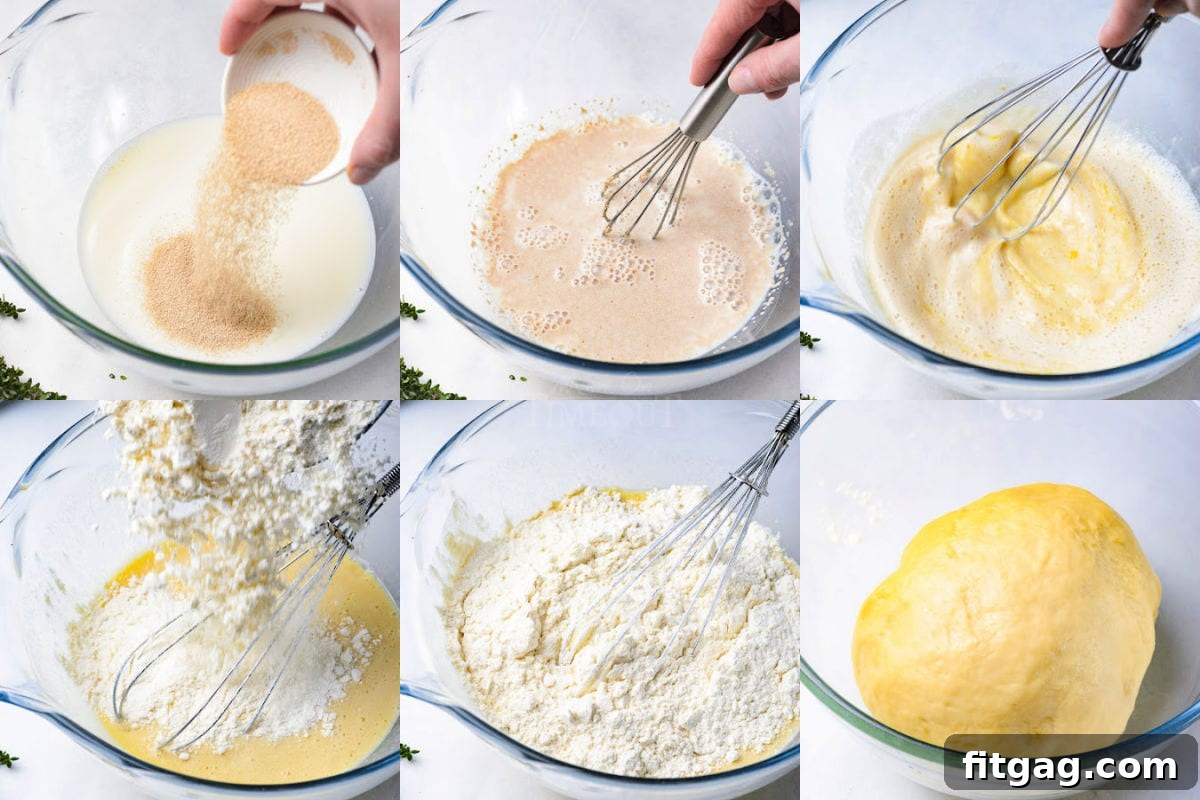
- In a generously sized mixing bowl, combine the instant yeast, honey, and warm milk. Whisk these ingredients together until well combined and the yeast begins to dissolve. The mixture should appear slightly foamy after a few minutes, indicating active yeast. Next, whisk in the three large, room temperature eggs until everything is thoroughly incorporated and smooth.
- Gradually add the flour to the wet mixture. Start by stirring in one cup of all-purpose flour until just combined and no dry streaks remain. Then, incorporate 2 tablespoons of softened butter, mixing it thoroughly into the dough. Add another cup of flour along with the salt, and whisk until all the flour is fully integrated.
- Continue adding flour incrementally, about half a cup at a time, mixing well after each addition. The amount of flour can vary slightly depending on humidity and how the flour is measured. You’ll know the dough has reached the right consistency when it begins to pull away cleanly from the sides of the bowl as you stir, forming a shaggy ball. For those with a stand mixer, feel free to use the dough hook attachment for this entire mixing and kneading process.
- Once the dough comes together, turn it out onto a lightly floured surface (or keep it in the stand mixer). Knead it by hand for approximately 6 to 8 minutes, or continue with the dough hook for the same duration. The goal is a smooth, elastic, and non-sticky dough that springs back slightly when gently pressed.
- Lightly grease a large clean bowl with a little oil or softened butter. Place the kneaded dough inside, turning it once to coat lightly, which prevents it from drying out. Cover the bowl snugly with a clean kitchen towel or plastic wrap. Allow the dough to rise in a warm, draft-free area for about 60 minutes, or until it has visibly doubled in size. This first rise is crucial for developing flavor and texture.
- While the dough is undergoing its first rise, prepare your baking sheet. Line it with a piece of parchment paper or a silicone baking mat to prevent sticking and ensure even baking. This proactive step ensures you’re ready when the dough is. Set it aside, ready for the formed wreath.
Phase 2: Preparing the Flavorful Filling
This savory filling is what truly elevates the Garlic Herb Bread Wreath, infusing it with irresistible aroma and taste. It’s quick and easy to prepare while your dough is rising, ensuring all components are ready at the right time:
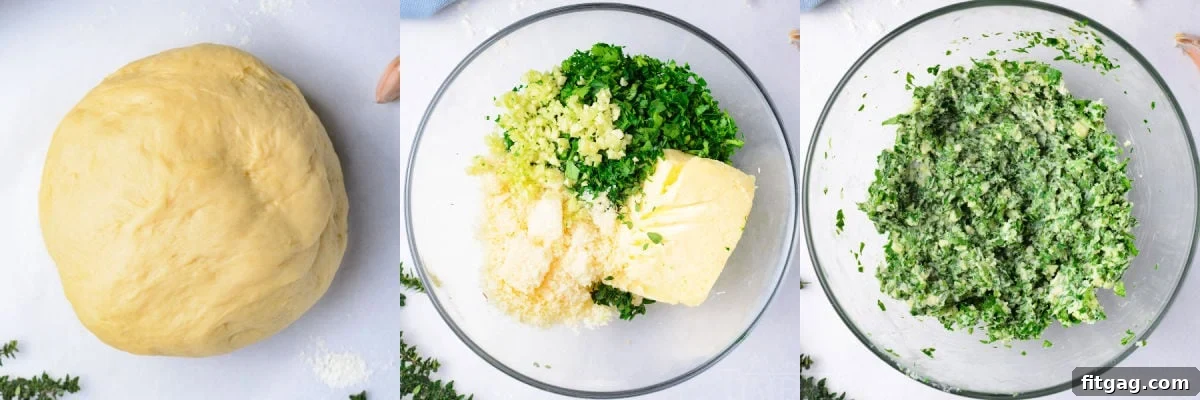
- Once your dough has completed its first rise and doubled in volume, it’s time to prepare the aromatic filling. This step can also be done earlier and stored, but fresh is always best.
- In a small mixing bowl, combine the 4 tablespoons of softened butter, finely minced garlic, the medley of fresh, chopped herbs (parsley, basil, sage, thyme), and the freshly grated Parmesan cheese. Stir these ingredients together thoroughly until they are well combined and form a fragrant, spreadable mixture. Ensure the butter is truly softened for easy mixing and a smooth spread.
Phase 3: Rolling, Twisting, Shaping, and Baking Your Wreath
This is where the magic happens, transforming your dough and filling into a beautiful edible wreath. Don’t be intimidated – this process is much simpler than it looks and incredibly rewarding!
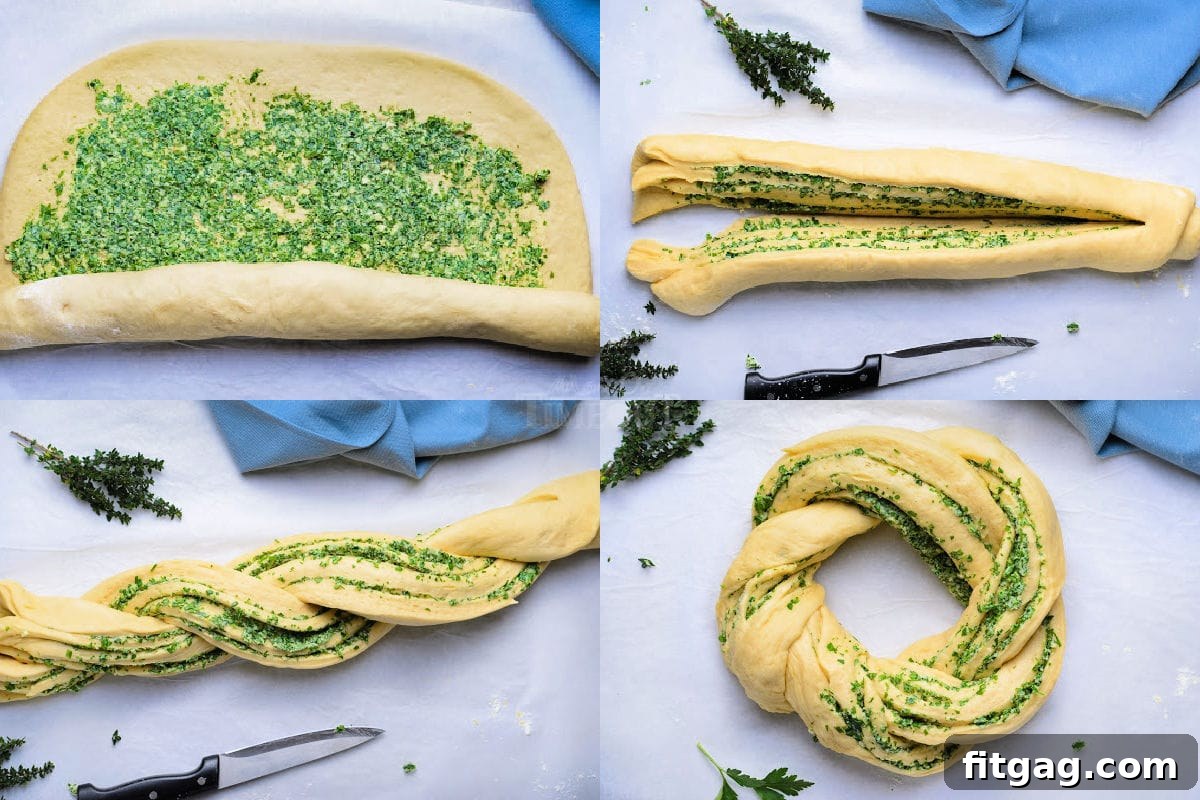
- Gently punch down the risen dough to release the accumulated air. Transfer it to a lightly floured surface and knead it for just a couple of minutes until it’s smooth, elastic, and easy to work with. Using a rolling pin, roll the dough out into a large rectangle, aiming for consistent thickness and dimensions of approximately 18 inches by 10 inches.
- Evenly spread the prepared garlic herb butter mixture over the entire surface of the rolled-out dough, ensuring a generous coating. It’s important to leave a 1-inch border clear around the perimeter of the rectangle. This clean border will help you seal the dough securely when rolling.
- Starting from one of the longer sides, tightly roll up the dough to form a log, similar to how you would prepare cinnamon rolls. Ensure it’s rolled snugly to prevent air pockets. Once rolled, use a very sharp knife to carefully cut the log lengthwise right down the middle, creating two long halves. Importantly, leave the last inch of the dough intact at one end; this acts as a hinge, holding the two halves together and making the twisting process much easier.
- Now for the twist! Hold up the two pieces of dough by the attached end and gently twist them over and under each other, creating a beautiful braid-like spiral. Be gentle but firm. As you twist, the dough will naturally lengthen to about 22 inches. Once twisted, carefully bring the ends of the twisted dough together to form a circular wreath shape. Pinch the ends firmly and seamlessly to seal them, ensuring your wreath holds its shape during baking.
- Carefully transfer the formed wreath to your prepared baking sheet (lined with parchment paper or a silicone mat). This can be a delicate step, so take your time. Loosely cover the wreath with plastic wrap or a clean kitchen towel. Allow it to rest in a warm, draft-free spot for another 30 minutes, or until it has nearly doubled in volume. This is the second proof, crucial for a light and fluffy final texture.
- While the wreath is completing its second proof, preheat your oven to 375°F (190°C). Once preheated and the wreath has visibly risen, place it in the oven. Bake it for 30 to 35 minutes. Look for a beautiful golden-brown color on the crust, and ensure it sounds hollow when gently tapped on the bottom, indicating it’s fully cooked through.
- Immediately after removing the bread from the oven, brush the entire surface with the remaining 2 tablespoons of softened butter. This adds a lovely sheen, an extra layer of rich flavor, and helps keep the crust tender. Allow the bread to rest for at least 10 minutes before slicing and serving. This resting time helps the bread set, making it easier to cut into perfect, pull-apart segments.
A Creative Twist: If you prefer a simpler presentation, or if time is a factor, you can simply twist the dough without forming it into a wreath. Just ensure you pinch the edges together firmly to create a cohesive, braided loaf. The flavor will be just as amazing, and it will still be a beautiful addition to your table!
Trish’s Top Tips for Baking the Perfect Garlic Herb Bread Wreath
Achieving a bakery-quality Garlic Herb Bread Wreath is easier with a few insider tips and tricks. Keep these in mind as you embark on your baking adventure to ensure the best possible results:
- Butter Application: For a smooth, even coat of butter on your bread, especially after baking, a pastry brush is your best friend. It ensures every nook and cranny gets that delicious buttery finish, contributing to both flavor and a beautiful golden crust.
- Extra Cheesy Goodness: If you’re a true cheese lover and want to elevate the decadence, consider folding an additional 1/2 cup of shredded mozzarella cheese into the garlic herb filling mixture. This will create delightful pockets of gooey, melted cheese throughout your bread.
- Prevent Sticking for Easy Handling: Don’t underestimate the importance of lightly greasing your bowl before the dough’s first rise. This simple step prevents the dough from sticking to the bowl as it expands, making it much easier to remove and handle once it has doubled in size.
- Optimal Baking Surface: Whether you choose parchment paper or a reusable silicone baking mat, lining your baking sheet is crucial. Both options provide a non-stick surface, ensuring your beautiful bread wreath doesn’t adhere to the pan and bakes evenly with a perfectly browned bottom.
- Room Temperature Eggs are Key: For optimal dough consistency and a better, more consistent rise, always use room temperature eggs. They incorporate more evenly into the dough, creating a smoother mixture compared to cold eggs which can seize the butter.
- Patience with the Rise: Patience is truly a virtue in bread making. Allow your dough ample time to rise in a warm, draft-free environment. A properly risen dough (double in size) will yield a lighter, airier texture and a superior crumb. Don’t rush this vital step.
- Fresh Herbs for Superior Flavor: While dried herbs can be used in a pinch, fresh herbs provide an unparalleled vibrant flavor and aromatic punch that truly makes this bread shine. They truly make a significant difference in the overall taste profile of this recipe.
- Don’t Over-Flour: When kneading or rolling the dough, use just enough flour to prevent sticking. Too much flour can make the bread dry and tough.
- Know Your Oven: Ovens can vary. If your oven tends to run hot or cold, adjust the baking time accordingly. A good internal thermometer can confirm doneness (around 200-210°F or 93-99°C).
Frequently Asked Questions About Garlic Herb Bread Wreath
Here are answers to some common questions about making, storing, and enjoying your homemade Garlic Herb Bread Wreath. These tips will help you get the most out of your delicious creation:
How should I store leftovers?
For the best flavor and texture, this garlic herb bread is truly best enjoyed fresh from the oven, ideally within a few hours of baking. However, if you have leftovers, wrap them tightly in aluminum foil and store at room temperature. This helps to prevent the bread from drying out and keeps the crust relatively soft. It will remain delicious for up to three days when stored this way. Avoid refrigerating, as this can often make yeast breads stale and hard much more quickly due to a process called retrogradation.
Can I freeze Garlic Herb Bread?
Absolutely! Freezing is an excellent way to preserve the Garlic Herb Bread Wreath for longer periods, ensuring you can enjoy a slice of homemade goodness whenever a craving strikes. It’s actually preferable to freezing over refrigeration, as the freezer helps maintain its crisp crust and soft interior much better. To freeze, first allow the baked bread to cool completely to room temperature. Then, wrap it tightly in aluminum foil, followed by placing it in a large, freezer-safe Ziplock bag or airtight container. It will keep beautifully in the freezer for up to 3 months. When ready to enjoy, simply thaw at room temperature and then reheat gently in a preheated oven (around 300°F/150°C) for about 10-15 minutes, or until warmed through and slightly re-crisped.
Can I prepare the dough ahead of time?
Yes, you can! This is a fantastic time-saving technique. After the first rise, gently punch down the dough to deflate it. Form it into a ball, place it back into a lightly greased bowl, cover tightly with plastic wrap, and refrigerate overnight (up to 24 hours). The colder temperature will significantly slow down the yeast activity. The next day, remove the dough from the refrigerator and let it come to room temperature for about 30-60 minutes before proceeding with spreading the filling, twisting, and baking as per the instructions.
What if I don’t have fresh herbs?
While fresh herbs are highly recommended for their superior vibrant flavor and aroma, you can substitute with dried herbs if necessary. As a general rule, use about one-third the amount of dried herbs compared to fresh, as dried herbs are more concentrated. For example, if the recipe calls for 3 tablespoons of fresh parsley, use 1 tablespoon of dried parsley. Keep in mind the flavor will be less vibrant and the texture might be slightly different.
How do I know when the bread is fully baked?
The bread is fully baked when it has a deep golden-brown crust and, if you tap the bottom, it sounds hollow. For absolute certainty, you can use an instant-read thermometer; the internal temperature of the bread should register between 200°F and 210°F (93-99°C).
Explore More Delicious Homemade Bread Recipes
The Garlic Herb Bread Wreath is just one of many delightful bread recipes you can master in your kitchen. If you enjoyed the rewarding process of making this homemade bread, we encourage you to try these other fantastic recipes to expand your baking repertoire and impress your friends and family with your skills:
- Pumpkin Dinner Rolls: A festive and flavorful option, perfect for autumn meals and holiday spreads, with a subtle sweetness.
- Cinnamon Swirl Bread: For those with a sweet tooth, a comforting classic that’s perfect for breakfast or brunch.
- Angel Biscuits: Light, fluffy, and a wonderful cross between a biscuit and a roll, incredibly versatile.
- Garlic Parmesan Breadsticks: Quick to make and undeniably addictive, these are great with pasta or as a quick snack.
- Cheesy Bacon Ranch Bread: A savory, loaded bread that’s packed with flavor, almost a meal in itself.
- Homemade Beer Bread: Incredibly easy to prepare with just a few ingredients, offering a unique, rich flavor.
- Classic Sourdough Bread: For the adventurous baker, embarking on sourdough is a truly rewarding project that yields a tangy, crusty loaf.
- Crusty Artisan Loaf: Simple ingredients, impressive results, perfect for sandwiches or dipping in olive oil.
Garlic Herb Bread Wreath Recipe
This exquisite Garlic Herb Bread Wreath is a perfect blend of rich flavor and stunning presentation. It features a soft, fluffy bread infused with a vibrant filling of Parmesan cheese, fresh garlic, and an aromatic mix of herbs. Ideal for making any meal feel special, from celebratory dinners to an elevated weeknight treat.
Print Recipe | Pin Recipe
Recipe Details
- Course: Bread
- Cuisine: American
- Keywords: bread wreath, garlic herb bread, homemade bread, savory bread
- Prep Time: 20 minutes
- Cook Time: 30 minutes
- Resting Time: 1 hour 30 minutes (includes two rises)
- Servings: 10 slices
- Author: Trish – Mom On Timeout
Ingredients
- 3 1/2 to 4 cups all-purpose flour
- 3/4 cup whole milk (warmed to 100°F – 110°F)
- 2 1/4 ounces instant yeast (1 packet or 7g)
- 1 teaspoon salt
- 2 tablespoons honey
- 3 large eggs (room temperature)
- 8 tablespoons butter (softened, divided)
- 1/4 cup freshly grated Parmesan cheese
- 2 cloves garlic (minced)
- 1/3 cup fresh parsley (finely chopped)
- 2 tablespoons fresh basil (finely chopped)
- 1 tablespoon fresh sage (finely chopped)
- 1 tablespoon fresh thyme (finely chopped)
Instructions
- Prepare the Dough: In a large bowl, whisk together the instant yeast, honey, and warm milk until combined and the yeast begins to dissolve. Then, whisk in the room temperature eggs until thoroughly incorporated.
- Add one cup of flour and stir until just combined. Whisk in 2 tablespoons of the softened butter. Next, add another cup of flour and the salt, whisking until the flour is fully integrated into the mixture.
- Continue adding flour incrementally, about half a cup at a time, mixing after each addition, until the dough begins to pull away from the sides of the bowl. (A stand mixer with a dough hook attachment can also be used for this process).
- Turn the dough out onto a lightly floured surface and knead for 6 to 8 minutes, until it forms a smooth, elastic dough that springs back slightly when pressed.
- Lightly grease a large bowl with oil or butter. Place the kneaded dough inside, turning to coat lightly. Cover the bowl snugly with a clean kitchen towel or plastic wrap. Let it rise in a warm, draft-free area for 60 minutes, or until it has visibly doubled in size.
- While the dough is rising, line a baking sheet with parchment paper or a silicone baking mat. Set aside.
- Prepare the Filling: In a small bowl, combine the remaining 4 tablespoons of softened butter, the minced garlic, all the finely chopped fresh herbs, and the freshly grated Parmesan cheese. Stir these ingredients together until well combined and fragrant.
- Assemble and Bake: Once the dough has risen, gently punch it down to release the air. Transfer to a lightly floured surface and knead for a few minutes until smooth and pliable. Roll the dough out into a large rectangle, approximately 18 inches by 10 inches.
- Evenly spread the prepared garlic herb butter filling over the entire surface of the rolled-out dough, leaving a 1-inch border clear around the perimeter of the rectangle.
- Starting from one of the longer sides, tightly roll up the dough to form a log, just like you would for cinnamon rolls. Using a very sharp knife, carefully cut the log lengthwise right down the middle, creating two long halves. Importantly, leave the last inch of the dough intact at one end; this acts as a hinge, holding the two halves together.
- Hold up the two pieces of dough by the attached end and gently twist them over and under each other, creating a beautiful braid-like spiral. As you twist, the dough will naturally lengthen to about 22 inches. Bring the ends of the twisted dough together to form a circular wreath shape, and pinch the ends firmly to seal them.
- Carefully transfer the formed wreath to your prepared baking sheet. Loosely cover the wreath with plastic wrap or a clean kitchen towel and let it rest for another 30 minutes, or until it has nearly doubled in volume (this is the second proof).
- Preheat your oven to 375°F (190°C). Once preheated and the wreath has risen, bake for 30 to 35 minutes, or until it is golden brown and sounds hollow when gently tapped.
- Immediately after removing the bread from the oven, brush the entire surface with the remaining 2 tablespoons of softened butter. Allow the bread to rest for at least 10 minutes before slicing and serving warm.
Nutrition Facts (per serving)
Calories: 316kcal |
Carbohydrates: 41g |
Protein: 11g |
Fat: 13g |
Saturated Fat: 7g |
Trans Fat: 1g |
Cholesterol: 77mg |
Sodium: 385mg |
Potassium: 179mg |
Fiber: 3g |
Sugar: 5g |
Vitamin A: 623IU |
Vitamin C: 4mg |
Calcium: 81mg |
Iron: 3mg