Creating Cherished Memories: Your Ultimate Guide to Salt Dough Christmas Ornaments
The holiday season is a magical time, filled with warmth, laughter, and the joy of creating lasting memories. There’s something truly special about decorating your home with handmade touches, especially those crafted with love and a sprinkle of festive spirit. Today, we’re diving into the wonderful world of salt dough ornaments – a timeless craft that brings smiles to faces of all ages and leaves you with precious keepsakes.
I remember promising you some delightful Christmas crafts back in July, and after a few (literal) bumps along the road, they’re finally here! My first attempt at baking these beauties in early November was, shall we say, memorable. After meticulously crafting and baking two beautiful batches, I made the rookie mistake of letting them cool in the oven. A couple of hours later, as dinner preparations began, I preheated the oven, completely forgetting my precious ornaments inside. The result? Two batches of perfectly crafted, utterly burned ornaments! A truly heartbreaking moment for any crafter.
But true crafting spirit means learning from your mistakes and trying again. So, we dove back in, making a third batch, and then a fourth, specifically for those adorable handprint ornaments. The kids, bless their hearts, even loved painting the charred remnants of the first batch, so it wasn’t a complete loss of fun. This guide will walk you through everything you need to know, ensuring your salt dough journey is filled with joy, not singed surprises!
Why Choose Salt Dough for Your Holiday Crafts?
Salt dough is an absolute gem for holiday crafting, particularly when you’re looking for an activity that’s both engaging and rewarding. Its popularity stems from several key advantages:
- Affordability: The ingredients are likely already in your pantry – flour, salt, and water. This makes it an incredibly budget-friendly option for creating abundant holiday decorations or personalized gifts.
- Simplicity: The recipe is straightforward, and the dough is very forgiving, making it perfect for crafters of all skill levels, from toddlers to seasoned artists.
- Durability: Once properly baked and sealed, salt dough ornaments can last for years, becoming cherished heirlooms that adorn your tree season after season.
- Personalization: Salt dough provides a blank canvas for endless creative expression. You can cut it into any shape, add textures, paint intricate designs, or capture precious handprints and footprints.
- Sentimental Value: Especially for families, creating handprint or footprint ornaments is a beautiful way to capture a moment in time, creating incredibly sentimental keepsakes that you’ll treasure long after the little hands have grown.

Mastering the Salt Dough Recipe: Ingredients & Preparation
Creating the perfect salt dough is the foundation for beautiful ornaments. It’s a simple process, but a few tips can ensure your dough is pliable, smooth, and ready for crafting.
The Basic Recipe for Success
The standard salt dough recipe is incredibly simple, requiring just three common household ingredients. For a basic batch, you’ll need 1 cup all-purpose flour, 1/2 cup table salt, and approximately 1/2 cup of warm water. I often recommend doubling or even tripling this recipe if you plan on making multiple ornaments or working with a group, as it’s surprising how quickly you can go through a batch! Using warm water is key; it helps the salt dissolve more effectively, leading to a smoother, less gritty dough texture.
Step-by-Step Dough Making
Begin by combining the flour and salt thoroughly in a large mixing bowl. A whisk works well to ensure an even distribution. Next, gradually add the warm water, a little at a time, mixing continuously. You might not need all of the water, or you might need a tiny bit more, depending on your environment’s humidity and the specific flour used. Aim for a consistency similar to playdough – firm enough to hold its shape but soft and pliable. If you’re specifically making handprints or footprints, you’ll want a slightly looser dough that allows for an easier, clearer impression. Once the ingredients are mostly combined, turn the dough out onto a lightly floured surface and knead it for about 10 minutes. This kneading process is crucial as it develops the gluten in the flour, resulting in a more elastic, less crumbly dough that is easier to work with and less prone to cracking during drying. You’ll know it’s ready when it feels smooth and uniform. After kneading, let the dough rest, covered, for at least 40 minutes. This resting period allows the gluten to relax, making the dough much easier to roll out without resistance or tearing.
Infusing Color and Scent (Optional Enhancements)
For an extra touch of creativity, consider adding food coloring directly to your dough. Simply mix a few drops into the water before combining it with the dry ingredients for a uniformly colored dough that can be painted over or left as is. For a sensory experience, you can also incorporate natural scents. Add a teaspoon of ground cinnamon, nutmeg, or even a dash of cloves to the dry ingredients for fragrant ornaments that add to your home’s festive aroma. For a subtle sparkle, fine glitter can also be kneaded into the dough, providing a built-in shimmer.
Troubleshooting Common Dough Issues
Don’t worry if your dough isn’t perfect on the first try! If it feels too sticky to handle, gradually add small amounts of flour, kneading it in until the desired consistency is achieved. If it’s too dry or crumbly, incorporate warm water a teaspoon at a time until it becomes pliable. Cracks during the drying process often indicate the dough was too thick or not kneaded sufficiently, so aim for even thickness and thorough kneading.


Creative Shaping and Crafting Your Ornaments
With your beautifully prepared salt dough, it’s time to unleash your creativity and transform it into unique ornaments.
Rolling Out the Dough Evenly
Roll out your dough on a lightly floured surface until it’s about 1/4 inch thick. Achieving an even thickness is crucial, as it ensures uniform drying and baking, preventing thinner sections from burning or thicker parts from remaining soft. For perfect consistency, you can use rolling pin guides or simply a ruler to measure as you go. When crafting with kids, a great tip is to split the dough into individual portions. This year, for my third batch, I rolled out sections of dough on two separate cutting boards, allowing each of my boys to independently create whatever they envisioned with “their” dough, fostering their sense of ownership and creativity.
Cutting Shapes: From Classic to Custom
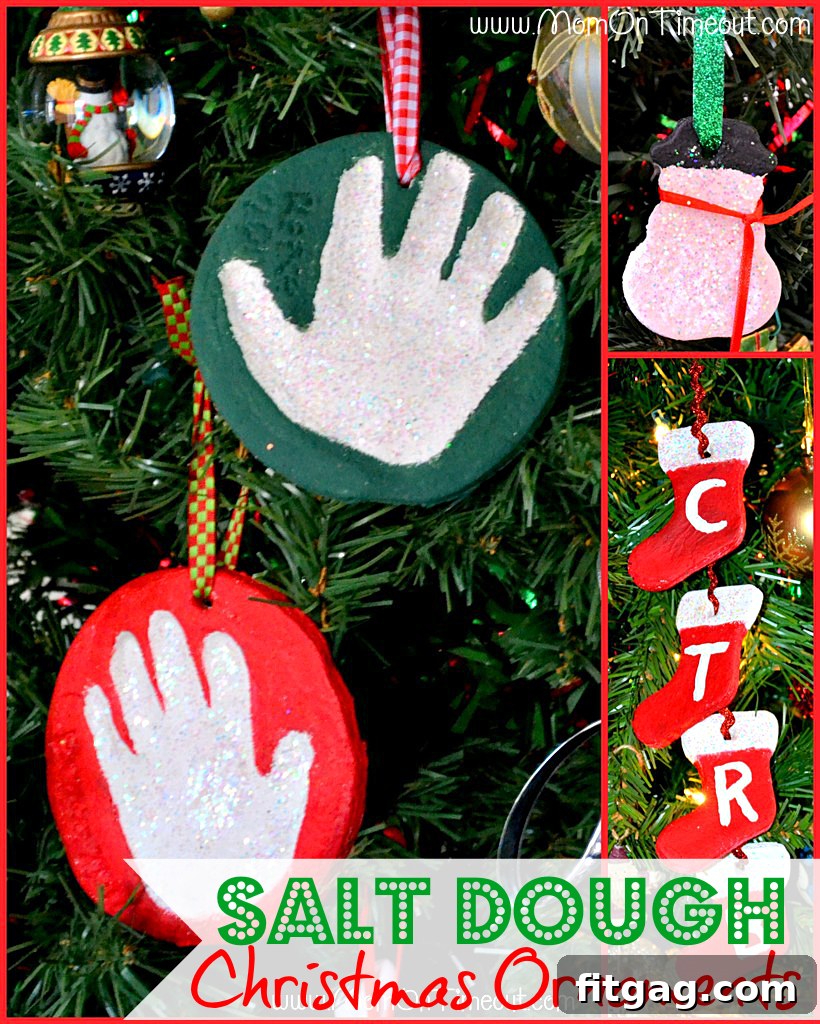
The possibilities for shapes are truly endless. Traditional holiday cookie cutters in stars, trees, gingerbread men, and snowflakes are always a hit. However, don’t limit yourself; a simple knife can be used to cut out custom shapes, or you can use stencils for more intricate designs. For the sentimental handprint ornaments, I found that the top of a pitcher happened to be the perfect size for shaping the circular base, working wonderfully to define the space before pressing in their tiny hands. To make handprints, gently press a child’s hand (or foot!) firmly but carefully into the softened dough, ensuring all fingers and lines are captured. This creates a timeless keepsake that beautifully documents their growth year after year. For added texture and unique details, try pressing lace, leaves, twigs, or rubber stamps into the dough before cutting, leaving beautiful impressions.
Preparing for Hanging: The Essential Hole
If your creations are destined to hang on a Christmas tree or as part of a garland, remember to poke a hole in each ornament before baking. Use a straw, skewer, or even the tip of a pencil to create a clean, adequately sized hole. Ensure it goes all the way through the dough and that any excess dough around the edges of the hole is carefully removed to prevent it from closing up during baking. Place the hole close enough to the top for hanging, but not so close that it compromises the integrity of the ornament.
Baking and Drying for Lasting Keepsakes
Proper drying is the most critical step in ensuring your salt dough ornaments become durable, long-lasting treasures. Patience here will pay off immensely.
The Baking Process: Low and Slow
Preheat your oven to a low temperature of 200 degrees Fahrenheit (approximately 93 degrees Celsius). This low and slow approach is vital to prevent the dough from puffing up, cracking, or browning too quickly, ensuring an even and thorough drying process. Carefully place your shaped ornaments on a baking tray lined with parchment paper. Parchment paper is essential to prevent sticking and makes for easy transfer. Bake for 4-6 hours, or until the ornaments are completely hard and dry to the touch, with no softness remaining in the center. Thicker ornaments will naturally require longer baking times. It’s a good idea to flip them halfway through to ensure even drying on both sides.
The Air-Drying Alternative
If you prefer not to use an oven, salt dough ornaments can also be air-dried. This method is energy-saving but requires significantly more time – plan on several extra days, possibly even a week or more, depending on the thickness of your ornaments and the humidity levels in your environment. Place them in a well-ventilated area and turn them periodically to ensure even drying.
Cooling Properly: Avoiding Disaster
Once your ornaments are hard and completely dry, it’s crucial to let them cool down completely. You can either turn off the oven and let them cool inside (if you remember them this time!) or transfer them to a wire rack. Proper cooling prevents any trapped moisture from creating condensation, which could soften the ornaments or lead to mold over time. My own unfortunate experience with the burned batches taught me the hard way – never preheat an oven with crafts inside!
Decorating Your Salt Dough Masterpieces
Once your ornaments are perfectly hard and cool, the real fun begins: decorating! This is where you can truly let your imagination soar and personalize each piece.
A Canvas for Creativity
Salt dough makes an excellent canvas for a wide variety of decorative materials. Acrylic paints are a popular choice due to their vibrant colors and good coverage; they’re versatile for both intricate details and broad strokes. For younger children, tempera paints are often a safer and easier-to-clean option. Don’t forget the glitter! Apply craft glue (PVA glue works well) to specific areas or cover the entire ornament for an extra festive sparkle. Ribbons, small beads, sequins, buttons, and even permanent markers or puffy paint can add unique textures and dimensions. I love letting the kids take the reins during this stage – their uninhibited creativity often leads to the most charming and unexpected designs!
Personalizing Your Ornaments
Make each ornament truly special by adding personalized touches. Use a fine-tip paint pen or permanent marker to write names, dates, or a short message on the back of each ornament. This transforms them into even more cherished keepsakes, perfect for remembering special moments or gifting to loved ones. Consider themes like traditional Christmas, winter wonderland, or even a modern minimalist style to match your existing decor.
Allowing for Proper Drying
After all the painting and gluing, it’s crucial to allow everything to dry completely. Depending on the amount of paint and glue used, this could take several hours or even overnight. Ensure the ornaments are thoroughly dry to the touch before moving on to the final sealing step, which will lock in your beautiful artwork.


Sealing and Preserving Your Treasures
The final step in creating durable, long-lasting salt dough ornaments is sealing them. While optional, this step significantly enhances their longevity and appearance.
Why Seal Your Ornaments?
Sealing your salt dough ornaments provides a protective barrier against moisture, dust, and fading, ensuring they remain beautiful for many years to come. It helps to harden the surface, prevent chips, and can even enhance the vibrancy of your painted designs by adding a glossy or matte finish, giving them a more polished, professional look.
Recommended Sealants
I often use a polyurethane spray for its excellent protective qualities and ease of application. When using spray sealants, always work in a well-ventilated area or outdoors, and apply several thin coats rather than one thick one, allowing each coat to dry according to the product instructions. Other great options include brush-on clear varnishes or Mod Podge, which comes in various finishes like glossy, matte, or satin. Choose a sealant that offers the level of shine and protection you desire for your unique creations. This step is definitely worth the small effort to ensure your cherished ornaments stand the test of time.
Final Touches: Hanging and Display
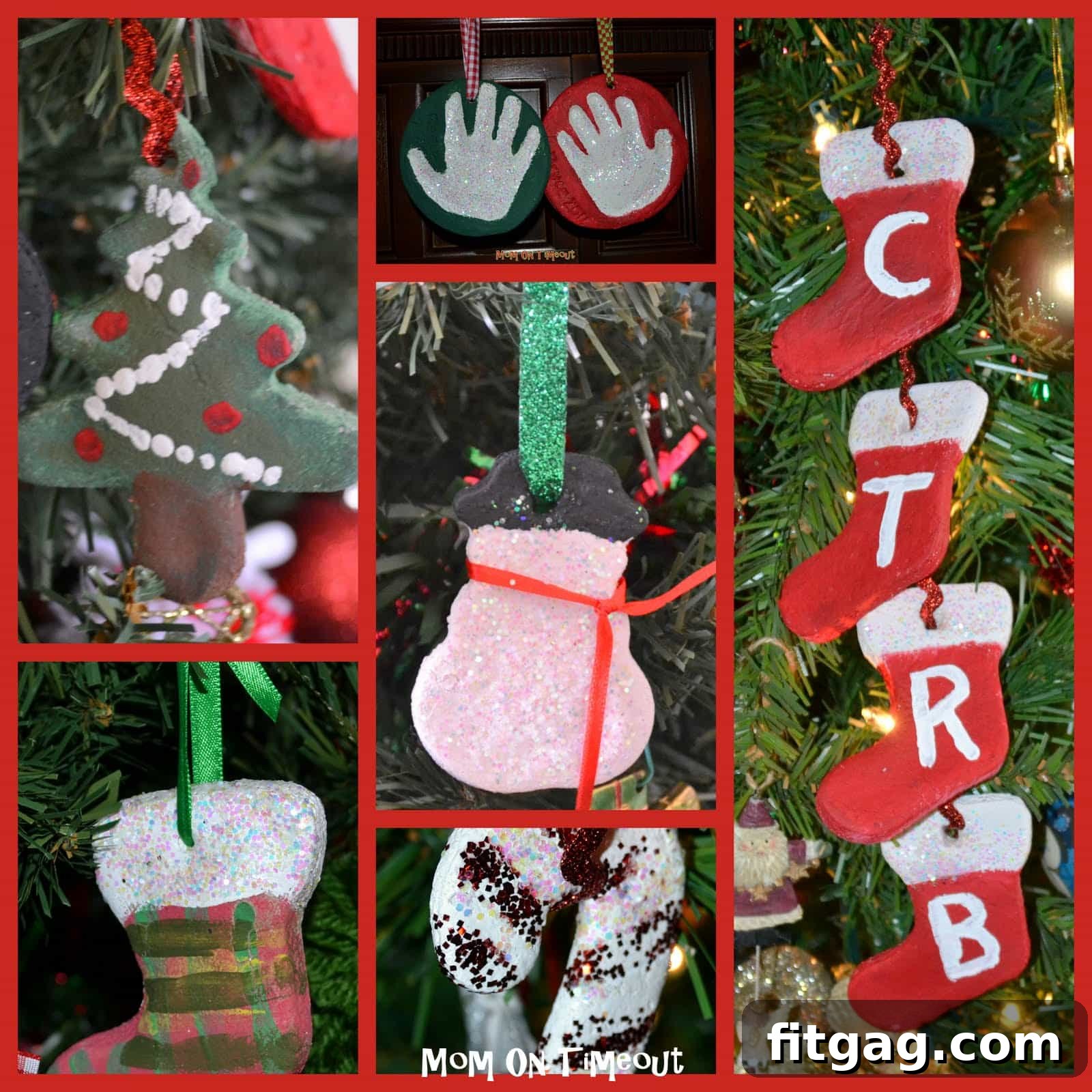
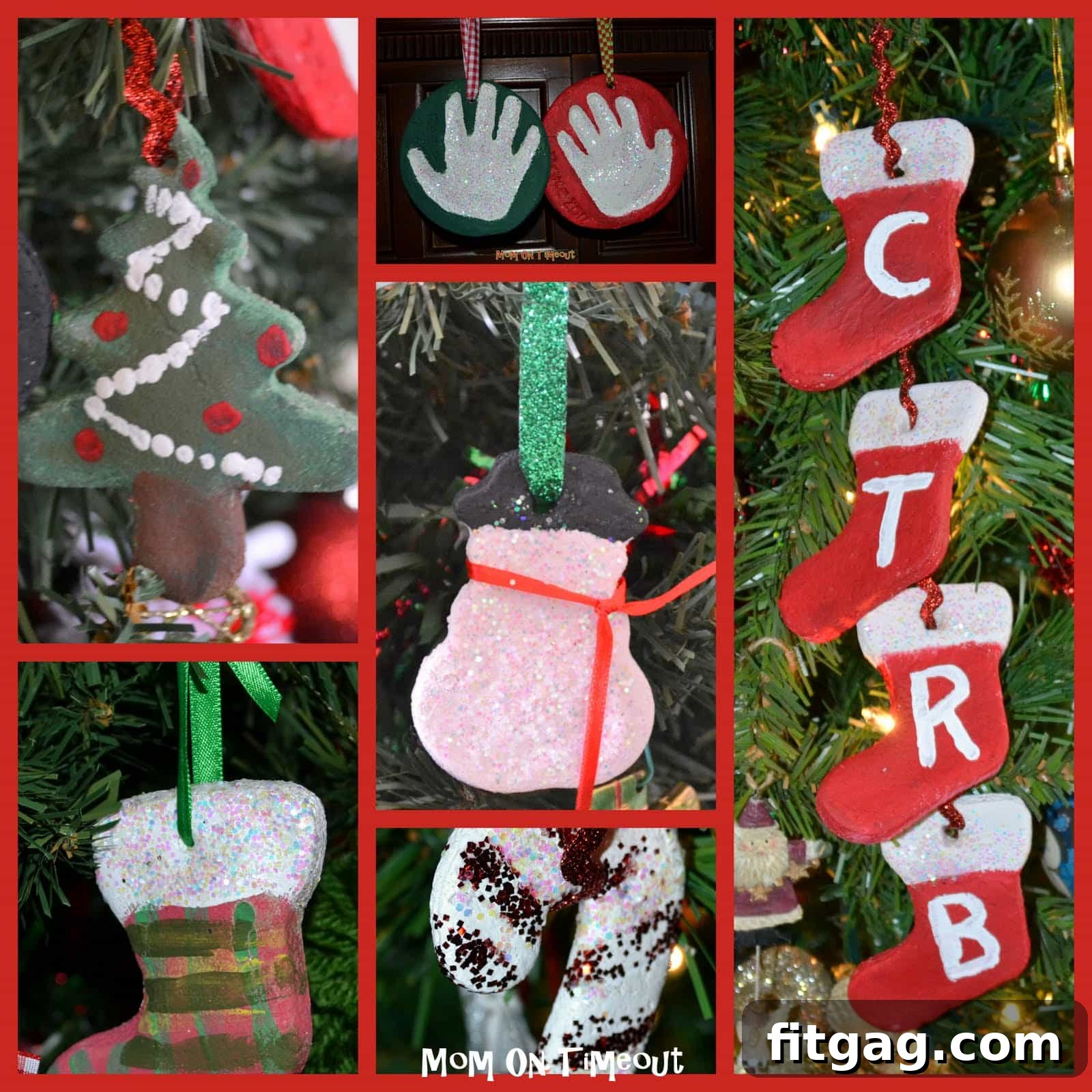
With your ornaments beautifully decorated and sealed, it’s time to add the final flourish! Thread a pretty ribbon, twine, or natural jute through the hole you made earlier. Choose colors and textures that complement your design and overall holiday decor. These fabulous creations are perfect for adorning your Christmas tree, but don’t stop there! They make wonderful personalized gift tags, unique additions to a holiday garland, or even thoughtful hostess gifts. This project truly embodies the spirit of handmade holidays – it’s super affordable, using simple ingredients you likely already have, and there’s no need to rush out and buy a bunch of expensive supplies. Here are some of our family’s favorite creations that showcase the endless possibilities:

A Season of Handmade Joy and Lasting Memories
The beauty of salt dough crafts truly lies in its endless possibilities. From intricate designs to simple, heartfelt shapes, you can create anything your imagination dreams up. It’s not just about the final product; it’s about the precious moments spent together, the shared laughter, and the pride in creating something beautiful with your own hands. These handmade treasures carry stories and emotions that mass-produced decorations simply cannot match.
I sincerely hope this guide inspires you and your family to embark on your own salt dough adventure this holiday season. Create some treasured ornaments, start a new family tradition, and fill your home with the unique charm of handmade holiday decor. These aren’t just decorations; they’re memories in the making, destined to be cherished for years to come. Happy crafting!
Connect with me!
Facebook |
Twitter |
Pinterest |
Google+ |
RSS
Linking up
here,
Home Stories A2Z, and
My Repurposed Life.