
Delicious Thumbprint Cookies: Your Ultimate Guide to Classic Jam-Filled Treats
There’s something inherently charming and utterly delicious about a homemade batch of Thumbprint Cookies. These buttery, melt-in-your-mouth shortbread-style cookies, adorned with a sweet or tangy jam center, are more than just a dessert – they’re a beloved tradition, especially during the holidays. Perfect for festive gatherings, cookie exchanges, or simply as a comforting treat with a cup of tea, these bite-sized gems are as delightful to look at as they are to eat.
Imagine a crisp, golden cookie base, lightly coated in sugar, giving way to a soft interior and a burst of vibrant, fruit-filled goodness. That’s the magic of thumbprint cookies. While often associated with Christmas, their timeless appeal makes them a fantastic choice year-round. They offer a perfect canvas for culinary creativity, allowing you to personalize flavors to suit any palate or occasion.

The Enduring Appeal of Thumbprint Cookies
At their core, thumbprint cookies are a testament to baking simplicity and elegance. The recipe typically features a rich, tender shortbread dough, distinguished by the absence of leavening agents like baking soda or baking powder. This results in a cookie that holds its shape beautifully and has a satisfyingly dense yet crumbly texture. The characteristic “thumbprint” indentation, which gives these cookies their name, is then filled with a dollop of jam before baking, creating a stunning stained-glass effect.
Originating from Sweden (where they are known as Hallongrotta, or “raspberry cave”), these cookies have transcended cultures to become a global favorite. Their allure lies in their straightforward preparation, the comforting familiarity of their buttery flavor, and the endless possibilities for customization, making them a go-to recipe for both novice and experienced bakers alike.
Why You’ll Fall in Love with This Thumbprint Cookie Recipe
This particular thumbprint cookie recipe is designed for both ease and exceptional taste. Here’s why it’s destined to become a staple in your baking repertoire:
Unbeatable Versatility: Endless Flavor Combinations
The beauty of thumbprint cookies is their adaptability. While classic raspberry and apricot jams are always a hit, this recipe encourages you to explore a spectrum of flavors. Think beyond traditional jams: experiment with zesty lemon curd for a bright, tangy contrast, rich caramel for a decadent touch, or melted chocolate for an indulgent twist. Strawberry, cherry, blackberry, or even exotic fruit preserves can transform each cookie into a unique experience. By mixing and matching different fillings, you can create a vibrant, diverse cookie platter that caters to every taste preference, ensuring there’s a favorite for everyone.
Simple Ingredients, Superior Taste
You don’t need a pantry full of exotic items to create these showstoppers. The cookie base relies on fundamental baking ingredients: butter, sugar, vanilla, and flour. This simplicity ensures that the rich, buttery flavor of the shortbread truly shines through. The absence of leavening agents means the cookies maintain their delicate texture and defined shape without spreading excessively in the oven. This focus on quality basic ingredients guarantees a consistently delicious result every time.
Visually Stunning: Perfect for Any Occasion
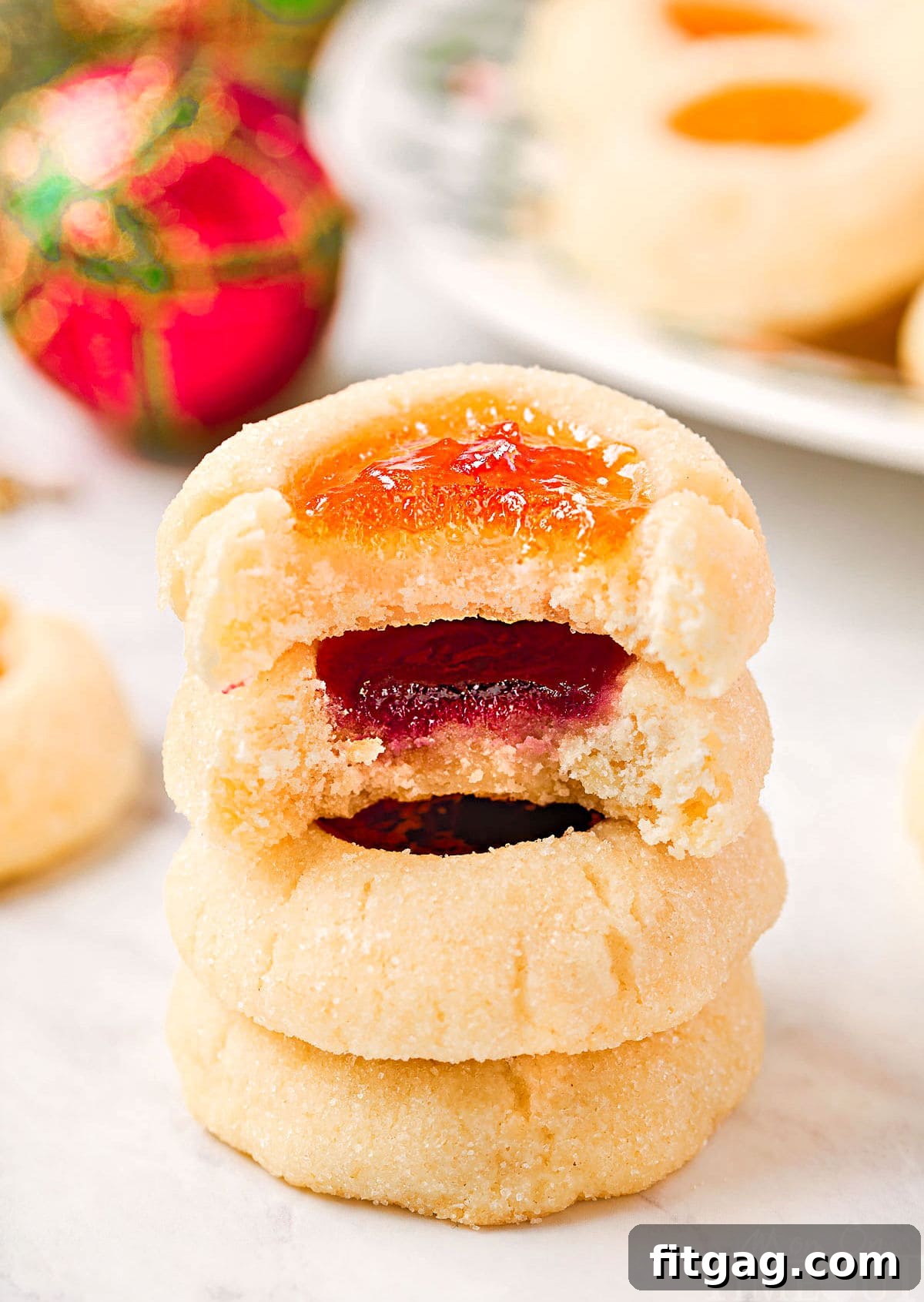
These cookies are not just delicious; they are incredibly photogenic. The jewel-toned centers of the jam create a striking visual appeal that makes them stand out on any dessert table or cookie tray. For an even more impressive presentation, I recommend using at least two different colors of jam—for example, the deep red of raspberry alongside the sunny orange of apricot—to provide a beautiful contrast. They’re guaranteed to impress guests and make your holiday spread or special occasion feel extra special.

Essential Ingredients for Perfect Thumbprint Cookies
Creating these gorgeous, jam-filled cookies requires just a handful of common pantry items. Each ingredient plays a crucial role in achieving that perfect shortbread texture and delightful flavor profile. Let’s take a closer look at what you’ll need:
- Unsalted Butter: This is the foundation of our buttery shortbread. It’s absolutely vital that your butter is at room temperature. Softened butter creams easily with sugar, creating an airy, uniform mixture that leads to tender cookies. Forget to take it out? A quick microwave zap in short bursts (checking often) can help, but room temperature is ideal for best results.
- Granulated Sugar: You’ll use sugar in two ways: first, to sweeten the cookie dough, and second, as a coating for the rolled cookie balls. The sugar coating adds a delightful sparkle and a slight textural crunch to the exterior of the cookie, enhancing the overall experience.
- Vanilla Extract: A classic flavor enhancer, vanilla extract adds warmth and depth to the cookie dough, complementing the buttery notes beautifully. For an intriguing twist, consider using almond extract, which pairs exceptionally well with many berry jams like raspberry.
- Salt: A pinch of salt is essential. It doesn’t just add flavor; it balances the sweetness of the sugar and jam, intensifying the overall taste profile of the cookie and preventing it from being cloyingly sweet.
- All-Purpose Flour: This provides the primary structure for our cookies. Be careful not to overmix the flour once it’s added, as this can develop the gluten too much, leading to tough rather than tender cookies.
- Jam: The star of the show! I often opt for Bonne Maman apricot jam for its rich flavor and smooth texture, and Smucker’s seedless raspberry jam for its vibrant color and classic taste. However, feel free to use your favorite brand and flavor. Thicker jams tend to hold their shape better during baking, preventing them from spreading too much.
One important note about this recipe: you won’t find any leavening agents – no eggs, no baking soda, and no baking powder. This is intentional! It means the cookies will maintain their exact shape and size when they go into the oven, resulting in beautifully defined thumbprints and consistent cookies.

Step-by-Step: How to Bake Irresistible Thumbprint Cookies
Making thumbprint cookies is a straightforward and enjoyable process. Follow these steps for perfect, jam-filled delights every time:
Preparing the Dough: The Key to Success
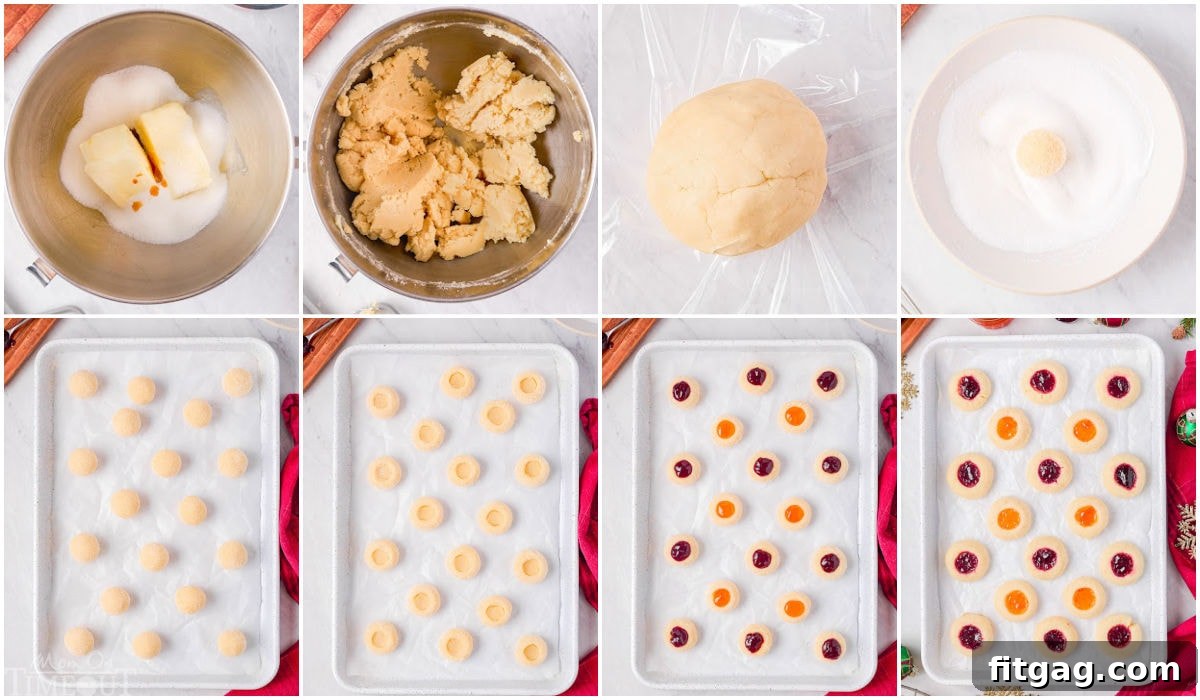
- In the mixing bowl of a stand mixer fitted with the paddle attachment, or using a hand mixer, combine the softened unsalted butter and granulated sugar. Beat on medium speed for two to three minutes until the mixture is light, fluffy, and creamy. This creaming process incorporates air, which contributes to the cookie’s tender texture.
- Add the vanilla extract (or almond extract for a variation) and salt to the butter mixture. Continue beating until these ingredients are thoroughly combined and evenly distributed throughout the dough.
- Scrape down the sides and bottom of the mixing bowl with a spatula to ensure all ingredients are incorporated. Reduce the mixer speed to low. Gradually add the all-purpose flour, mixing until just combined. The dough may initially appear crumbly, but be patient; it will come together after a minute or two of mixing. If it seems stubborn, gently work it with your hands for a quicker consolidation.
- Once the dough forms a cohesive ball, wrap it tightly in plastic wrap. Refrigerate the dough for at least one hour. This chilling period is crucial as it allows the butter to firm up, making the dough easier to handle and preventing the cookies from spreading too much during baking. It also helps intensify the flavors.
Forming and Filling: Crafting Your Cookies
- After the dough has chilled for at least an hour, preheat your oven to 350°F (175°C). Line two baking sheets with parchment paper or silicone baking mats to prevent sticking and ensure even baking.
- Pour 1/3 cup of granulated sugar into a shallow bowl. This will be your coating sugar.
- Scoop out approximately one tablespoon of dough for each cookie. Roll the dough into smooth, uniform balls between your palms. Gently roll each dough ball in the bowl of granulated sugar, ensuring it’s evenly coated. Place the sugar-coated dough balls onto the prepared baking sheets, leaving about 1-2 inches between each cookie.
- Using your thumb or the back of a small round spoon, make a clear indentation in the center of each cookie. Be firm but gentle. For a perfectly even jam well, you can press a second time into the indentation, leveling out any slopes.
- Carefully fill each indentation with about half a teaspoon of your chosen jam. Don’t overfill, as the jam can bubble over during baking.
Baking and Cooling: Achieving Golden Perfection
- Bake the cookies for 14 to 15 minutes, or until the bottom edges just begin to turn a light golden brown. The cookies themselves should remain pale for that classic shortbread look.
- Once baked, remove the baking sheets from the oven. Let the cookies rest on the baking sheet for one additional minute. This allows them to set slightly before you transfer them.
- Carefully move the warm cookies to a wire rack to cool completely. Cooling thoroughly is important before storing to prevent condensation.
- Once completely cool, your beautiful thumbprint cookies are ready to be enjoyed or stored!
Expert Tips and Tricks for Flawless Thumbprint Cookies
Even simple recipes benefit from a few expert insights. Here are some key tips to ensure your thumbprint cookies turn out perfectly every time:
- Preventing Cookies from Spreading: If you notice your cookies are spreading more than desired, it’s usually because the dough has become too warm. Quickly chill your dough in the refrigerator for an additional 10 to 15 minutes before continuing to bake. A cold dough holds its shape better in the hot oven.
- Don’t Overfill the Centers: While it’s tempting to load up on jam, resist the urge to overfill the indentations. Too much jam will cause it to bubble up and overflow during baking, creating a messy rather than pretty cookie. Half a teaspoon is typically sufficient.
- Work with Chilled Dough: As mentioned, chilled dough is significantly easier to work with. If you find your dough becoming sticky or difficult to roll, simply place it back in the refrigerator for 5 to 10 minutes until it becomes more manageable. This brief chill makes a big difference.
- The Magic of Powdered Sugar: For a truly elegant finish, a light dusting of powdered sugar over the cooled cookies adds a touch of sweetness and visual appeal. A dusting wand or a fine-mesh sieve works wonders for an even coating.
- Total Jam Quantity: While you can mix and match jam flavors, remember that the recipe calls for a total of ¼ cup of jam. This quantity is generally enough for 36 cookies without overfilling.
- Dough Consistency: Don’t be alarmed if the mixture looks crumbly at first after adding the flour. Keep mixing for another minute or two, or gently work it with your hands, and it will come together into a smooth, cohesive dough.
- Perfecting the Indentation: The indentation from your thumb can sometimes be uneven. To create a perfectly round and uniform well for your jam, you can press a second time into the indentation, gently leveling out any sloped edges and creating a clean, even hole.
- No Leavening Agents: This is a crucial characteristic of shortbread-style thumbprint cookies. The absence of eggs, baking soda, or baking powder means the cookies will maintain their original shape and size in the oven, ensuring crisp edges and defined centers. Embrace this unique quality!
Creative Variations to Explore
While the classic jam thumbprint cookie is delightful, don’t hesitate to get creative with variations. Here are some ideas to inspire your next batch:
- Alternative Fillings: Beyond jams, explore lemon curd, lime curd, caramel sauce (ensure it’s thick enough), Nutella, or even small pieces of chocolate. For a truly unique twist, try filling with peanut butter and drizzling with chocolate after baking for a “Peanut Butter Blossom” hybrid.
- Flavor the Dough: Add a teaspoon of almond extract to the cookie dough for a delicious pairing, especially with raspberry or cherry jam. You could also try a hint of orange zest or a pinch of cinnamon for a different aromatic profile.
- Different Coatings: Instead of granulated sugar, roll the cookie balls in finely chopped nuts (like pecans or walnuts) for an added crunch and nutty flavor. For a smoother cookie texture, skip the sugar coating entirely.
- Elegant Drizzles: Once the cookies are cooled, drizzle them with a simple glaze made from powdered sugar and a touch of milk or lemon juice. White chocolate or dark chocolate drizzles can also add an extra layer of indulgence.
- Spiced Dough: For a holiday touch, add a pinch of cinnamon, nutmeg, or cardamom to the dough. These spices beautifully complement fruit fillings.
Storage and Freezing Instructions
Proper storage ensures your delicious thumbprint cookies remain fresh and enjoyable for longer:
Storing Baked Cookies
Once your thumbprint cookies have completely cooled, store any leftovers in an airtight container at room temperature. They will maintain their quality for 3 to 5 days. If you wish to extend their freshness, you can refrigerate them for up to a week. Just make sure the container is truly airtight to prevent them from drying out.
Freezing for Future Enjoyment
Thumbprint cookies are excellent candidates for freezing, whether baked or as dough, making them perfect for meal prep or spontaneous cravings!
- To Freeze Baked Cookies: Allow the baked and filled cookies to cool completely. Arrange them in a single layer on a baking sheet and freeze until solid (about 1-2 hours). Once frozen, transfer them to a freezer-safe airtight container or a heavy-duty freezer bag, separating layers with parchment paper to prevent sticking. They can be frozen for up to one month. Thaw at room temperature for a few hours before serving.
- To Freeze Cookie Dough: This is a fantastic option for making cookies in advance. Prepare the dough as directed, then either roll it into a large ball and wrap it tightly in several layers of plastic wrap, or portion it into individual cookie balls before wrapping/storing. Place the wrapped dough in an airtight, freezer-safe ziploc bag or container. The unbaked dough can be frozen for up to 3 months. When ready to bake, thaw the dough overnight in the refrigerator, then proceed with rolling, coating, indenting, and filling as directed in the recipe.

Frequently Asked Questions About Thumbprint Cookies
What kind of jam should I use to fill thumbprint jam cookies?
The best part about thumbprint cookies is the freedom to choose your favorite jam! Raspberry is a classic and very popular choice, as is apricot. Other fantastic options include strawberry, cherry, orange marmalade, or blackberry. We highly recommend using a thicker jam or preserve, as these tend to hold their shape better and are less likely to spread or boil over the cookie while baking in the oven. Avoid very runny jams.
How long do these cookies last?
Thumbprint cookies generally stay fresh for about 3 to 5 days when stored in an airtight container at room temperature. If you need them to last a little longer, storing them in the refrigerator can extend their freshness for up to a week.
Can you freeze thumbprint cookies?
Yes, absolutely! You can freeze both baked thumbprint cookies and unbaked cookie dough. For unbaked dough, roll it into a log or individual balls, wrap tightly, and freeze for up to three months. Thaw overnight in the refrigerator before baking. For baked cookies, ensure they are completely cooled, then freeze in a single layer before transferring to an airtight container for up to a month. Thaw at room temperature before enjoying.
What other variations can I make with these cookies?
There are many exciting variations! You can add a teaspoon of almond extract to the cookie dough, which complements raspberry jam beautifully. Consider drizzling a simple icing across the tops of the cooled cookies for an extra touch of sweetness. For a cookie with a smoother, less textured exterior, you can choose not to roll the dough balls in granulated sugar before baking. Other filling ideas include lemon curd, chocolate ganache, or a thick caramel sauce.
More Delicious Cookie Recipes to Try
If you love baking, especially during the festive season, here are some other fantastic cookie recipes to add to your repertoire:
- Whipped Shortbread Cookies
- Grinch Cookies
- Peppermint Snowball Cookies
- Peppermint Shortbread Cookies
- Peanut Butter Blossoms
- Cookie Empanadas
- Chewy Ginger Molasses Cookies
- Chocolate Crinkle Cookies
- Kolaczki (Polish Cookies)
- Coconut Macaroons
- Almond Joy Cookies
- Coconut Macaroon Blossoms
The Complete Thumbprint Cookie Recipe Card

Thumbprint Cookies
These Thumbprint Cookies are pretty as a picture and the perfect bite-sized cookie for your next holiday gathering! Buttery, shortbread style cookies are coated in sugar and filled with your choice of jam. Perfect for holiday parties, cookie exchanges or a late night treat for Santa!
Course: Cookies, Dessert
Cuisine: American
Keyword: jam thumbprint cookies, thumbprint cookie recipe, thumbprint cookies, thumbprint cookies recipe
Prep Time: 20 minutes
Cook Time: 15 minutes
Chill Time: 1 hour
Servings: 36 cookies
Calories: 99 kcal
Author: Trish – Mom On Timeout
Ingredients
Cookie Dough
- 1 cup unsalted butter, room temperature
- ⅔ cup granulated sugar
- 1 teaspoon vanilla extract (or almond extract)
- ½ teaspoon kosher salt
- 2 cups all-purpose flour
Cookie Coating & Filling
- ⅓ cup granulated sugar
- ¼ cup jam (e.g., apricot and seedless raspberry jam)
Instructions
- In the mixing bowl of a stand mixer fitted with the paddle attachment, add the butter and granulated sugar. Beat on a medium speed for two to three minutes or until the mixture is light and creamy.
- Add the vanilla extract and salt and beat until thoroughly combined.
- Scrape down the sides of the mixing bowl and reduce to a low speed. Gradually add in the flour, scraping down the sides and bottom of the bowl as needed. The dough may not appear like it’s coming together but give it a minute or two. You can also work the dough with your hands to make it come together quicker.
- Roll the dough into a ball and wrap it in plastic wrap. Refrigerate for one hour.
- Once the dough has chilled for an hour, preheat the oven to 350°F (175°C) and line two baking sheets with parchment paper.
- Place 1/3 cup of granulated sugar in a shallow bowl for rolling.
- Scoop one tablespoon of dough and roll into a ball. Coat each ball of dough by rolling in the bowl of sugar. Place the balls on the prepared baking sheets.
- Make an indentation in the center of each cookie using your thumb. Fill with half a teaspoon of jam. Repeat until all cookies are filled.
- Bake for 14 to 15 minutes or until the bottom edges just begin to brown. Let the cookies sit on the baking sheet for one additional minute before moving to a wire rack to cool.
- Let cookies cool completely before storing in an airtight container.
Notes
Storage Information: Store any leftover stained glass cookies in an airtight container at room temperature for 3 to 5 days. To increase longevity, you can store them in your refrigerator for up to a week!
To Freeze: You can freeze these jam-filled cookies as well. Store cooled cookies in a freezer-safe container for up to a month. Thaw to room temperature and enjoy! If you want to make the cookie dough in advance, make the dough, transfer to an airtight, freezer-safe ziploc bag and freeze for up to 3 months. Thaw overnight in the refrigerator. Proceed with the recipe as directed.
Nutrition
Calories: 99kcal | Carbohydrates: 12g | Protein: 1g | Fat: 5g | Saturated Fat: 3g | Polyunsaturated Fat: 0.2g | Monounsaturated Fat: 1g | Trans Fat: 0.2g | Cholesterol: 14mg | Sodium: 34mg | Potassium: 11mg | Fiber: 0.2g | Sugar: 7g | Vitamin A: 158IU | Vitamin C: 0.2mg | Calcium: 3mg | Iron: 0.3mg