Source: EWG.org
As conscious consumers and dedicated parents, we all strive to provide the best for our families, especially when it comes to nutrition. The quest for healthy eating often leads us to consider organic produce, yet the reality of managing a household budget can make selecting what to buy organic a challenging puzzle. Fortunately, an invaluable resource exists to simplify this decision-making process: the annual Shopper’s Guide to Pesticides in Produce, published by the Environmental Working Group (EWG).
This comprehensive guide is a cornerstone for anyone looking to navigate the complexities of food safety and organic purchasing with confidence. Each year, the EWG meticulously analyzes thousands of produce samples and releases two critical lists: the Dirty Dozen, highlighting the twelve fruits and vegetables most contaminated with pesticide residues, and the Clean Fifteen, showcasing the fifteen produce items with the fewest pesticide residues. Understanding these lists empowers you to make smarter choices at the grocery store, ensuring your “organic shopping dollars” are spent where they matter most.
Why the EWG’s Shopper’s Guide is Essential for Your Family’s Health
The Environmental Working Group is a non-profit organization dedicated to protecting human health and the environment. Their annual Shopper’s Guide isn’t just a list; it’s a vital tool based on extensive research and testing. For years, this guide has served as a beacon for consumers concerned about pesticide exposure from their food. The EWG’s methodology is rigorous, analyzing data from over 47,000 samples of fruits and vegetables tested by the U.S. Department of Agriculture and the Food and Drug Administration. What sets their analysis apart is that the produce is tested *as it is typically eaten*, meaning fruits and vegetables are washed and, when applicable, peeled before testing. This provides a realistic snapshot of what consumers are actually exposed to.
Making informed choices about organic versus conventional produce can significantly reduce your family’s dietary exposure to pesticides. While organic options often come with a higher price tag, the Dirty Dozen and Clean Fifteen lists enable you to prioritize your purchases, ensuring you focus on buying organic for the items that carry the greatest pesticide load. This strategy is particularly beneficial for families on a budget, allowing them to maximize health benefits without breaking the bank.
Source: EWG.org
Navigating Your Grocery Store with the Shopper’s Guide
The beauty of the EWG’s Shopper’s Guide lies in its accessibility and practicality. To help consumers like you make smart decisions on the go, the EWG offers a downloadable shopper’s guide. This convenient PDF can be downloaded directly from their website and is also readily available as an app in the Android Market, Apple App Store, and Windows Marketplace. Having this resource at your fingertips means you can quickly reference which fruits and vegetables are most important to buy organic, helping you prioritize your purchases effectively.
It’s crucial to remember the EWG’s overarching recommendation: while buying organic whenever possible is ideal, the benefits of consuming fruits and vegetables profoundly outweigh the potential risks of pesticide exposure. If your budget doesn’t allow for extensive organic purchases, please continue to enjoy a variety of conventional fruits and vegetables. The goal is to increase your intake of these nutrient-rich foods, regardless of whether they are organic or conventionally grown. A diet rich in produce provides essential vitamins, minerals, and fiber that are vital for overall health and well-being.
The Dirty Dozen Plus: Prioritizing Your Organic Purchases
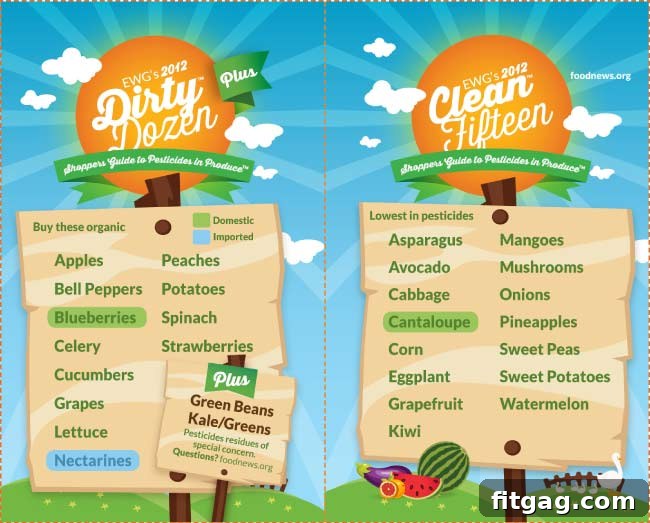
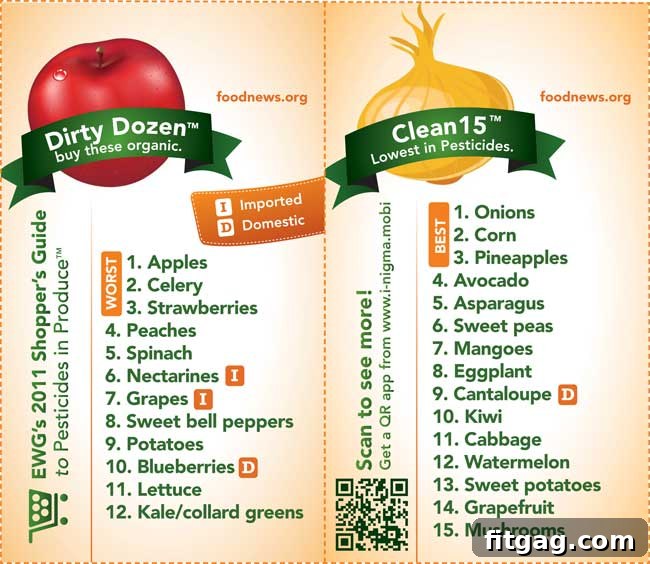
These twelve fruits and vegetables are found to have the highest concentrations of pesticide residues. When you’re making your grocery list and deciding where to spend your organic dollars, these items should be at the top of your organic shopping list. Making a switch to organic for these foods can significantly reduce your family’s exposure to common pesticides.
- Apples
- Celery
- Sweet bell peppers
- Peaches
- Strawberries
- Nectarines – imported
- Grapes
- Spinach
- Lettuce
- Cucumbers
- Blueberries – domestic
- Potatoes
**Plus Category:** The “Plus” indicates items that, while not always among the top 12 in terms of pesticide quantity, may contain residues of pesticides that are particularly concerning. For health-conscious consumers, considering these for organic purchase is also a wise choice:
+Green beans
+Kale/Greens
+ May contain pesticide residues of special concern
The Clean Fifteen: Smart Choices for Conventional Buying
Conversely, the Clean Fifteen lists produce items that consistently show the lowest levels of pesticide residues, making them safer choices to buy conventionally if organic options are not available or if you’re working with a tighter budget. These fruits and vegetables have thick skins that are often peeled, or simply require fewer pesticides during cultivation, reducing your concern about chemical exposure.
- Onions
- Sweet Corn
- Pineapples
- Avocado
- Cabbage
- Sweet peas
- Asparagus
- Mangoes
- Eggplant
- Kiwi
- Cantaloupe domestic
- Sweet potatoes
- Grapefruit
- Watermelon
- Mushrooms
Making Informed Choices for a Healthier Lifestyle
The full list of 45 fruits and vegetables and their detailed rankings can be explored further on the EWG’s website here. Did any specific produce item surprise you by appearing on either the “dirty” or “clean” list? For many, seeing asparagus on the “clean” list is a welcome relief, especially for those who love this versatile vegetable!
This annual guide encourages us to critically evaluate our shopping habits and make conscious decisions that benefit our health and our budgets. While the lists provide excellent guidance, remember that consuming a wide variety of fruits and vegetables is paramount for a healthy diet. Whether you choose organic or conventional, focus on fresh, whole foods to nourish your body and your family. By staying informed with resources like the EWG’s Shopper’s Guide, you’re taking proactive steps towards a healthier, more sustainable lifestyle. Embrace these insights to confidently navigate the produce aisle and make the best choices for your table.

Connect with me!
Linking up here, Home Stories A2Z, Savvy Southern Style, and My Repurposed Life.