
Welcome to a delightful twist on a beloved classic: these incredible Lemon Sweet Rolls! Forget everything you thought you knew about morning pastries, because these vibrant, citrus-infused rolls are here to revolutionize your breakfast and dessert tables. Overflowing with bright, zesty lemon flavor, they offer a wonderfully refreshing alternative to traditional cinnamon rolls, providing a sweet yet tart experience that truly awakens the senses. Each bite delivers a perfect harmony of soft, buttery dough, a luscious lemon filling, and a creamy, tangy glaze, creating an utterly irresistible treat that’s surprisingly simple to master. Whether you’re planning a special holiday brunch, a cozy weekend breakfast, or simply seeking a unique afternoon pick-me-up, these lemon rolls are guaranteed to become a new family favorite. They’re so good, you might just find it impossible to stop at one!
If your heart beats for all things lemon, you’ll be thrilled to discover more of our celebrated citrus desserts. Be sure to explore these other fantastic recipes: Classic Lemon Bars, a velvety Lemon Tiramisu, or our rich and decadent Lemon Meringue Cheesecake. Each offers a distinct yet equally delightful lemon experience.

Discover the Zest: The Ultimate Lemon Sweet Rolls
While my appreciation for the comforting warmth of traditional cinnamon rolls runs deep, there’s an undeniable joy in shaking things up a bit, especially when it results in something as spectacular as these lemon sweet rolls. If you’ve been searching for a fresh, exciting baking project, your quest ends here. Imagine sinking your teeth into a roll where the softest, most pillowy dough intertwines with a vibrant, luscious lemon filling. This creates a mesmerizing blend of tangy sweetness that’s not just delicious, but also incredibly satisfying. These homemade lemon rolls are an irresistible indulgence, perfect for any gathering, from casual family brunches to elegant holiday feasts.
Their appeal extends beyond just taste; they bring a burst of sunshine to any table, captivating guests with their enticing aroma and beautiful golden-brown finish. Whether you’re whipping up a batch for a special weekend brunch with friends, or simply satisfying a craving for a comforting yet sophisticated dessert, these citrus-infused sweet rolls are destined to vanish in record time. I confidently predict that no one will be content with just one; their bright, zesty allure is simply too compelling to resist!

Why These Lemon Sweet Rolls Will Become Your New Favorite
There are countless reasons to fall in love with this lemon roll recipe. From their unique flavor profile to their comforting texture, they offer a truly special baking and eating experience:
Sunshine in Every Bite: Few flavors evoke joy and freshness quite like lemon, making it an exceptional choice for both breakfast and dessert. The vibrant zest and tangy juice from fresh lemons infuse these rolls with an invigorating citrus flavor that instantly brightens your palate. Each bite is a delightful explosion of sunny goodness, reminiscent of a warm, cheerful morning. It’s more than just a treat; it’s a mood booster, bringing a little ray of sunshine into your day.
A Zesty Twist on a Beloved Classic: For those who cherish the soft, tender dough and sweet swirls of classic cinnamon rolls, these lemon sweet rolls present an exciting and refreshing alternative. They retain the comforting, fluffy texture of a traditional roll but surprise with a sweet and tangy lemon filling. This makes them perfect for adventurers eager to explore new flavors or simply anyone looking to add a lively citrus punch to their pastry repertoire.
Remarkably Versatile for Any Occasion: One of the many charms of these lemon rolls is their incredible versatility. Serve them warm straight from the oven for an unforgettable breakfast or a show-stopping brunch, generously drizzled with our creamy lemon cream cheese glaze. They also make a fantastic afternoon pick-me-up, pairing wonderfully with a cup of tea or coffee, or a light and satisfying dessert after any meal. Their bright flavor profile ensures they’re always a welcome addition, no matter the time of day.

Crafting Your Own Homemade Lemon Sweet Rolls: A Step-by-Step Guide
If you’re already familiar with the process of baking cinnamon rolls, then adapting to this lemon sweet roll recipe will be incredibly straightforward! The primary differences lie in the delightful lemon-infused filling and the bright, creamy lemon glaze. However, if you’re new to baking yeasted rolls, there’s absolutely no need to worry. I’ve meticulously detailed every step of the process, ensuring a smooth and successful baking journey for everyone. Follow along closely, and you’ll soon be enjoying your own batch of perfectly baked, zesty sweet rolls.
For your convenience, the full printable recipe card with precise measurements and detailed instructions can be found at the very end of this post, ready for you to reference and enjoy.
Preparing the Lemon Rolls Dough
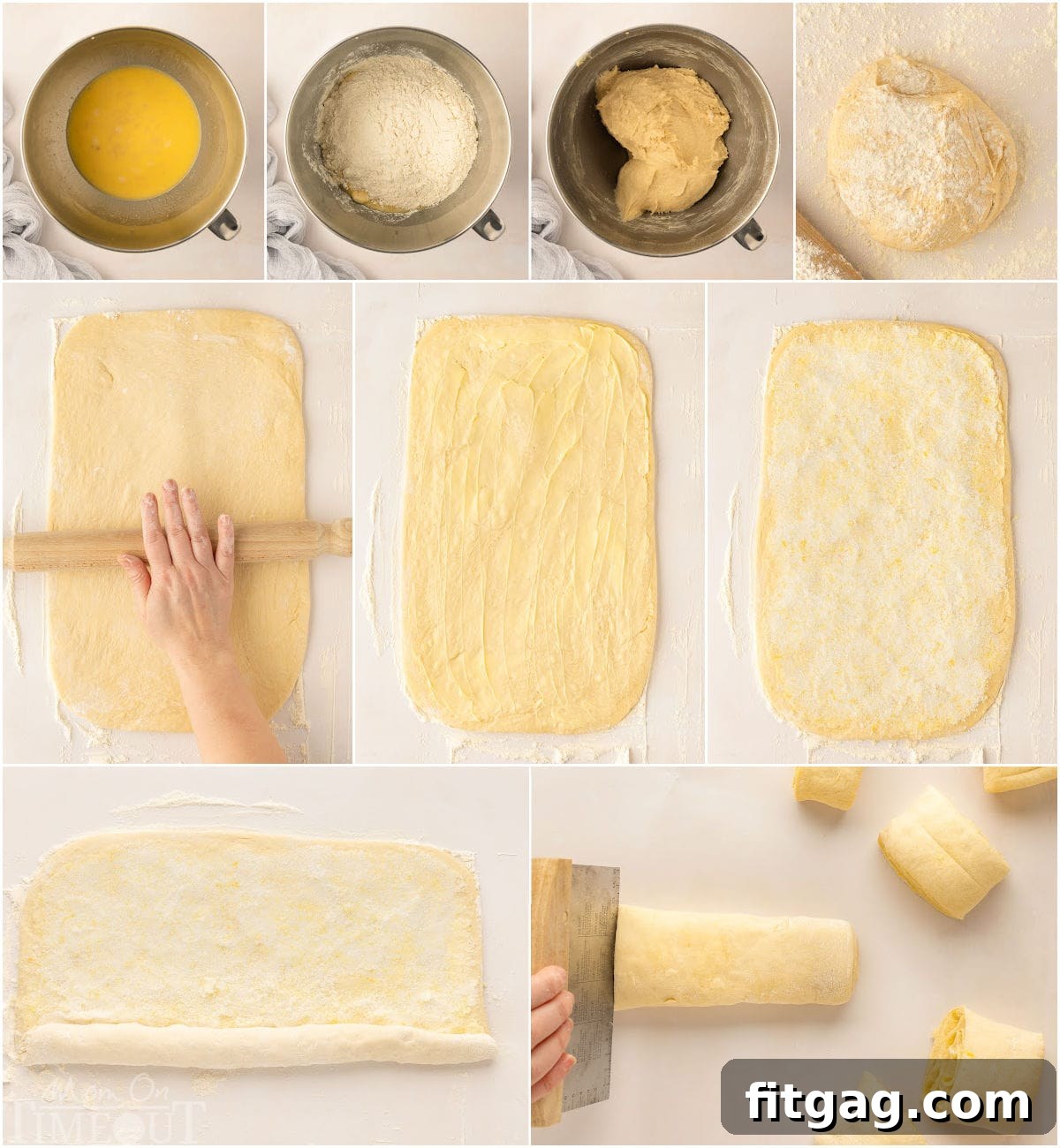
- Combine Wet Ingredients: In a large mixing bowl, gently whisk together the lukewarm milk (ensuring it’s around 110°F to activate the yeast perfectly), instant yeast, a room-temperature egg, granulated sugar, fresh lemon zest, melted butter, and a pinch of salt. Continue whisking until the mixture becomes lightly foamy, indicating that the yeast is active and ready to work its magic.
- Introduce Flour and Knead: Gradually add the bread flour (or all-purpose flour) to the wet ingredients. If using a stand mixer with a dough hook, knead for about 3 minutes until the dough forms a smooth, slightly tacky ball that pulls away from the sides of the bowl. If kneading by hand, mix with a spatula until a rough dough forms, then turn it out onto a lightly floured surface and knead for 5-7 minutes until smooth and elastic.
- First Rise: Lightly coat a clean bowl with olive oil or butter, then transfer the dough to the bowl, turning it once to ensure it’s lightly oiled on all sides. Cover the bowl tightly with plastic wrap and place it in a warm, draft-free spot. Allow the dough to rise until it has visibly doubled in size, which typically takes about an hour, though rise time can vary based on ambient temperature.
- Roll Out the Dough: Once the dough has completed its first rise, gently punch it down to release the air. Turn it out onto a lightly floured surface. Using a floured rolling pin, roll the dough into a large, even rectangle, approximately 12 inches by 16 inches. Aim for an even thickness across the entire surface.
- Prepare the Lemon Filling Base: Dot softened unsalted butter evenly across the entire surface of the rolled-out dough. Then, using the back of a spoon or an offset spatula, gently spread the butter into a thin, uniform layer, ensuring full coverage to create a rich base for the lemon sugar.
- Create the Zesty Lemon Sugar: In a separate small bowl, combine the granulated sugar and fresh lemon zest. Mix them thoroughly with your fingers to release the aromatic oils from the zest into the sugar, intensifying the lemon flavor.
- Generously Apply Filling: Evenly scatter the prepared lemon-sugar mixture over the buttered dough. Be generous, but remember to leave a small border (about half an inch) along one of the long edges of the rectangle. This border will help seal the roll effectively.
- Roll and Slice: Starting from the long side opposite the un-sugared border, tightly roll the dough into a long log shape. As you roll, ensure it’s as snug as possible to create those beautiful, distinct swirls. Once rolled, pinch the seam firmly closed with your fingers to prevent unraveling during baking. For easier, cleaner slicing, cut the log in half, then cut each half into 6 equal pieces, yielding 12 perfectly sized rolls.
- Arrange in Baking Dish: Lightly grease a 9×13-inch baking dish with butter. Carefully place the sliced lemon rolls into the prepared dish, leaving a small, uniform space between each roll. This allows them room to expand during their second rise and baking.
- Second Rise: Cover the baking dish loosely with plastic wrap and return it to a warm spot for a second rise. During this crucial stage, the rolls will puff up significantly and nestled closely together, becoming soft and tender. This second rise typically takes between 45 to 60 minutes.
- Preheat Oven: While the rolls are completing their second rise, preheat your oven to 350°F (175°C). This ensures the oven is at the correct temperature for even baking.
- Bake to Golden Perfection: Once the rolls have fully risen, remove the plastic wrap. Brush the tops of the rolls with one tablespoon of melted butter to encourage a beautiful golden crust. Bake for 28-30 minutes, or until the tops are golden brown and the rolls are cooked through. If the tops brown too quickly, you can loosely tent the dish with aluminum foil.
- Cool Slightly: Remove the baked rolls from the oven. Let them cool in the baking dish for a few minutes while you prepare the glorious lemon cream cheese glaze. They are best served warm!

Crafting the Luxurious Lemon Cream Cheese Glaze
- Cream the Base: In a medium mixing bowl, combine the softened full-fat cream cheese and softened unsalted butter. Beat them together with an electric mixer until the mixture is completely smooth, light, and creamy, with no lumps remaining.
- Add Sweetness and Tang: Gradually add the powdered sugar, a tiny pinch of salt (to balance the sweetness), and the fresh lemon juice to the cream cheese mixture. Continue beating on medium speed until the glaze is wonderfully smooth, pourable, and free of any powdered sugar clumps.
- Adjust Consistency: The beauty of this glaze is its adaptability! If you prefer a thinner, more drizzly consistency, add a few more drops of lemon juice or a splash of milk. For a thicker, more substantial glaze, simply beat in a tablespoon or two more powdered sugar until desired consistency is reached.
- Glaze and Garnish: While your lemon sweet rolls are still warm in the baking dish, generously drizzle the prepared lemon cream cheese glaze over the tops. The warmth of the rolls will allow the glaze to melt slightly, seeping into every nook and cranny. For an extra touch of elegance and visual appeal, scatter fresh lemon slices and a sprinkle of additional lemon zest over the glazed rolls.
- Serve Immediately: These irresistible treats are at their absolute best when served right away, allowing you and your loved ones to savor them while they’re still delightfully warm and the glaze is perfectly gooey.
Pro Tip for Filling: Don’t be shy with the lemon sugar! Spread it generously across the buttered dough to maximize that zesty flavor, but remember to leave a small, clean border (about half an inch) at one of the long edges. This ensures you can create a proper, tight seal when rolling the dough, preventing the filling from escaping.
Storage and Make-Ahead Strategies for Lemon Sweet Rolls
While these lemon sweet rolls are undeniably best enjoyed fresh from the oven, there are several convenient options for storing leftovers or preparing them in advance. This ensures you can enjoy their bright, zesty goodness whenever the craving strikes!
- Refrigerator Storage: Should you find yourself with the rare treat of leftover rolls, store them in an airtight container in the refrigerator for up to 2-3 days. This helps maintain their freshness and prevents them from drying out.
- Freezing Baked Rolls: For longer storage, allow the baked and glazed rolls to cool completely. Wrap each roll individually in plastic wrap, then place them in an airtight freezer-safe bag or container. They can be frozen for up to one month. To reheat, simply place frozen rolls in a preheated oven at 300°F (150°C) for about 15-20 minutes, or until warmed through and soft.
- Reheating Leftovers: The “freshly baked” experience is always superior, but leftover rolls can be easily revived! For a quick reheat, warm individual rolls in the microwave for 20-30 seconds. This helps to soften the dough and warm the glaze back to its delicious, gooey state.
- Making Ahead (Overnight Option): These homemade lemon rolls are perfect for preparing up to 48 hours in advance. After the second rise (Step 10 in the recipe), instead of baking, cover the dish tightly with plastic wrap and place it in the refrigerator. The cold temperature will effectively “put the yeast to sleep,” halting further rising. When you’re ready to bake, remove the rolls from the fridge and let them come back to room temperature for at least an hour before proceeding with baking from Step 11.
- Freezing Before Baking: You can also freeze these lemon rolls before they are baked. Follow the recipe instructions up to Step 10. Once the rolls are arranged in the greased baking dish, cover the dish exceptionally well with multiple layers of plastic wrap and then aluminum foil to prevent freezer burn. Freeze for up to 2-3 weeks. When ready to bake, thaw the covered rolls in the refrigerator for 24 hours. Then, bring them to room temperature for at least an hour before continuing with baking from Step 11.

Frequently Asked Questions About Lemon Sweet Rolls
We’ve gathered some common questions to help you achieve perfect lemon rolls every time:
What kind of flour should I use for the best results?
For an exceptionally tender and fluffy dough, bread flour is highly recommended. It boasts a higher protein content compared to all-purpose flour, which helps develop stronger gluten. This results in a dough that is both elastic and able to trap more air, contributing to that dreamy, soft, and pillowy texture. However, if bread flour isn’t readily available, don’t worry! This versatile recipe has been thoroughly tested with all-purpose flour, and it still yields fantastic results, producing delicious rolls that are soft and delightful.
How long does the dough typically take to rise?
Patience is truly a virtue when it comes to the first rise of your dough. This initial proofing typically takes approximately an hour, but it’s important to remember that rise time can significantly vary depending on several factors, particularly the ambient temperature and humidity of your kitchen. Instead of rigidly sticking to a specific time, focus on visual cues: watch for the dough to visibly double in size. A helpful trick is to snap a quick picture of your dough when you start; it will serve as an excellent visual guide. A properly proofed dough will appear beautifully dome-shaped and, when gently poked with a floured finger, it should slowly spring back, leaving a slight indentation.
Can I substitute active dry yeast for instant yeast?
Absolutely! While this recipe specifically calls for instant yeast due to its convenience (it can be mixed directly with dry ingredients), active dry yeast works perfectly well too. If you’re using active dry yeast, you’ll simply need to activate it first. To do this, combine the warm milk, the active dry yeast, and one tablespoon of the granulated sugar (taken from the dough ingredients) in your mixing bowl. Whisk them together gently and let the mixture sit for 5 to 10 minutes, until it becomes visibly foamy. This indicates the yeast is alive and active. Once foamy, you can then add the remaining dough ingredients (including the additional 2 tablespoons of sugar) and continue with the recipe as written from Step 1.

Exciting Variations to Elevate Your Lemon Sweet Rolls
While these lemon sweet rolls are perfectly delicious as is, they also serve as a fantastic canvas for culinary creativity! Here are some delightful variations to experiment with, adding new dimensions of flavor and texture:
- Citrus Medley: Introduce another layer of brightness by swapping out some of the lemon juice and zest for fresh orange or even lime. A mix of citrus notes can create a wonderfully complex and aromatic profile.
- Berry Bliss: For a burst of fruity freshness, gently fold in fresh blueberries, chopped raspberries, or finely diced strawberries into the lemon filling before rolling the dough. The berries will soften and release their juices during baking, creating pockets of fruity goodness.
- Nutty Crunch: To add a delightful textural contrast and an extra layer of flavor, consider incorporating chopped nuts. Toasted almonds, crunchy pecans, or vibrant green pistachios would all be excellent choices. You can mix them directly into the lemon filling or sprinkle them generously over the rolls just before baking.
- Lighter Glaze Option: If you prefer a less rich topping or simply want the lemon flavor to shine even more brightly, opt for a simpler glaze. Combine just powdered sugar with fresh lemon juice (and perhaps a tiny splash of milk) for a bright, translucent drizzle that’s sweet and tangy without the cream cheese richness.
- Naked Sweetness: For those who appreciate the pure, unadulterated sweetness of the brioche-like dough and the tangy lemon filling, consider skipping the glaze altogether. These rolls are incredibly delicious on their own, allowing the natural flavors of the dough and citrus to take center stage. This is a great option for a less sweet treat.

Essential Baking Tips for Perfect Lemon Sweet Rolls
Achieving bakery-quality lemon sweet rolls at home is entirely within your reach with these expert tips:
- Mind the Milk Temperature: The temperature of your milk is crucial for yeast activation. It’s imperative that the milk is only warmed to around 110°F (43°C). Milk that is too hot (scalding hot) will kill the yeast, preventing your dough from rising, resulting in dense rolls. A microwave can quickly heat milk to the perfect temperature in 30-45 seconds, but microwave wattages vary. If you don’t have a thermometer, perform a simple finger test: dip your clean finger into the milk. It should feel comfortably warm, like a baby’s bathwater, not hot. If you’re ever in doubt, err on the side of slightly cooler rather than too hot.
- Glaze Consistency is Key: Our recipe yields a beautifully light and pourable lemon cream cheese glaze, perfect for drizzling. However, you can easily customize its consistency to your preference. If you desire a thicker, more spreadable glaze, simply beat in additional powdered sugar, a tablespoon at a time, until it reaches your desired thickness. Conversely, if you’d like a thinner, more translucent glaze, gradually add a touch more fresh lemon juice or a tiny splash of milk until it flows beautifully.
- Choose Your Flour Wisely: For the ultimate soft and fluffy texture, bread flour is an excellent choice. Its higher protein content promotes stronger gluten development, which gives the rolls their signature chewiness and soft crumb. However, if bread flour isn’t available, don’t fret! This recipe has been thoroughly tested with standard all-purpose flour, and it still produces wonderfully delicious and tender results. Just be mindful not to over-knead if using all-purpose flour.
- Patience During Rising: The first rise is a critical step, usually taking approximately an hour, but remember that variables like room temperature and humidity play a significant role. Rather than strictly adhering to a timer, look for visual cues: the dough should confidently double in size. A handy trick is to take a quick photo of your dough at the beginning of the rise; it will serve as an excellent visual benchmark. A properly proofed dough will have a lovely dome shape and, when gently poked with a floured finger, will slowly spring back, leaving only a slight indentation.
More Luscious Lemon Treats to Explore
If you’re a devoted fan of lemon desserts, you’re in for a treat! Our collection features a variety of delightful recipes that harness the bright, zesty flavor of lemons. Expand your culinary repertoire with these other fantastic lemon-inspired creations:
- Effortless No-Bake Lemon Pie
- Fluffy Lemon Ricotta Pancakes with Blueberry Sauce
- Refreshing Strawberry Lemonade
- Decadent Lemon Blueberry Cheesecake
- Fun Lemon Rice Krispie Treats

Print Recipe
Pin Recipe
Lemon Sweet Rolls
Ingredients
For the Fluffy Dough
- 1 ½ cups whole milk warmed to 110°F (43°C) to activate yeast perfectly; see notes for temperature test
- 2 ¼ teaspoons instant yeast equivalent to 1 packet; see notes for active dry yeast substitution
- 1 large egg at room temperature for better incorporation
- 3 tablespoons granulated sugar to feed the yeast and add sweetness
- 2 teaspoons lemon zest finely grated, for a burst of citrus flavor in the dough
- ½ teaspoon salt to balance sweetness and enhance flavor
- 3 tablespoons unsalted butter melted, for richness and tender texture
- 3½ to 4¼ cups bread flour or high-quality all-purpose flour, spooned and leveled for accuracy
- olive oil or butter for greasing the rising bowl
For the Zesty Filling
- ¾ cup granulated sugar for the sweet base of the filling
- 1½ tablespoons lemon zest packed, approximately from 2 large lemons, for intense lemon flavor
- 5 tablespoons unsalted butter softened to spread easily over the dough
- 1 tablespoon unsalted butter melted, for greasing the baking dish and brushing rolls before baking
For the Creamy Lemon Glaze
- 4 ounces full fat cream cheese brick style, softened to room temperature
- 2 tablespoons unsalted butter softened to room temperature
- 1 ¼ cups powdered sugar sifted, to ensure a smooth glaze
- pinch of salt enhances the lemon flavor and balances sweetness
- 2 tablespoons lemon juice freshly squeezed, about 1 large lemon, for tangy sweetness
For Garnish (Optional)
- lemon slices thinly sliced, for a beautiful presentation
- lemon zest additional zest for extra fragrance and visual appeal
Instructions
Lemon Rolls
-
In the large bowl of a stand mixer, combine the lukewarm whole milk (ensure it’s around 110°F), instant yeast, large room-temperature egg, granulated sugar, lemon zest, melted unsalted butter, and salt. Whisk vigorously by hand until the mixture is well combined and becomes lightly foamy, signaling that the yeast is active.1 ½ cups whole milk, 2 ¼ teaspoons instant yeast, 1 large egg, 3 tablespoons granulated sugar, 2 teaspoons lemon zest, ½ teaspoon salt, 3 tablespoons unsalted butter
-
Add the bread flour (or all-purpose flour) to the wet ingredients. Attach the dough hook to your stand mixer and knead the dough for approximately 3 minutes until it becomes smooth, elastic, and slightly tacky but no longer sticky to the touch. If you’re kneading by hand, mix with a sturdy spatula until a rough dough forms, then turn it out onto a lightly floured surface and knead continuously for about 5-7 minutes. To test readiness, gently poke the dough with a clean, dry finger; it should feel slightly tacky but not leave residue. If it’s too sticky, add flour a tablespoon at a time, being careful not to over-flour.3½ to 4¼ cups bread flour
-
Lightly grease a clean bowl with olive oil or butter. Place the kneaded dough into the bowl, turning it once to coat its surface with the oil. Cover the bowl tightly with plastic wrap to prevent a skin from forming, and leave it in a warm, draft-free spot to rise. Allow it to proof until it has visibly doubled in size, which typically takes about an hour, depending on your kitchen’s temperature.olive oil
-
Once the dough has successfully completed its first rise, gently punch it down to release the trapped air. Turn the dough out onto a lightly floured surface. Using a floured rolling pin, carefully roll the dough into a large and even rectangle, aiming for dimensions of roughly 16 inches by 12 inches. Ensure the thickness is consistent across the entire rectangle.
-
In a small bowl, combine the ¾ cup granulated sugar and 1½ tablespoons of packed lemon zest. Use your fingertips to rub the zest into the sugar; this action helps release the fragrant oils from the lemon zest, intensifying its flavor for the filling.¾ cup granulated sugar, 1½ tablespoons lemon zest
-
Take the 5 tablespoons of softened unsalted butter and dot it evenly all over the surface of the rolled-out dough. Then, using the back of a spoon or an offset spatula, gently spread the butter into a smooth, even layer that covers the entire dough rectangle, right to the edges.5 tablespoons unsalted butter
-
Generously and evenly sprinkle the fragrant lemon-sugar mixture directly on top of the buttered dough. Ensure good coverage, but remember to leave a small, clean border (about half an inch) along one of the long edges of the rectangle. This will help you get a tight seal when rolling.
-
Starting with the long side facing you (the one without the clean border), begin to tightly roll the dough rectangle into a long, uniform log shape. Roll as snugly as possible to create beautiful swirls. Once rolled, firmly pinch the seam closed with your fingers to prevent any unraveling during baking. For easier and cleaner slicing, gently cut the long dough log in half.
-
Using a very sharp knife, a piece of unflavored dental floss, or a dough cutter, carefully cut each half of the dough log into 6 equal pieces. This will give you a total of 12 beautifully swirled lemon rolls.
-
Grease a 9×13-inch baking dish generously with the 1 tablespoon of melted butter. Arrange the cut lemon rolls into the prepared dish, ensuring there is a small, even space between each one. This allows them adequate room to expand beautifully during their second rise and baking.1 tablespoon unsalted butter
-
Cover the baking dish loosely with plastic wrap and place it in a warm, draft-free spot for the second rise. During this stage, the rolls will puff up considerably and nestle close together, becoming incredibly tender. The second rise typically takes 45-60 minutes, depending on the warmth of your environment. (Refer to the notes section for instructions on preparing these rolls overnight.)
-
About 15 minutes before the end of the second rise, preheat your oven to 350°F (175°C). This ensures the oven is perfectly ready when your rolls are.
-
Once the lemon rolls have beautifully puffed up and completed their second rise, carefully remove the plastic wrap. Lightly brush the tops of the rolls with one tablespoon of melted butter; this will help them achieve a gorgeous golden-brown color and a slightly crisp crust. Bake for 28 to 30 minutes. Begin checking for doneness around the 25-minute mark. If they haven’t achieved a lovely golden-brown hue, continue baking for an additional 5-10 minutes, or until perfectly colored and cooked through. If they are browning too quickly but still need to cook internally, loosely tent the dish with aluminum foil.
-
Carefully remove the baked lemon rolls from the oven. Set the dish aside on a wire rack to cool for a few minutes while you prepare the irresistible lemon cream cheese glaze.
Lemon Cream Cheese Glaze
-
In a large mixing bowl, combine the softened full-fat cream cheese and softened unsalted butter. Beat these together with an electric mixer on medium speed until the mixture is completely smooth, light, and creamy, ensuring there are no lumps of cream cheese remaining.4 ounces full fat cream cheese, 2 tablespoons unsalted butter
-
Add the sifted powdered sugar, a tiny pinch of salt (to enhance the flavor), and the fresh lemon juice to the creamed butter and cream cheese. Continue beating until the glaze is wonderfully smooth, luscious, and has a pourable consistency. You have full control over the glaze’s texture: for a thinner, lighter drizzle, add a touch more lemon juice or a splash of milk; for a thicker, more substantial topping, simply beat in additional powdered sugar until your desired consistency is achieved.1 ¼ cups powdered sugar, pinch of salt, 2 tablespoons lemon juice
-
While your freshly baked Lemon Sweet Rolls are still warm in their dish, generously drizzle the creamy lemon glaze over them. The residual warmth from the rolls will allow the glaze to melt slightly, creating a beautiful, glossy finish that seeps into every tender crevice. For an elegant final touch, scatter thin lemon slices and additional lemon zest over the glazed rolls as garnish.lemon slices, lemon zest
-
Serve these delectable rolls right away, while they are still wonderfully warm and the glaze is perfectly gooey and inviting. Enjoy every tangy, sweet bite!
Notes
Comprehensive Storage and Make-Ahead Information
While these Lemon Sweet Rolls are undeniably at their peak freshness and flavor when enjoyed warm from the oven, here’s all the essential information you’ll need for storing any delightful leftovers, or for planning to prepare these rolls in advance for ultimate convenience:
- Refrigerator: To maintain their freshness and prevent drying, store any leftover baked and glazed Lemon Sweet Rolls in an airtight container in the refrigerator for a period of 2 to 3 days.
- Freezing Baked Rolls: For extended storage, allow your freshly baked and glazed rolls to cool completely to room temperature. Individually wrap each roll tightly in plastic wrap, then place them into a heavy-duty freezer bag or an airtight freezer-safe container. They can be frozen for up to one month. To reheat from frozen, simply place the rolls in a preheated oven at 300°F (150°C) for approximately 15-20 minutes, or until they are warmed through and delightfully soft.
- Reheating Leftover Rolls: Although fresh is always best, leftover rolls can be wonderfully revived! For quick enjoyment, reheat individual rolls in the microwave for about 20-30 seconds. This brief warming period will gently soften the dough and return the glaze to a deliciously gooey consistency.
- Making Ahead (Overnight Option): These Lemon Sweet Rolls can be expertly prepared up to 48 hours in advance, making them perfect for stress-free breakfasts or brunches. After the second rise is complete (following Step 10 in the recipe), cover the baking dish securely with plastic wrap and transfer it to your refrigerator. The cold temperature will effectively slow down the yeast’s activity, preventing excessive rising. When you’re ready to bake, remove the dish from the fridge and allow the rolls to sit at room temperature for at least an hour (or up to two) before proceeding with baking from Step 11.
- Freezing Unbaked Rolls: You can also freeze these Lemon Sweet Rolls before they are baked. Follow the recipe instructions precisely up to Step 10 (placing the rolls in the baking dish after their second rise). Instead of baking, cover the dish exceptionally well with several layers of plastic wrap, followed by a layer of aluminum foil to prevent any freezer burn. Place the covered dish in the freezer for up to 2-3 weeks. When you’re ready to bake, first thaw the covered rolls in the refrigerator for 24 hours. After thawing, bring them to room temperature for at least an hour before baking, then proceed directly from Step 11 of the recipe.
Additional Important Notes and Expert Tips
- Precise Milk Temperature is Key: It is critically important that the whole milk used in the dough is warmed to precisely 110°F (43°C). Milk that is too hot (scalding hot) will inadvertently kill the active yeast, preventing your dough from rising and resulting in dense, heavy rolls. A microwave can achieve this perfect temperature quickly, typically within 30-45 seconds, but please be aware that microwave wattages vary significantly. If you don’t possess a kitchen thermometer, you can perform a reliable finger test: simply dip your clean finger into the warmed milk. It should feel comfortably warm to the touch, similar to the temperature of a baby’s bathwater. If you are ever unsure, it’s always safer to err on the side of slightly cooler rather than too hot, as cool milk will just slow the rise, while hot milk will halt it entirely.
- Flour Choice for Optimal Texture: For creating a truly soft, airy, and fluffy dough that is a dream to work with, bread flour is an outstanding choice. It is packed with a higher protein content, which contributes to excellent gluten development. However, if bread flour is not readily available, this recipe has been thoroughly tested with standard all-purpose flour, and it performs beautifully, yielding equally delicious and tender results.
- The Art of Patience in Rising: Patience is an essential ingredient for the first rise of your dough. This initial proofing typically takes approximately an hour, though the exact duration can be influenced by various factors, most notably the ambient temperature and humidity in your kitchen. Instead of rigidly watching the clock, observe the dough: it should visibly double in size. A helpful visual guide can be achieved by taking a quick photograph of your dough when you begin the rising process. A properly proofed dough will exhibit a beautiful dome shape and, when gently poked with a floured finger, it will slowly spring back, leaving a slight, persistent indentation.
- Customizing Glaze Consistency: We designed our lemon cream cheese glaze to be light and wonderfully pourable, perfect for drizzling over warm rolls. However, you can easily adjust its consistency to your exact preference. If you find yourself desiring a thicker, more spreadable glaze, simply incorporate more powdered sugar, a tablespoon at a time, until it reaches your desired texture. Conversely, if you prefer a thinner, more delicate drizzle, add just a touch more fresh lemon juice or a small splash of milk, mixing until the perfect consistency is achieved.
- Substituting Yeast Types: While this recipe specifies instant yeast, which can be directly combined with dry ingredients, you can certainly use active dry yeast if that’s what you have on hand. To do so, you’ll need to activate it first: in your mixing bowl, combine the warm milk, the specified amount of active dry yeast, and one tablespoon of the granulated sugar (taken from the dough ingredients). Whisk gently to combine and let the mixture sit for 5 to 10 minutes until it becomes foamy, indicating the yeast is active. Then, proceed with adding the remaining dough ingredients as written in the recipe (remembering to add the remaining 2 tablespoons of sugar).