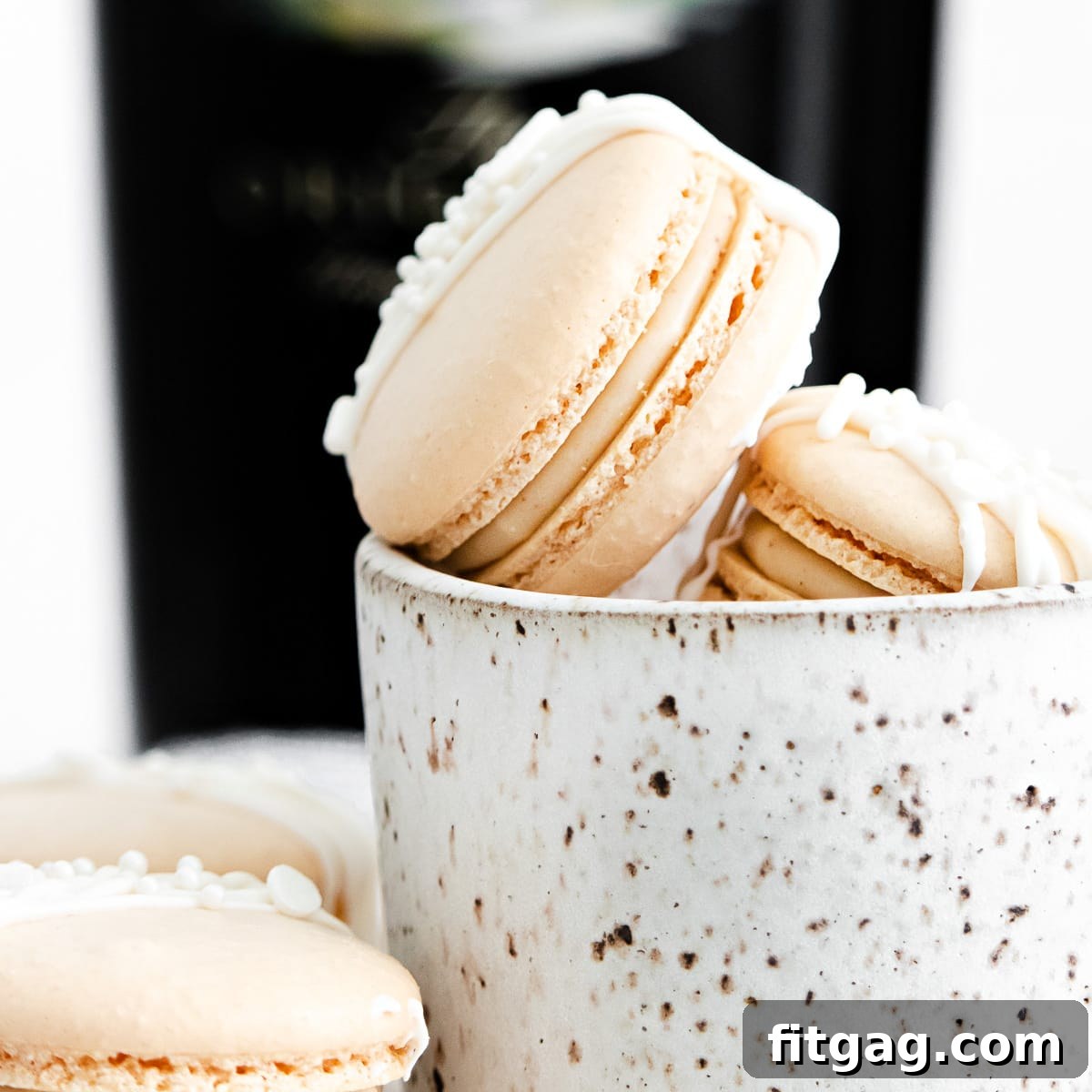
Step into the enchanting world of French patisserie with a delightful twist: Irish Cream Macarons. These exquisite, light, and airy confections are far more than just cookies; they are a delicate balance of crisp outer shell and a tender, chewy interior, harmoniously brought together by a rich, velvety Irish cream filling. Perfect for celebrating St. Patrick’s Day or simply indulging in a touch of sophisticated sweetness any time of year, these picturesque treats are guaranteed to impress anyone lucky enough to taste them. Forget complicated desserts; with our easy-to-follow recipe, you’ll master the art of macaron making and create these irresistible homemade delights that truly stand out.
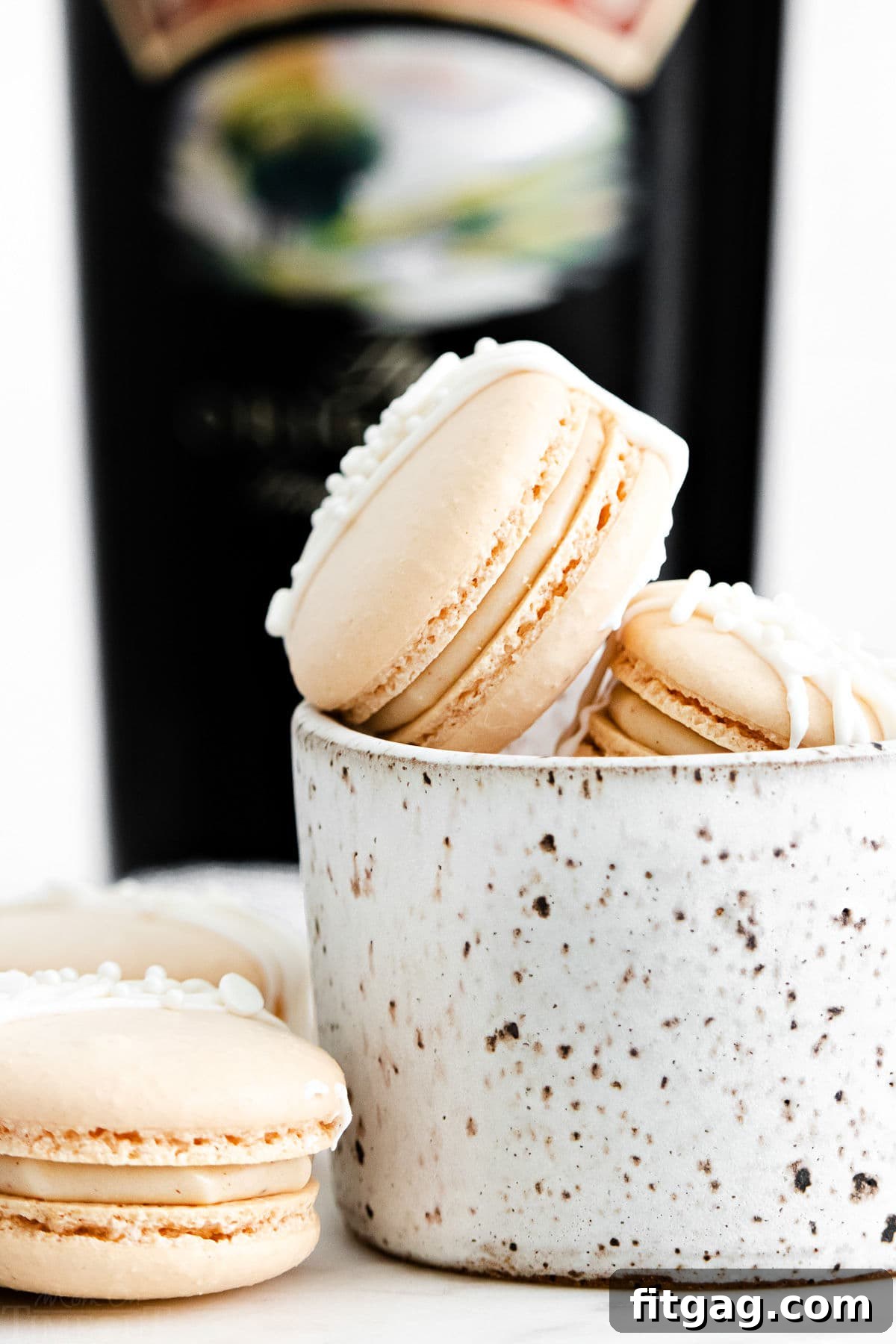
Beyond their undeniably beautiful appearance, Irish Cream Macarons offer a symphony of textures and flavors that captivate the palate. The initial crunch of the delicate almond shell gives way to a soft, melt-in-your-mouth center, while the luxurious Irish cream filling adds a decadent, aromatic depth that is both comforting and sophisticated. Many bakers find the process of making macarons a bit intimidating, often viewing it as a highly technical challenge. However, I assure you, it’s a deeply rewarding culinary journey that builds confidence with each carefully crafted batch. While often considered a challenging pastry, with my detailed, step-by-step guidance, even novice bakers will soon be crafting perfectly formed Irish Cream Macarons with those coveted ruffled “feet,” ready to showcase their newfound baking prowess.
While these sweet and creamy cookies are an absolute must-make for St. Patrick’s Day, bringing a festive touch of green or gold to your dessert table, their universal appeal makes them a fantastic dessert for any occasion throughout the year. Imagine serving these elegant treats at a bridal shower, a sophisticated afternoon tea, a birthday celebration, or simply enjoying them with a freshly brewed cup of coffee on a quiet afternoon. Their unique flavor profile, combining the classic almond notes of a macaron with the sophisticated warmth of Irish cream, makes them utterly heavenly and truly impossible to resist. Once you experience the delicate balance of flavors and textures in these Irish Cream Macarons, you’ll find yourself craving them time and time again.
What Exactly Are Macarons? Unveiling a French Classic
Macarons are a classic French confection, though their true origins are often debated, with some culinary historians tracing them back to Italy, where they were brought to France by Catherine de’ Medici in the 16th century. Regardless of their precise lineage, these delicate sandwich cookies have graced European patisseries for centuries, evolving into the sophisticated treats we adore today. It’s important to distinguish them from “macaroons,” which are dense, chewy coconut cookies, as macarons are distinctly different and identifiable by several key features: their smooth, dome-shaped tops, the iconic ruffled “feet” (the delicate, frilly edge where the top and bottom shells meet), and a soft, chewy interior.
At their core, the macaron shells are crafted from a precise blend of egg whites, finely ground almond flour, granulated sugar, and powdered sugar. This seemingly simple combination of ingredients requires careful technique and attention to detail to achieve the signature light, crisp-on-the-outside, chewy-on-the-inside texture. The magic happens during the creation of the meringue, which is then carefully folded with the dry ingredients in a process known as “macaronage.” This delicate mixing step is crucial for developing the batter to the perfect consistency – not too stiff, not too runny – allowing it to pipe smoothly and form the characteristic “feet” during baking. Once baked and cooled, these airy shells are then filled with a wide variety of delectable fillings, ranging from vibrant fruit ganaches to rich buttercreams. In this particular recipe, we elevate the classic macaron with a sumptuous, subtly boozy Irish cream filling, transforming them into an even more irresistible indulgence that marries traditional elegance with a festive, modern twist.
Why Irish Cream Macarons? A Flavor Symphony for the Senses
The enduring beauty of macarons lies not only in their elegant appearance but also in their incredible versatility. While cherished traditional flavors like vanilla, chocolate, and pistachio will always hold a special place, incorporating unique ingredients allows for exciting and innovative culinary creations that surprise and delight. Irish cream, with its distinctive blend of rich Irish whiskey, fresh cream, and subtle cocoa notes, provides a wonderfully complex and deeply satisfying flavor profile that perfectly complements the delicate, nutty almond notes of the macaron shell. It’s a masterful marriage of textures and tastes: the initial crisp snap of the shell, followed by the soft, ethereal chewiness within, all enveloped by the smooth, subtly alcoholic, and sweet creaminess of the filling. This harmonious blend creates a truly memorable dessert experience.
This exquisite flavor combination makes Irish Cream Macarons exceptionally suitable for festive occasions like St. Patrick’s Day, where a touch of Irish spirit and celebration is always welcome. They offer a sophisticated alternative to traditional holiday treats. However, the inherent sophistication and comforting notes of Irish cream transcend mere seasonal boundaries. It’s a flavor that evokes warmth, luxury, and a sense of indulgent comfort, making these macarons a delightful treat for cozy autumn gatherings, elegant winter celebrations, or as an unexpected gourmet surprise any time of the year. The depth and character of the Irish cream elevate the overall experience, transforming a simple cookie into a truly unforgettable and highly sought-after dessert. Their unique taste makes them an ideal choice for gifting or simply as a special indulgence for yourself and loved ones.
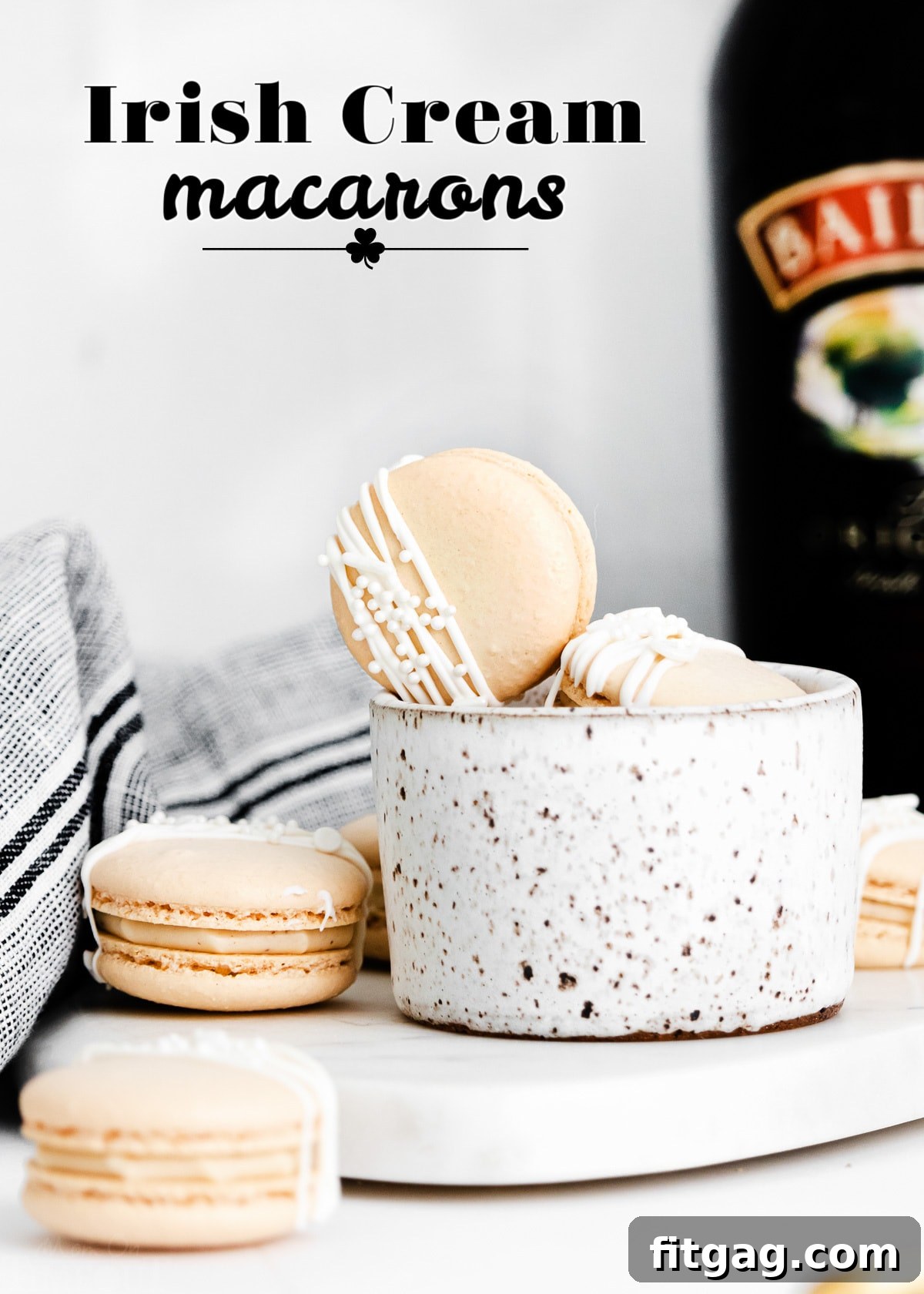
Essential Ingredients for Macaron Success: Quality and Preparation are Key
The ingredient list for these impressive Irish Cream Macarons is surprisingly short, emphasizing the elegance that comes from simplicity and quality. However, the precise measurement, quality, and preparation of each individual ingredient are absolutely crucial for achieving that coveted perfect macaron structure and flavor. Using a reliable digital kitchen scale for all measurements is highly recommended, as baking macarons is as much a science as it is an art, and even slight inaccuracies can impact the final result.
For the Delicate Macaron Shells, You’ll Need:
- Egg Whites: This is truly the foundational ingredient for macaron shells. For optimal results, I highly recommend using egg whites that have been separated from the yolks at least 24 hours in advance and allowed to come to room temperature. This “aging” process helps to slightly dry out the whites, creating a more stable meringue that can hold more air, which is essential for achieving light, airy shells with those perfect, characteristic “feet.” Room temperature egg whites also whip up faster and achieve significantly greater volume, leading to a more consistent meringue.
- Granulated Sugar: This sugar is vital for stabilizing the egg whites and creating a strong, glossy meringue. During the whipping process, it helps the egg whites stretch and maintain their structure, ultimately contributing to the smooth, crisp texture of the macaron shells. It also provides the necessary sweetness.
- Powdered Sugar (Confectioners’ Sugar): Much finer than granulated sugar, powdered sugar contributes significantly to the delicate, smooth texture of the macaron shell. It helps absorb excess moisture and prevents the shells from becoming too dense or gritty. Always remember to sift it thoroughly with the almond flour to ensure there are no lumps, which can ruin the smooth surface of your macarons.
- Almond Flour: Blanched almond flour is the absolute key to the macaron’s unique flavor and signature delicate texture. It is imperative that the almond flour is very finely ground to prevent a grainy texture in the finished shells. Ensure you are using blanched almond flour, not almond meal, which includes the skin and will result in a much rougher, speckled shell. Sifting the almond flour (often twice) is a critical step for achieving that perfectly smooth and elegant macaron finish.
For the Rich Irish Cream Filling, You’ll Need:
- Cream Cheese: Softened cream cheese forms the luscious, creamy base of our decadent filling. Its subtle tanginess beautifully balances the sweetness of the Irish cream, creating a rich yet wonderfully balanced consistency that isn’t overly heavy. Always ensure your cream cheese is at room temperature before you begin mixing, as this is essential for achieving a lump-free, perfectly smooth mixture.
- Irish Cream: This is where the characteristic magic happens and the star flavor truly shines! Any high-quality brand of Irish cream liqueur will work beautifully, but for the most authentic and robust flavor, I highly recommend using a reputable brand like Bailey’s. A cheaper or generic brand might lack the depth, complexity, and characteristic flavor that makes this filling truly special and memorable. Its distinct taste infuses the macarons with a sophisticated, celebratory spirit.
- Powdered Sugar: Added for a delicate touch of sweetness and to help thicken the filling to a perfectly pipeable consistency. Its fine, smooth texture ensures that your filling will be silky and non-gritty, complementing the delicate macaron shells.
- Cinnamon: Just a pinch of finely ground cinnamon adds a wonderful warmth and subtle depth to the Irish cream filling. This spice enhances its overall flavor profile without overpowering the main Irish cream notes, providing a subtle but impactful aromatic addition that elevates the entire macaron.
How to Master the Art of Perfect Irish Cream Macarons: A Detailed Guide
Creating macarons can initially seem like a formidable culinary challenge, but with a generous dose of patience, meticulous attention to detail, and precise execution, it’s an incredibly rewarding and satisfying baking experience. Don’t be intimidated by the number of detailed steps; each one plays a crucial, interconnected role in achieving the elusive perfect macaron. Just follow these instructions carefully, taking each step one at a time, and you’ll soon be enjoying your very own batch of flawless, bakery-quality Irish Cream Macarons.
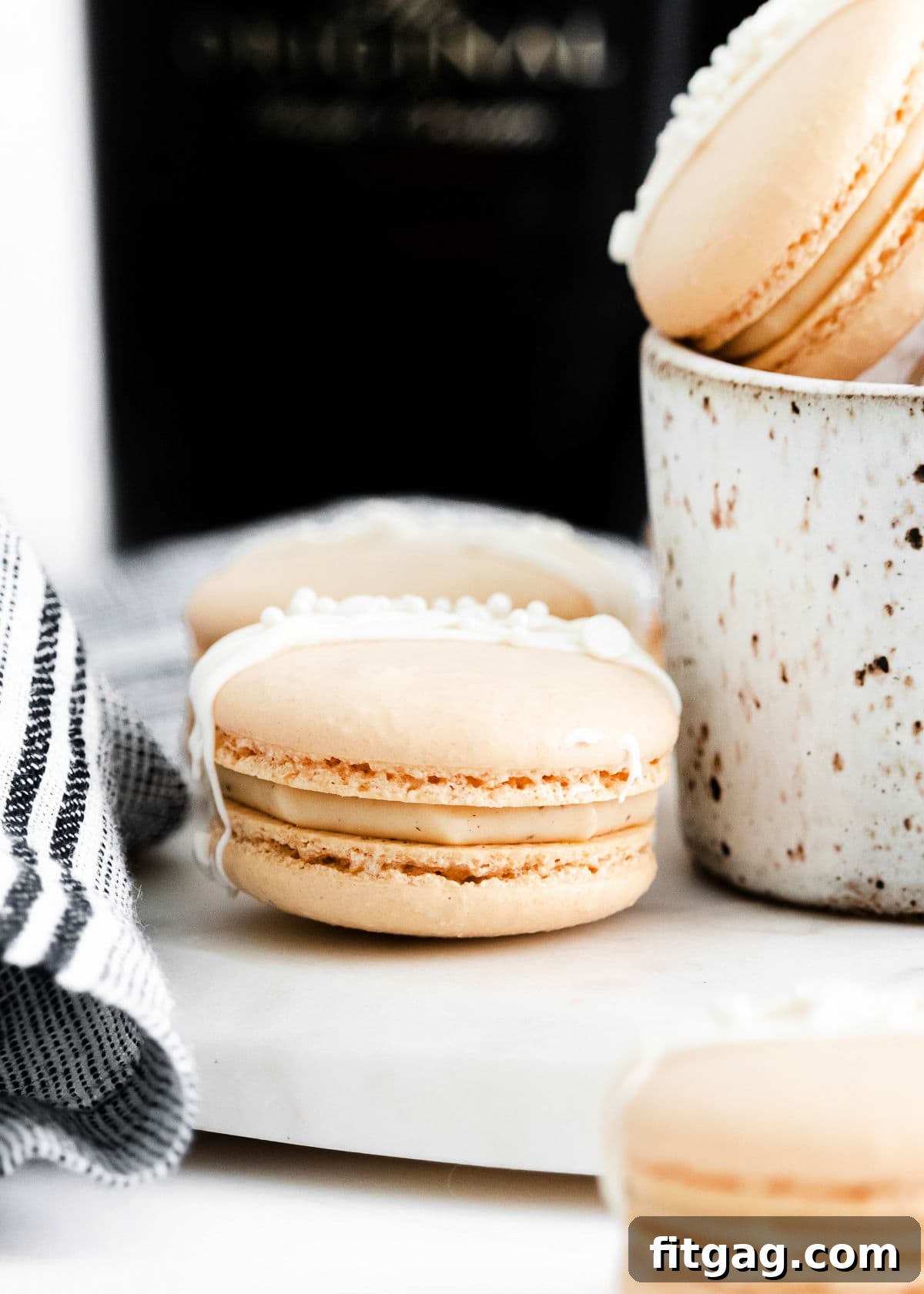
Step-by-Step Shell Preparation: The Foundation of Perfect Macarons
- Begin by thoroughly preparing your baking sheets. Line two half-sheet baking pans with high-quality silicone baking mats or parchment paper. If you opt to use parchment paper, ensure it lays perfectly flat on the baking sheet to prevent any risk of lopsided macarons. You can temporarily secure the corners with a tiny dab of macaron batter or a small piece of tape before you start piping, remembering to remove any tape before the pans go into the oven.
- Create a classic double boiler setup. Fill a small saucepan halfway with water and bring it to a gentle simmer over medium heat. Carefully place a heatproof bowl (preferably stainless steel or glass) over the simmering pan, ensuring that the bottom of the bowl does not make direct contact with the simmering water.
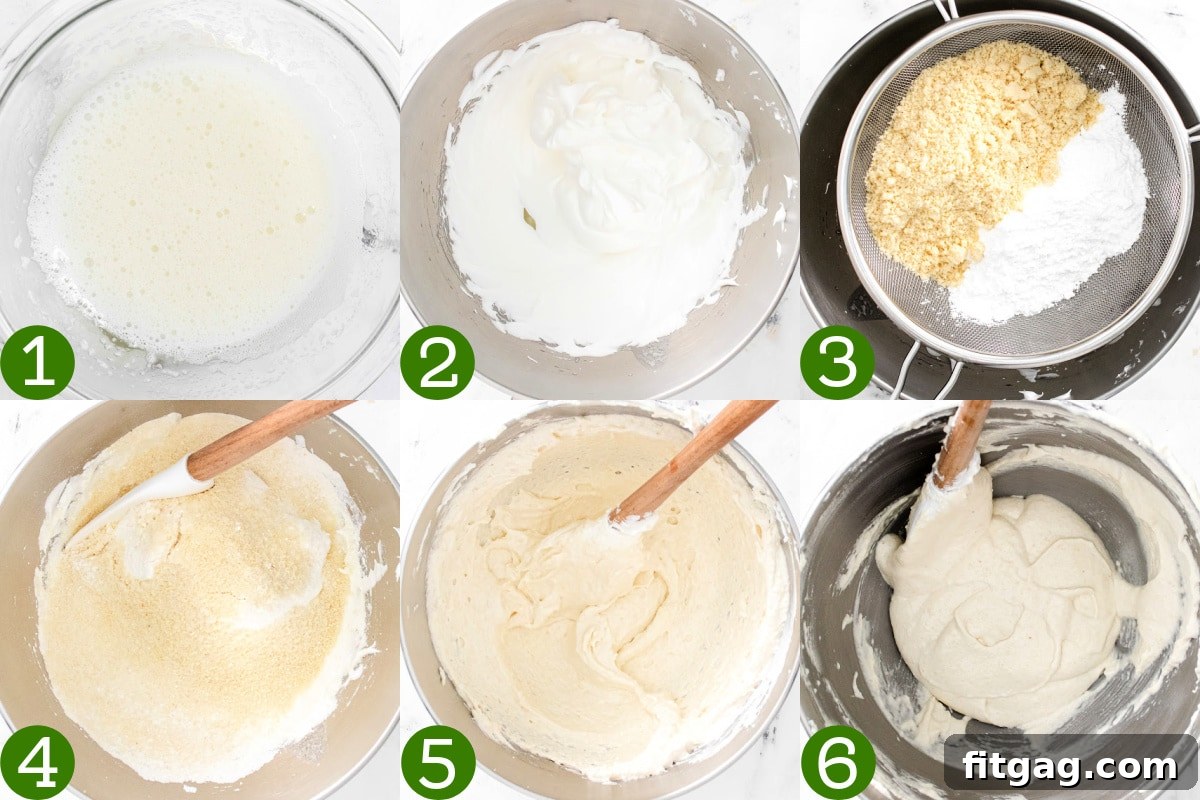
- Add the aged, room-temperature egg whites and the granulated sugar to the heatproof bowl. Whisk the mixture constantly but gently for approximately 2 to 3 minutes, until the granulated sugar has completely dissolved. You can test for dissolution by rubbing a small amount of the mixture between your thumb and forefinger; it should feel perfectly smooth, with no gritty sugar crystals remaining.
- Carefully transfer the warm egg white and sugar mixture to an impeccably clean and dry bowl of a stand mixer fitted with the whisk attachment. Beat the mixture on medium-high speed until it transforms into a glossy, voluminous meringue that forms stiff peaks. When you lift the whisk, the peaks should stand firm and tall without collapsing or drooping, indicating a stable meringue.
- In a separate, medium-sized bowl, sift together the powdered sugar and the finely ground almond flour. Sifting these dry ingredients, potentially twice, is crucial to ensure maximum smoothness and to remove any lumps, which could result in an uneven macaron shell texture.
- Gently begin to fold the sifted dry ingredients into the prepared meringue using a flexible rubber spatula. This initial folding should be careful and deliberate, aiming to incorporate the dry ingredients without immediately deflating the egg whites too much. Make sure to scrape down the sides of the bowl as you go, ensuring everything is thoroughly combined.
- Now comes the “macaronage” – this is the crucial step where you develop the correct batter consistency. Using your rubber spatula, gently “smush” or spread the batter against the sides of the bowl in a circular motion. Then, scrape it back into the center and fold it all back together. Repeat this process, incrementally deflating the egg whites, until the batter flows smoothly off the spatula like “lava” in a continuous ribbon. This consistency is often described as flowing like molten lava or pancake batter.
To accurately test the macaron batter’s consistency, lift your spatula high above the bowl and let the batter drizzle back into itself. If you can slowly and continuously draw a “figure 8” with the flowing batter without the stream breaking, then it has achieved the perfect “lava-like” consistency and is ready for piping. If the stream breaks or falls in clumps, continue the gentle smushing and folding process a few more times, checking frequently until the desired smooth, flowing ribbon is achieved. Be mindful not to overmix, as this will result in overly runny batter and flat, oil-leaking macarons; conversely, undermixing will lead to bumpy, peaked, or cracked shells without the signature “feet.”
Piping and Baking Your Macaron Shells to Perfection
- Carefully transfer the perfectly mixed macaron batter into a piping bag that has been fitted with a large, open round tip (a #12 or #10 piping tip works wonderfully for standard-sized macarons).
- Holding the piping bag strictly perpendicular to the baking surface (about half an inch above the mat), pipe 1-inch circles onto your prepared silicone mats. Ensure you leave ample space, approximately 2 inches, between each macaron. Silicone macaron mats often come with pre-drawn circles, which greatly assist in maintaining consistent size and shape, a crucial element for matching shells later.
- Once a baking sheet is fully piped with macarons, firmly tap the entire tray several times against your kitchen counter. This crucial step helps release any trapped air bubbles within the batter, which can cause hollow or cracked shells during baking. You’ll observe tiny air bubbles rising to the surface; pop any stubborn ones with the tip of a toothpick for a perfectly smooth top. The shells will also flatten slightly and settle into a perfectly round shape.
- Allow the piped macaron shells to “rest” at room temperature for approximately 30 to 60 minutes, or until a thin, dry “skin” forms on top. This means the tops should feel completely dry to the touch and no longer sticky. This resting period is absolutely essential for developing the characteristic “feet” during baking and preventing the shells from cracking in the oven. The exact time will depend on the humidity of your kitchen.
- While the macaron shells are resting and developing their skin, preheat your oven to 325°F (160°C). Maintaining a consistent oven temperature is critically important for macaron success; consider using an oven thermometer for accuracy.
- Bake the macaron shells one baking sheet at a time for 12 to 15 minutes. If your oven is known for having hot spots, rotate the baking sheet halfway through the baking time to ensure even cooking and color. The macarons are done when their “feet” are well-defined and stable, and the shells do not wobble or jiggle when gently nudged on the baking sheet.
- Once baked, carefully slide the silicone mat (or parchment paper) with the macarons onto a wire cooling rack and allow the macaron shells to cool completely to room temperature before attempting to remove them. Rushing this step can cause them to stick to the mat or break apart.
Crafting the Irresistible Irish Cream Filling
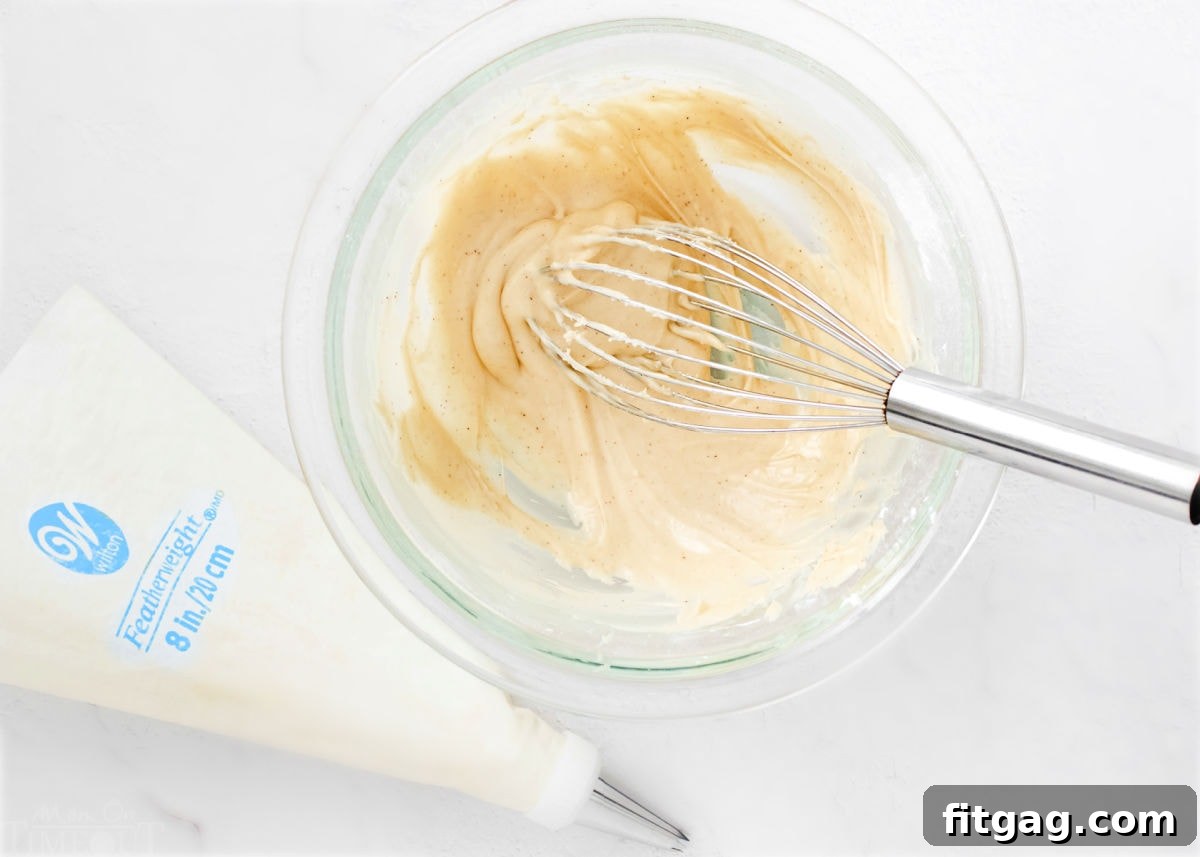
- In a medium-sized mixing bowl, combine the softened cream cheese and the Irish cream liqueur. Whisk them together thoroughly until the mixture is completely smooth and free of any lumps. Ensure both ingredients are at room temperature for the best, most uniform consistency.
- Gradually whisk in the powdered sugar and the pinch of ground cinnamon until all ingredients are well combined and the filling achieves a thick, creamy, and spreadable consistency. Taste and adjust sweetness if desired.
- Transfer this decadent Irish cream filling into a piping bag, ready for the final assembly of your macarons.
Assembling and “Aging” Your Irish Cream Macarons for Optimal Flavor
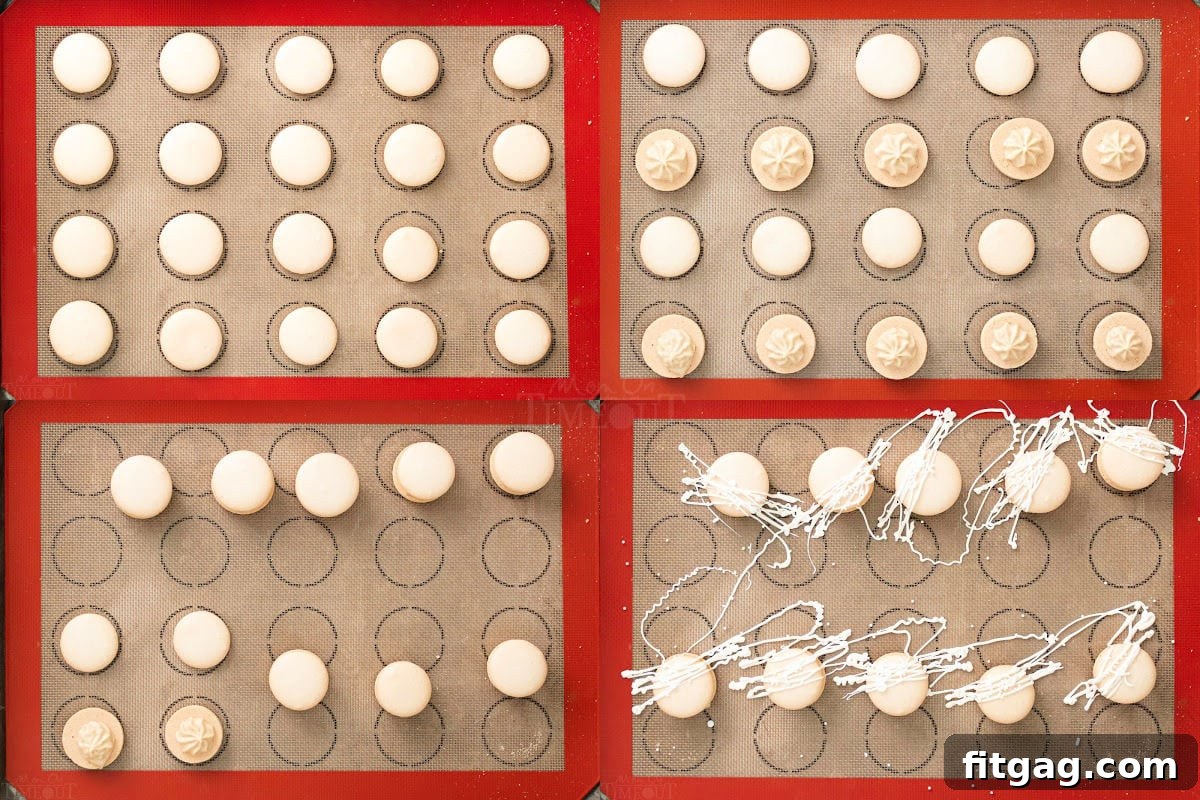
- Carefully sort through your completely cooled macaron shells, pairing them up by similar size. This crucial initial step ensures that your finished macarons look uniform and elegant, giving them a more professional and polished appearance.
- Pipe a small dollop (or a ring, depending on your preference) of the Irish cream filling onto the flat side of one macaron shell. Aim for the center, leaving a slight border.
- Gently place a second matching macaron shell on top, pressing down softly and evenly until the filling spreads harmoniously to the very edges of the shells. Be careful not to press too hard, as the delicate shells are prone to cracking.
- Once all the macarons are assembled, arrange them in an airtight container and place them in the refrigerator to “age” overnight. While this step is often considered optional by some, it is highly recommended and, in my opinion, essential for a truly authentic macaron experience. Aging allows the moisture from the creamy filling to gently permeate the crisp shells, softening them just enough to create that perfectly irresistible balance of a crisp exterior and a wonderfully chewy, melt-in-your-mouth interior. This maturation process deepens and marries all the flavors.
- Before serving your aged Irish Cream Macarons, allow them to come to room temperature for about 30 minutes to an hour. This step enhances their delicate flavor and tender texture, making them truly irresistible and ready to be savored.
Trish’s Expert Tips for Flawless Macarons: Mastering the Art
Baking macarons is an art form that benefits immensely from a few key techniques and insider tips. Here are my tried-and-true recommendations, gleaned from years of baking, to help you achieve perfect results every time, ensuring your Irish Cream Macarons are nothing short of spectacular:
Achieve Stiff Peaks in Your Meringue
The meringue forms the absolute backbone of your macaron shells, and achieving the correct consistency is paramount to success. It’s super important to beat the egg whites until they form truly stiff peaks. What does “stiff peaks” mean? It means that when you lift the whisk attachment from the meringue, the “peaks” of meringue stand firm and tall without any hint of falling over or drooping to one side. This indicates a strong, stable meringue that provides the necessary structure and airiness for light, delicate macaron shells with excellent “feet.” Without a robust and stable stiff-peaked meringue, your batter will likely be too liquid, leading to flat, spreading macarons that lack their signature lift and texture. This stage is non-negotiable for success!
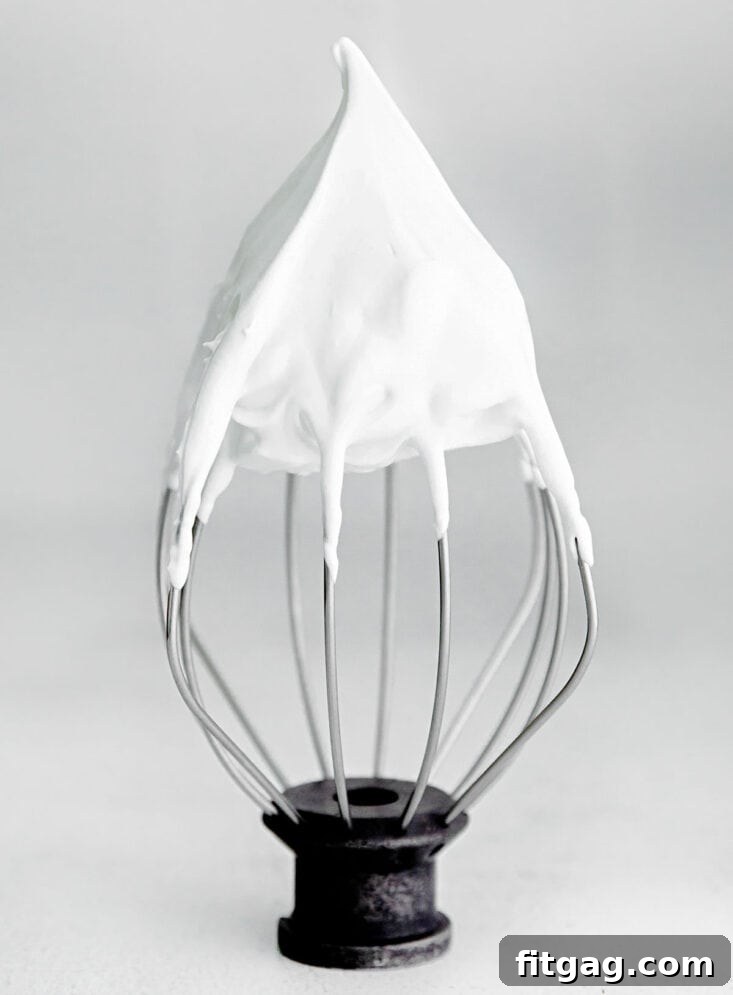
Properly beaten egg whites should create firm, upright peaks that hold their shape against gravity. This is what a true stiff peak looks like – nice and tall without the tip falling to one side. This critical stage indicates the meringue is strong enough to support the almond flour and powdered sugar, ensuring you get those coveted delicate macaron feet.
The Magic of Silicone Baking Mats: Your Best Macaron Tool
When it comes to making macarons, silicone baking mats are truly a game-changer and an invaluable tool. They provide an ideal non-stick surface that helps the macaron shells bake incredibly evenly and, crucially, release easily without tearing or breaking. For both beginners who are just starting their macaron journey and even advanced macaron makers, silicone macaron mats with pre-printed circles are an absolute blessing. These guides are incredibly beneficial as they help you pipe consistently sized macarons, which is paramount for successfully pairing shells later and ensuring a professional, uniform finish across your entire batch.
Alternatively, many experienced bakers also deeply appreciate using parchment paper for its unique super slick surface. A clever trick that combines the best of both worlds is to place one of these silicone mats beneath a piece of plain parchment paper. The pre-drawn circles on the silicone mat will be perfectly visible through the parchment, providing an excellent template for piping while still allowing you to benefit from the specific non-stick and release qualities of the parchment paper. This method can be particularly useful if you find your macarons developing better “feet” or releasing more cleanly on parchment paper in your specific oven.
Embrace the “Aging” Process: The Secret to Perfect Texture
While it might be incredibly tempting to devour your freshly baked and assembled Irish Cream Macarons right away, I strongly recommend allowing them to “age” overnight in the refrigerator. This isn’t just an optional step; it’s a transformative one that truly elevates the macaron experience! Aging the macarons allows the moisture from the creamy, flavorful Irish cream filling to gently and gradually permeate the crisp shells. This process softens them just enough to create that perfectly irresistible balance of a crisp, delicate exterior and a wonderfully chewy, melt-in-your-mouth interior. This maturation process deepens and marries all the flavors beautifully, achieving the signature macaron texture that is so widely known and loved. To fully appreciate their delicate flavor and tender chew, always remember to bring them to room temperature for about 30 minutes to an hour before serving.
Precision in Shell Pairing: For a Professional Finish
Once your macaron shells have completely cooled to room temperature, take a deliberate moment to carefully sort and match them up by similar size before you begin the filling process. This seemingly simple step makes a significant and noticeable difference in the final presentation of your macarons. Pairing similarly sized shells ensures that the finished cookies look uniform, elegant, and perfectly symmetrical, instantly giving them a more professional and bakery-quality appearance. More importantly, this meticulous matching helps to ensure that the delicious Irish cream filling won’t ooze out from uneven edges, keeping your assembled macarons neat, perfectly contained, and beautiful from every angle.
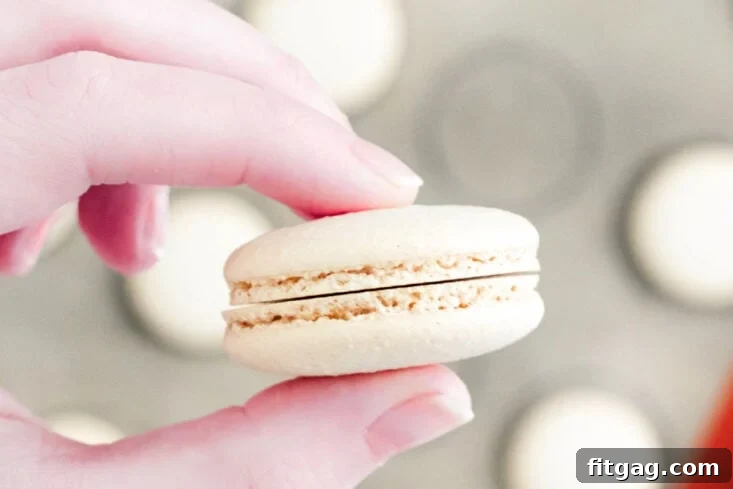
Taking a minute to match up macaron shells by size before assembly truly gives your finished treats a more polished and professional appearance. This essential step also prevents any filling from oozing out from uneven edges, ensuring each bite is perfect and visually appealing.
Creative Variations and Serving Suggestions for Your Macarons
While these Irish Cream Macarons are absolutely exquisite and satisfying on their own, don’t hesitate to get creative with additional decorations or subtle flavor tweaks to make them uniquely yours. Macarons are often celebrated as much for their stunning visual appeal as for their taste, and a little extra effort in presentation can elevate them even further, making them truly unforgettable.
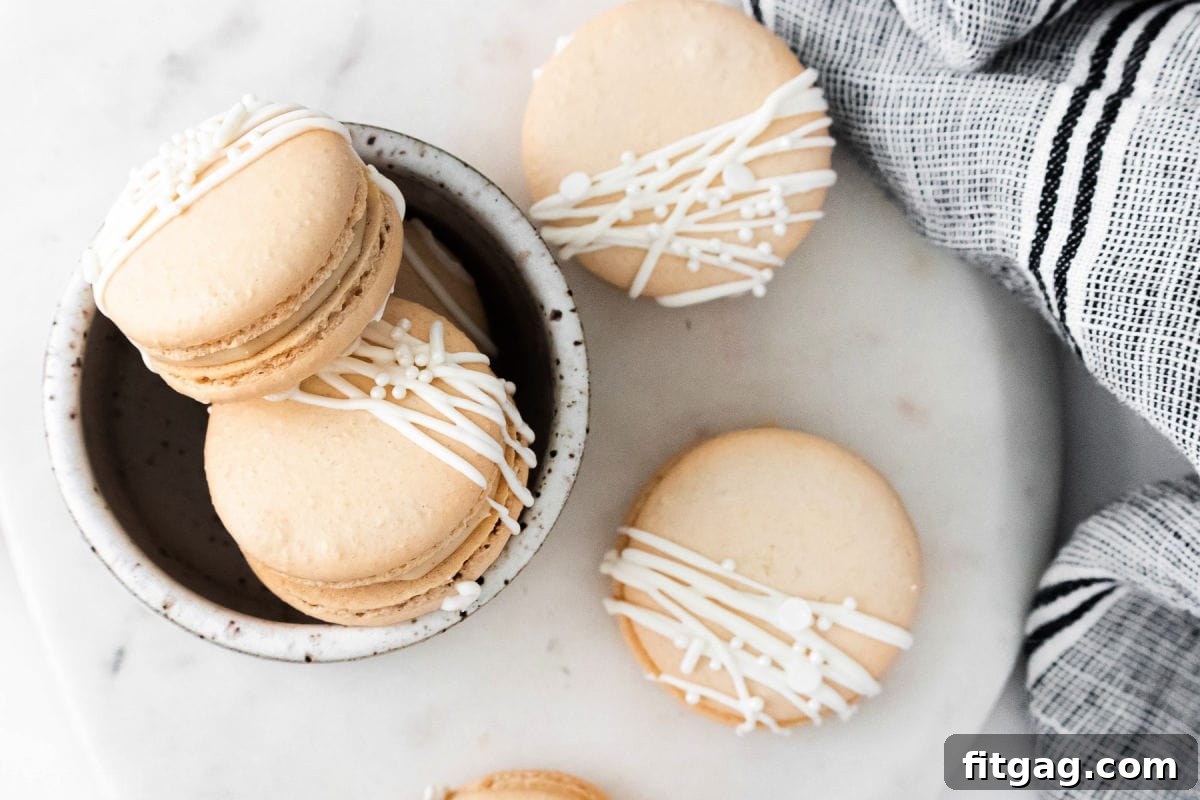
- Decorate with Elegance: Have fun and personalize your homemade macarons! I often decorate mine with a delicate drizzle of melted white chocolate and a scattering of festive sprinkles. This simple addition instantly adds a beautiful touch of elegance and a subtle extra layer of sweetness and texture. Other creative ideas include a light dusting of cocoa powder or edible glitter for a shimmering effect, or even tiny sugar shamrocks for a truly themed St. Patrick’s Day celebration. While completely optional, adding a touch of flair to the outside if you have the time can make them even more special and visually striking.
- Spice it Up with Nutmeg: For those who enjoy a richer, more complex spice profile, consider adding a tiny pinch of finely ground nutmeg in addition to the cinnamon in your Irish cream filling. Nutmeg pairs exceptionally beautifully with the warm, creamy notes of Irish cream, adding an extra layer of aromatic complexity that will undoubtedly delight your taste buds. This subtle addition deepens the flavor without overpowering the star ingredient.
- Non-Alcoholic Alternative: If you’d prefer to make a non-alcoholic version of these delightful treats, it’s easily achievable! You can substitute the Irish cream liqueur in the filling with a carefully crafted combination of strong brewed coffee or espresso, a touch of pure vanilla extract, and a hint of almond extract. Adjust the consistency with a small amount of extra cream or milk to ensure it remains pipeable. This substitution will still give you a wonderfully rich, coffee-flavored macaron with a similar depth of flavor, perfect for all ages.
- Coloring the Shells for Festivity: For a truly festive St. Patrick’s Day treat that pops visually, consider adding a few drops of high-quality green gel food coloring to your macaron batter during the macaronage stage. Gel coloring is highly recommended over liquid coloring, as it won’t add excess moisture to the delicate batter, ensuring your shells still bake perfectly and achieve their desired texture and “feet.” You could even try a swirl of green and white for a marbled effect!
More Festive St. Patrick’s Day Recipes to Enjoy
If you’re still feeling lucky and looking for more delightful treats to celebrate St. Patrick’s Day, or simply to enjoy a themed dessert that brings joy, explore these other fantastic and easy-to-make recipes:
- Mint Chocolate Bark
- St. Patrick’s Day Jello Cups
- Lemon Lime Jello Salad
- Easy Rainbow Pretzel Wands
- Rainbow Sugar Cookie Bark
- Mint Chocolate Chip Cheese Ball
Irish Cream Macarons Recipe Card

Irish Cream Macarons
These light and airy Irish Cream Macarons are delicate cookies with a chewy texture, filled with a rich and creamy Irish Cream filling. Perfect for any celebration, especially St. Patrick’s Day!
- Course: Dessert
- Cuisine: French
- Keyword: Irish cream macaron, macaron, macaron recipe, St. Patrick’s Day dessert, homemade macarons
- Prep Time: 20 minutes
- Cook Time: 12-15 minutes
- Yields: 24 macarons
- Calories: Approximately 66 kcal per macaron
- Author: Trish – Mom On Timeout
Ingredients
For the Delicate Macaron Shells:
- 90 grams egg whites (room temperature, preferably aged for 24 hours)
- 90 grams granulated sugar
- 95 grams powdered sugar, sifted
- 95 grams almond flour, finely ground and sifted
For the Rich Irish Cream Filling:
- 20 grams cream cheese, softened (ensure it’s at room temperature for smooth mixing)
- 20 grams Irish cream liqueur (use a good quality brand like Bailey’s)
- 40 grams powdered sugar, sifted
- 1/8 teaspoon ground cinnamon (optional, for added warmth)
Instructions
Prepare the Macaron Shells:
- Line two half-sheet baking sheets with silicone baking mats or parchment paper. If using parchment, ensure it lies perfectly flat; you can tape corners temporarily, removing tape before baking.
- Set up a double boiler: fill a small saucepan halfway with water, bring to a simmer over medium heat, then place a heatproof bowl over it (bowl should not touch water).
- Add egg whites and granulated sugar to the bowl. Whisk constantly for 2-3 minutes until sugar is completely dissolved (test by rubbing between fingers – should be smooth).
- Transfer egg white mixture to a clean, dry stand mixer bowl with a whisk attachment. Beat on medium-high until stiff, glossy peaks form (peaks should stand firm and tall).
- Sift powdered sugar and almond flour into the meringue.
- Gently fold the dry ingredients into the meringue, scraping the sides of the bowl, taking care not to initially deflate too much air.
- Perform macaronage: “smush” batter against bowl sides in a circular motion with your spatula, then scrape and fold. Repeat until batter flows smoothly off the spatula in a continuous “figure 8” ribbon without breaking.
- Transfer batter to a piping bag fitted with a large, open round tip (such as #10 or #12).
- Pipe 1-inch circles about 2 inches apart onto prepared mats, holding the piping bag strictly perpendicular to the surface.
- Firmly tap each baking tray several times on the counter to release air bubbles. Pop any visible bubbles on the surface with a toothpick.
- Let piped shells rest at room temperature for 30-60 minutes, or until a dry “skin” forms on top (no longer sticky to the touch). This is crucial for “feet” development.
- While shells rest, preheat your oven to 325°F (160°C).
- Bake one baking sheet at a time for 12-15 minutes, rotating halfway through if your oven has hot spots. Shells are done when their “feet” are well-defined and they don’t jiggle when gently nudged. Allow to cool completely on the mat before carefully removing.
Prepare the Irish Cream Filling:
- In a medium bowl, whisk together the softened cream cheese and Irish cream until the mixture is smooth and lump-free.
- Gradually whisk in the powdered sugar and ground cinnamon until all ingredients are fully combined and the filling is thick and creamy.
- Transfer the finished filling to a piping bag.
Assemble and Age Macarons:
- Pair cooled macaron shells by similar size. Pipe the Irish cream filling onto the center of the flat side of one macaron shell.
- Place a second matching shell on top, pressing down very gently until the filling spreads evenly to the edges.
- Place the assembled macarons in an airtight container and refrigerate overnight to “age.” This step is highly recommended for the best crisp-chewy texture.
- Before serving, bring the aged macarons to room temperature for 30-60 minutes. Store any leftovers in the refrigerator for up to four days in an airtight container.
Notes and Troubleshooting Tips
- To achieve perfectly shaped macarons, always hold the piping bag strictly perpendicular to the baking sheet surface while piping. Holding it at an angle can result in lopsided shells.
- Aging the macarons overnight in the refrigerator is a crucial step that helps soften the shell and creates that desirable crisp yet wonderfully chewy macaron texture that these delicate pastries are known for. Do not skip this step for optimal results!
- Ensure all equipment (bowls, whisks) are perfectly clean and grease-free, as any fat can prevent egg whites from whipping properly.
- Humidity can affect macaron success. On very humid days, the resting time might need to be extended.
Approximate Nutrition Information (per macaron)
- Calories: 66 kcal
- Carbohydrates: 10g
- Protein: 1g
- Fat: 2g
- Saturated Fat: 1g
- Cholesterol: 1mg
- Sodium: 9mg
- Potassium: 7mg
- Fiber: 1g
- Sugar: 10g
- Vitamin A: 11IU
- Vitamin C: 1mg
- Calcium: 10mg
- Iron: 1mg