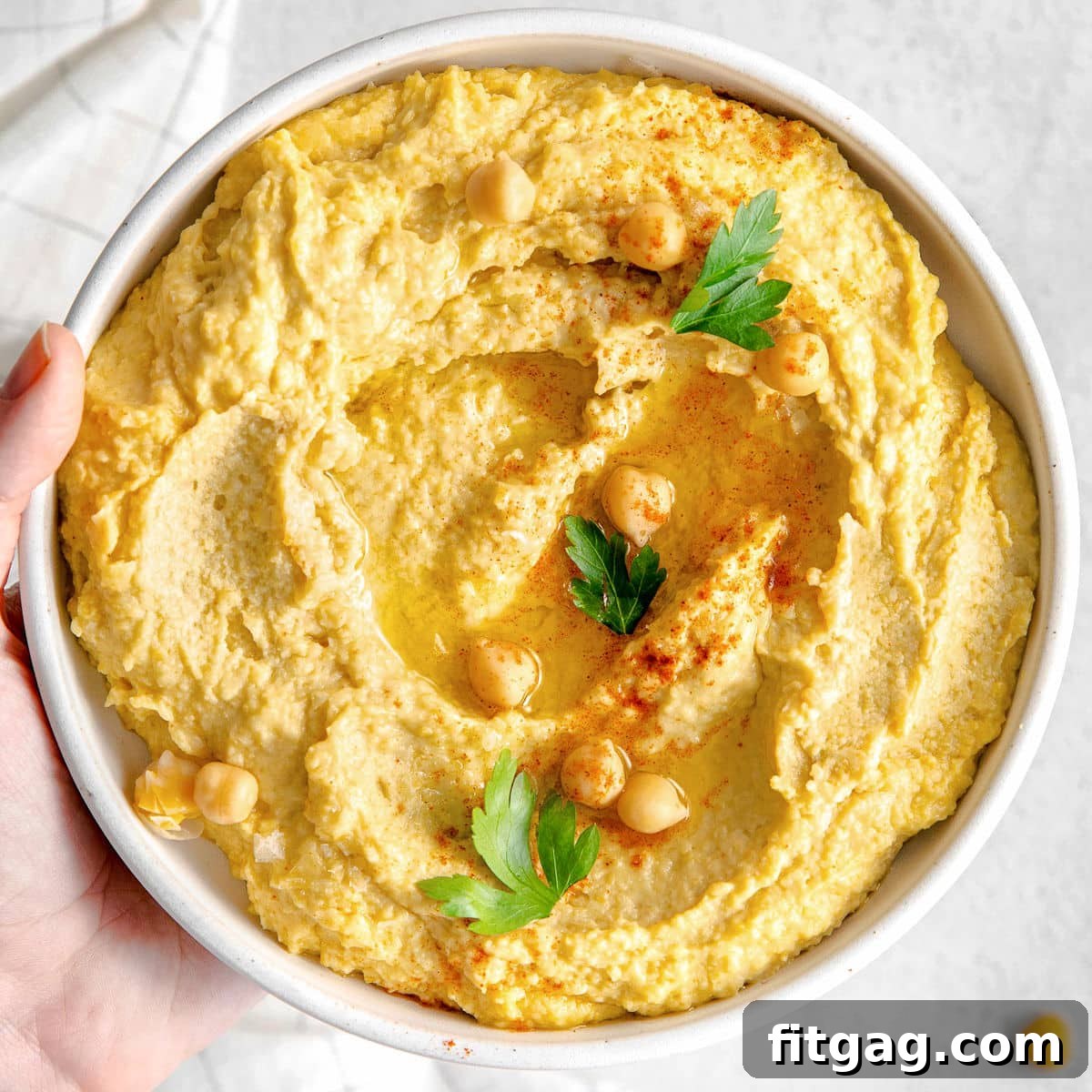
The Best Homemade Hummus Recipe: Creamy, Flavorful & Ready in 5 Minutes!
Unlock the secret to irresistible, velvety-smooth hummus right in your kitchen with this incredibly simple recipe. Forget bland store-bought versions; this homemade hummus is bursting with fresh flavor and takes just about 5 minutes of active prep time! Whether you’re looking for a quick snack, a versatile dip for entertaining, or a healthy sandwich spread, this classic chickpea dip will quickly become a household favorite. And if you’re a true hummus enthusiast, don’t miss our vibrant Beet Hummus or the creative Hummus Stuffed Veggie Tray!
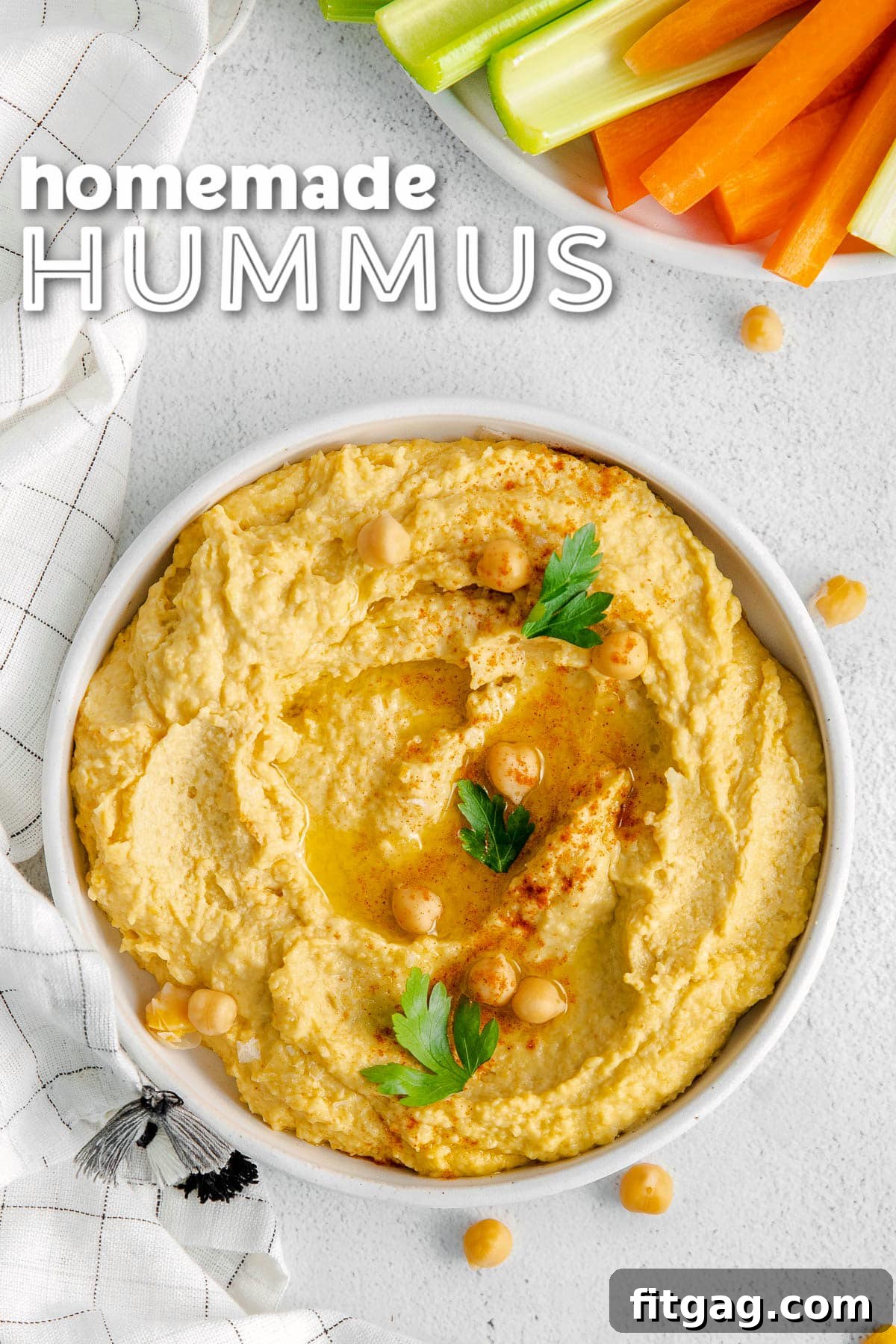
Hummus, at its heart, is a deceptively simple dish often underestimated. Some might consider it “plain,” but trust us, a well-made classic hummus is anything but boring. It’s a culinary marvel that transforms humble ingredients into a delightful experience, perfect as a gourmet dip, a convenient grab-and-go snack, or a flavorful spread that elevates any meal.
The hallmark of an exceptional hummus lies in two key attributes: unparalleled creaminess and rich, balanced flavor. This specific recipe delivers both in abundance. What’s more, it comes with an invaluable bonus: it’s astonishingly quick and straightforward to prepare, making it a perfect addition to your busy weeknight routine or last-minute party planning.
Serve this delectable hummus with our easy Veggie Crescent Bites or as a delightful companion to Turkey Cranberry Pinwheels for an impressive spread.
Unveiling Hummus: A Culinary Journey
So, what exactly is hummus? At its core, hummus is a traditional Middle Eastern and Mediterranean dip or spread, traditionally crafted from cooked, mashed chickpeas blended with tahini (a paste made from ground sesame seeds), fresh lemon juice, and garlic. The name “hummus” itself is derived from the Arabic word for chickpeas, highlighting its primary ingredient. This ancient delicacy has been enjoyed for centuries, cherished for its nourishing qualities and vibrant taste. It’s not just a dip; it’s a staple that embodies the rich culinary heritage of the region, often served as part of a mezze platter or as an accompaniment to a wide array of dishes.
While commonly enjoyed with pita bread or fresh vegetables, hummus transcends its traditional uses. It serves as an excellent spread for wraps and sandwiches, a base for grain bowls, or even a flavorful accompaniment to grilled meats and falafel. Its versatility knows no bounds, making it a beloved component of global cuisine. This recipe focuses on creating that authentic, luxurious taste and texture that makes hummus so universally appealing.
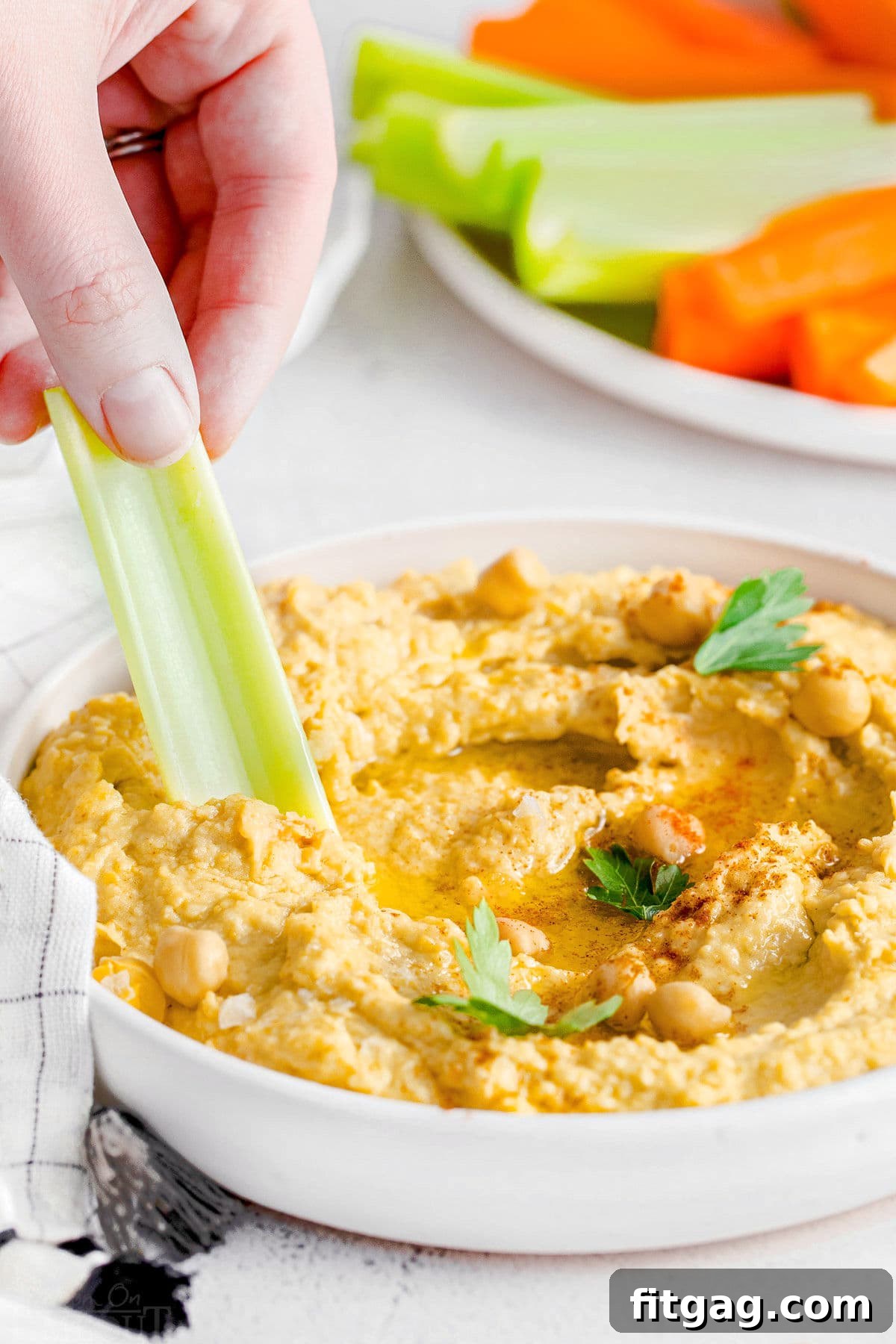
Why Homemade Hummus Triumphs Over Store-Bought
A quick trip to any grocery store reveals shelves overflowing with various hummus flavors, from classic to roasted red pepper, and even intriguing dessert concoctions. It’s a testament to hummus’s soaring popularity that you can find such a wide array, including gourmet options like Kale Pesto hummus (which, surprisingly, can be quite scrumptious!).
However, once you experience the superior taste and texture of freshly made classic hummus, you’ll understand why making it yourself is highly recommended over buying it. Many assume homemade is a lengthy endeavor, but the truth is, this recipe is so incredibly fast – it takes about the same amount of time as deciding which store-bought tub to choose! You control the ingredients, ensuring peak freshness and the purest flavors without any unnecessary additives or preservatives.
If you’re new to the world of hummus, this recipe is the perfect starting point. Its simplicity and exceptional flavor guarantee a result far better than anything you can purchase, making the minimal effort truly worthwhile. It’s an easy way to impress your guests, or simply treat yourself to a healthier, more delicious snack.
Beyond being a fantastic dip, use this versatile hummus in a Hummus Veggie Tray for your next gathering or incorporate it into a savory BLT Chicken Caesar Salad Wrap for a satisfying meal.
Is Hummus Healthy? Dive into the Nutritional Benefits
Absolutely! Hummus is celebrated worldwide as a powerhouse of nutrition, making it an excellent addition to a healthy diet. It’s entirely plant-based, naturally gluten-free (when prepared without gluten-containing additives), and packed with essential vitamins and nutrients. Rich in fiber, which aids digestion and promotes satiety, hummus can help you feel fuller for longer, potentially assisting with weight management.
Beyond fiber, chickpeas provide a significant source of plant-based protein, making hummus a fantastic option for vegetarians and vegans. It also contains healthy fats from tahini and olive oil, along with vital minerals like iron, magnesium, and phosphorus. Furthermore, hummus is a good source of B vitamins and antioxidants, which contribute to overall well-being. It’s a filling, low-calorie food that offers a nutrient-dense boost, making it a smart choice for any meal or snack.
Essential Ingredients for Perfect Homemade Hummus
Crafting this delicious homemade hummus requires just a handful of simple ingredients, most of which you likely already have in your pantry. For the complete, printable recipe card with exact measurements, refer to the end of this post. Let’s take a closer look at what makes up this creamy delight:
- Tahini – This unctuous paste, made from ground sesame seeds, is arguably the most crucial ingredient in hummus. It imparts that distinctive nutty flavor and is key to achieving the incredibly smooth and creamy texture. Don’t skip it; it makes all the difference!
- Water – A little bit of cold water is essential for emulsifying the tahini and creating that coveted light, airy, and creamy consistency. Adjusting the amount allows you to fine-tune the hummus to your preferred thickness.
- Fresh Lemon Juice – The bright, zesty tang of freshly squeezed lemon juice is vital for balancing the richness of the tahini and lifting all the flavors. While bottled lemon juice can work in a pinch, fresh lemon offers a superior, more vibrant taste.
- Garlic – Fresh garlic cloves provide a pungent depth that is synonymous with authentic hummus. For the best flavor, always opt for fresh garlic, minced finely. If fresh isn’t available, a small amount of garlic powder can be used as a substitute, though the flavor profile will be slightly different.
- Chickpeas (Garbanzo Beans) – The very foundation of this recipe. Canned chickpeas are incredibly convenient, making this recipe super time-friendly as the softened beans blend into a smooth paste almost instantly. If you prefer to use dried chickpeas, remember to soak and cook them thoroughly until very tender before blending.
- Extra Virgin Olive Oil – Beyond being a delicious drizzle for serving, olive oil is blended into the hummus to add richness, a silky-smooth texture, and a beautiful sheen. You’ll add it slowly while blending, allowing you to control the final consistency, ensuring it’s neither too thick nor too thin.
- Salt and Pepper – Simple yet indispensable flavor enhancers. They tie all the ingredients together, making the flavors pop and ensuring your hummus is perfectly seasoned to your liking.
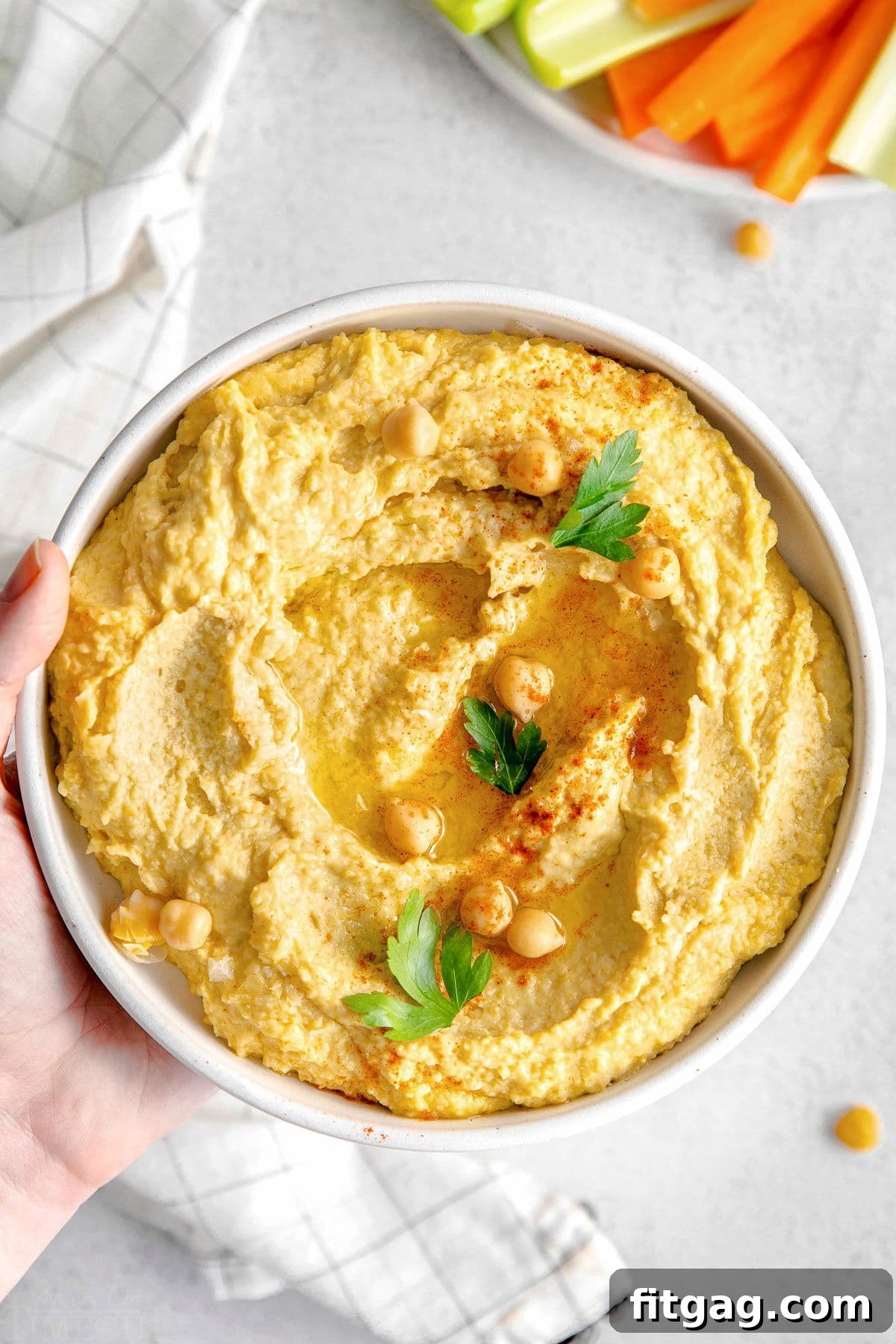
Step-by-Step Guide: How to Make Hummus at Home
Achieving perfectly smooth and creamy hummus is effortless with the right tools. A food processor is ideal for this recipe due to its powerful blade and sturdy design, which handles the thick consistency of hummus with ease. While a high-speed blender can also work, a food processor generally yields the best results. Once your food processor is ready, the process is incredibly straightforward:
- Combine & Pulse First – Begin by adding the tahini, cold water, and fresh lemon juice to the bowl of your food processor. Pulse these ingredients together for about one minute until they form a light, pale, and creamy mixture. This step is crucial for achieving that airy texture and preventing a bitter tahini flavor.
- Add Chickpeas & Garlic – Next, add the drained chickpeas and minced garlic to the food processor. Pulse the mixture continuously until the chickpeas are completely broken down into very tiny pieces. Stop the processor, scrape down the sides of the bowl with a spatula to ensure all ingredients are incorporated, then continue processing for another minute or so until the mixture begins to smooth out.
- Drizzle in Olive Oil – With the food processor running, slowly drizzle in the extra virgin olive oil through the feed tube. Continue processing until the hummus transforms into a wonderfully smooth, uniform, and creamy consistency. The continuous blending helps to fully emulsify the ingredients, creating that luxurious texture.
- Season to Perfection – Finally, add salt and freshly ground black pepper to taste. Blend everything one last time to ensure the seasonings are evenly distributed. Taste and adjust if necessary, adding more lemon juice for brightness, salt for flavor, or a touch more water if you desire an even thinner consistency.
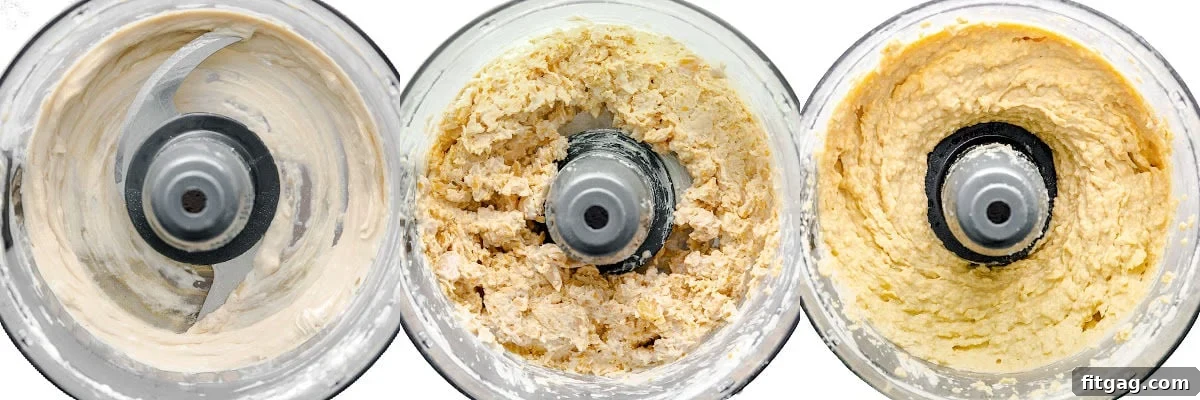
I personally enjoy my hummus with a slight bit of texture, but if you’re aiming for an ultra-smooth, restaurant-quality hummus, consider adding 1 teaspoon of ice-cold water at a time while continuously blending until your desired consistency is achieved. Some even recommend peeling the chickpeas for an extra silky finish, though it’s optional!
Expert Tips for Your Best Hummus Yet
- Immediate Enjoyment or Storage: Your homemade hummus is simply divine the moment it’s ready. Enjoy it immediately with your favorite dippers, or transfer it to an airtight container and store it in the refrigerator for up to 5 days. For best flavor, bring it to room temperature for about 15-20 minutes before serving.
- Tahini Substitution (If Necessary): While tahini is fundamental for authentic flavor and texture, if you find yourself without it, you can still make a delicious chickpea dip. Simply skip the first step of blending tahini, water, and lemon juice. Instead, combine the water, lemon juice, garlic, and chickpeas all at the same time in the food processor, then proceed with drizzling in the olive oil. The result will be a tasty dip, though it won’t have the classic tahini depth.
- Adjusting Consistency: The beauty of homemade hummus is its customizable texture. If your hummus is too thick, gradually add small amounts of ice water (1 teaspoon at a time) while the food processor is running until it reaches your preferred creamy consistency. For a thicker dip, use slightly less water initially.
- Flavor Enhancement: For an extra layer of flavor, consider roasting the garlic cloves before adding them to the food processor. Roasted garlic offers a sweeter, milder, and more complex taste. You can also experiment with a pinch of cumin for an aromatic touch.
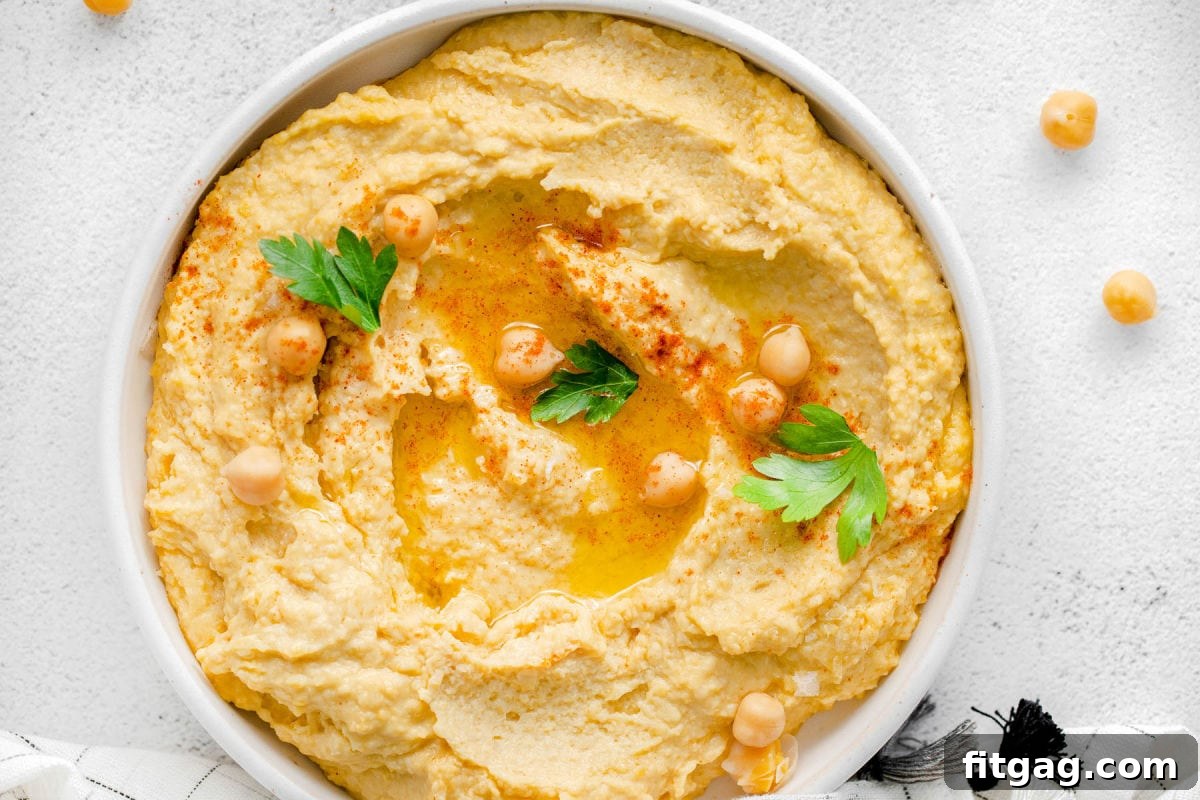
- Serving Presentation: Before serving, transfer your hummus to a shallow bowl, create a swirl in the center with the back of a spoon, and generously drizzle with extra virgin olive oil. A sprinkle of paprika, sumac, or fresh chopped parsley adds both color and an extra layer of flavor.
For the smoothest, silkiest hummus texture, don’t be afraid to let your food processor run longer than you think necessary – sometimes up to 3-5 minutes total after adding all ingredients. The longer it blends, the creamier it gets!
Exciting Hummus Variation Ideas
One of the joys of making hummus at home is how easily you can customize it with different flavors. The base recipe remains the same, allowing you to infuse your favorite ingredients and create endless variations. Get creative and try these exciting ideas:
- Chocolate Hummus – A surprisingly delightful dessert hummus! Omit the garlic and lemon juice. Instead, add cocoa powder, maple syrup or honey, and a dash of vanilla extract for a sweet treat. Serve with fruit or graham crackers.
- Roasted Red Pepper Hummus – For a smoky, sweet, and vibrant dip, simply add about ½ cup of roasted red peppers (from a jar, drained, or freshly roasted) into the food processor along with the chickpeas and garlic.
- Avocado Hummus – Introduce a creamy, rich twist by adding one medium, ripe avocado to the ingredients. This variation offers a boost of healthy fats and a gorgeous green hue.
- Sweet Potato Hummus – Blend in a small roasted or steamed sweet potato with the other ingredients for a naturally sweet, earthy, and beautifully colored hummus.
- Black Bean Hummus – Give your hummus a Tex-Mex flair by replacing the garbanzo beans with canned black beans (rinsed and drained). This makes for a darker, earthier dip, fantastic with tortilla chips.
- Spicy Hummus – Kick up the heat by adding a pinch of cayenne pepper, a dash of hot sauce, or a finely chopped jalapeño to your classic recipe.
- Sun-Dried Tomato Hummus – Add ¼ cup of oil-packed sun-dried tomatoes (drained) for a rich, tangy, and savory twist.
Frequently Asked Questions About Hummus
When stored properly in an airtight container in the refrigerator, your homemade hummus will stay fresh and delicious for up to 5 days. Always ensure it’s tightly sealed to prevent it from drying out or absorbing other odors from the fridge.
Absolutely! Hummus freezes remarkably well, making it perfect for meal prep or extending its shelf life. You can freeze it right after preparation, and it will remain good for up to 3 months. When freezing, remember that hummus will expand slightly, so ensure you leave a little room at the top of your freezer-safe container. To enjoy, simply transfer it to the refrigerator to thaw overnight. Once thawed, give it a good stir, and if needed, add a touch more olive oil or water to restore its creamy texture.
The possibilities are truly endless when it comes to customizing hummus flavors! As mentioned in our variations section above, you can experiment with chocolate, roasted red pepper, avocado, sweet potato, or even black bean. Beyond those, popular options include spinach and artichoke, caramelized onion, or even a spicy cilantro-lime version. For a unique and vibrant twist, we particularly love our beet hummus!
Creative Ways to Enjoy Your Homemade Hummus
Beyond being a simple dip for pita or vegetables, homemade hummus can elevate countless dishes. Here are some inspiring ideas to make the most of your delicious creation:
- Elevate Your Appetizer Platter: Arrange your hummus in a beautiful bowl, drizzle with olive oil, sprinkle with paprika or sumac, and surround it with an array of fresh-cut vegetables like carrots, celery, bell peppers, cucumber, cherry tomatoes, and radishes. Add warm pita bread, pita chips, or crunchy crackers for a complete mezze experience.
- Healthy Sandwich & Wrap Spread: Ditch the mayonnaise! Hummus makes an excellent, healthier spread for sandwiches and wraps. It adds moisture, flavor, and a boost of protein and fiber. Try it with turkey, grilled chicken, or loads of fresh veggies.
- Mediterranean Bowls: Create vibrant and satisfying grain bowls by using hummus as a base. Layer it with quinoa or couscous, roasted vegetables, grilled halloumi or falafel, and a fresh herb salad.
- Topping for Toast or Crostini: Spread hummus on toasted bread or crostini, then top with chopped olives, feta cheese, sun-dried tomatoes, or a sprinkle of za’atar for a quick and elegant appetizer or light breakfast.
- Dollop for Soups & Stews: A spoonful of creamy hummus can add richness and body to lentil soups, vegetable stews, or even chili. Stir it in just before serving.
- Salad Dressing Base: Thin out hummus with a bit of lemon juice and water to create a creamy, flavorful salad dressing for green salads or grain salads.
- Accompaniment to Grilled Meats: Serve alongside grilled chicken, lamb, or fish for a healthy and flavorful side dish that complements the savory notes of the meat.
More Delicious Bean-Based Recipes
If you love the versatility and nutritional benefits of beans, explore these other fantastic recipes:
- The Best Baked Beans
- Nana’s Famous Green Bean Recipe
- Crockpot Refried Beans
- Crock Pot Pinto Beans
- Slow Cooker Cowboy Beans
- Slow Cooker Green Beans with Bacon
Recipe Card: Classic Hummus

Print
Pin
Classic Hummus
Ingredients
- ¼ cup tahini
- 2 tablespoons water
- 2 tablespoons lemon juice freshly squeezed
- 1 clove garlic minced
- 15 ounces chickpeas 1 can
- ¼ cup extra virgin olive oil
- salt and pepper to taste
Instructions
-
Add the tahini, water, and lemon juice into the bowl of a food processor and pulse until light and creamy, about 1 minute.
-
Add the garlic and chickpeas. Pulse until the chickpeas are broken into small pieces, about 1 minute. Scrape down the sides of the bowl and continue processing for another minute or so.
-
With the food processor on, slowly drizzle in the olive oil until the hummus is smooth and creamy. If the hummus is too thick, add 1 teaspoon of water at a time until the desired consistency is achieved.
-
Season with salt and pepper, to taste.
-
Enjoy the hummus right away or transfer it to an airtight container and store in the refrigerator for up to 5 days.
-
To serve: drizzle the hummus with olive oil and sprinkle some paprika over the top.