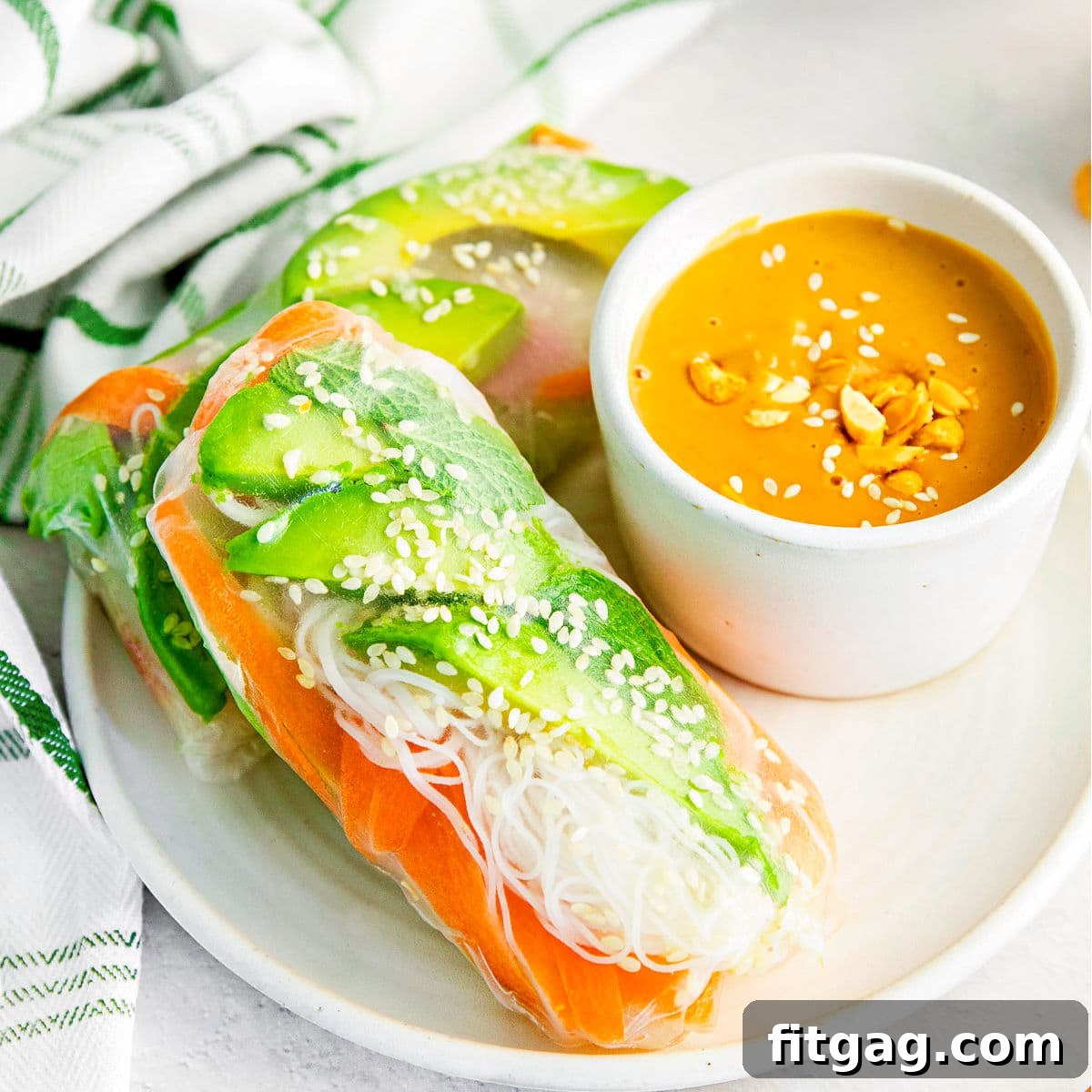
Discover the ultimate guide to crafting the most delightful Fresh Spring Rolls, a vibrant appetizer or snack that perfectly captures the essence of spring and summer. These light, flavorful rolls are brimming with crisp, colorful vegetables and served with an irresistible creamy peanut dipping sauce, making them an instant crowd-pleaser. Whether you’re hosting a casual summer picnic, an elegant garden party, a bridal shower, or simply seeking a refreshing meal, this easy spring roll recipe promises to be a show-stopper that will have everyone reaching for more.
These fresh rolls make an ideal appetizer before a variety of main courses. Consider serving them as a light prelude to a savory Chicken Stir Fry, or elevate your dining experience by pairing them with succulent Honey Walnut Shrimp for an unforgettable meal that balances textures and flavors beautifully.
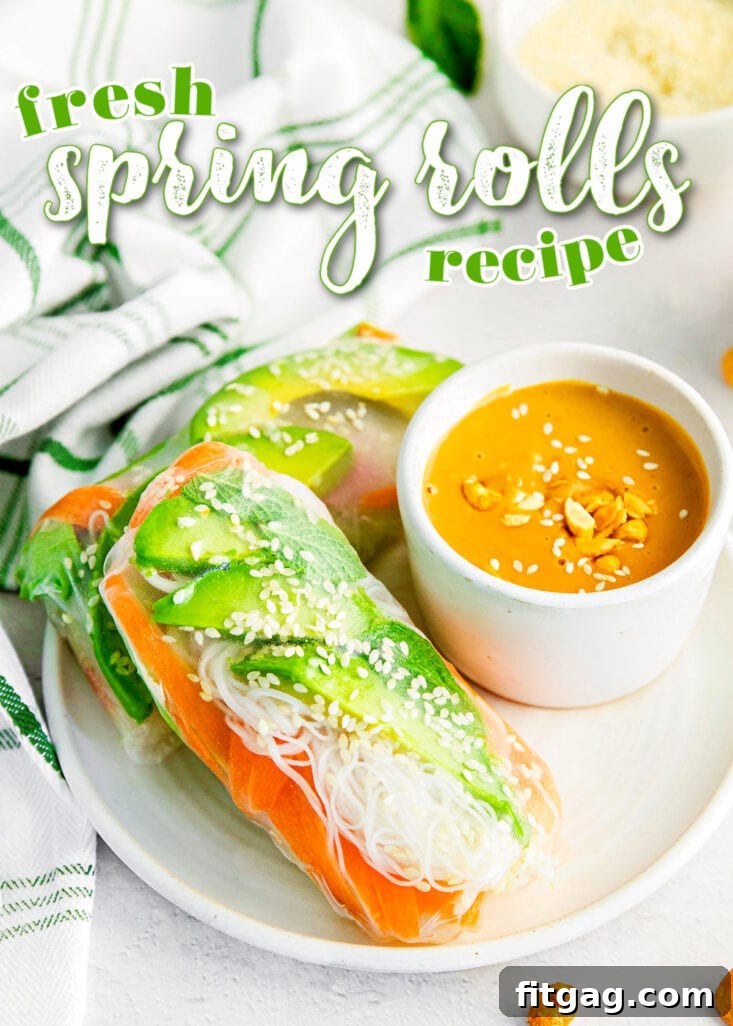
Our Favorite Fresh Spring Roll Recipe: A Symphony of Flavors and Textures
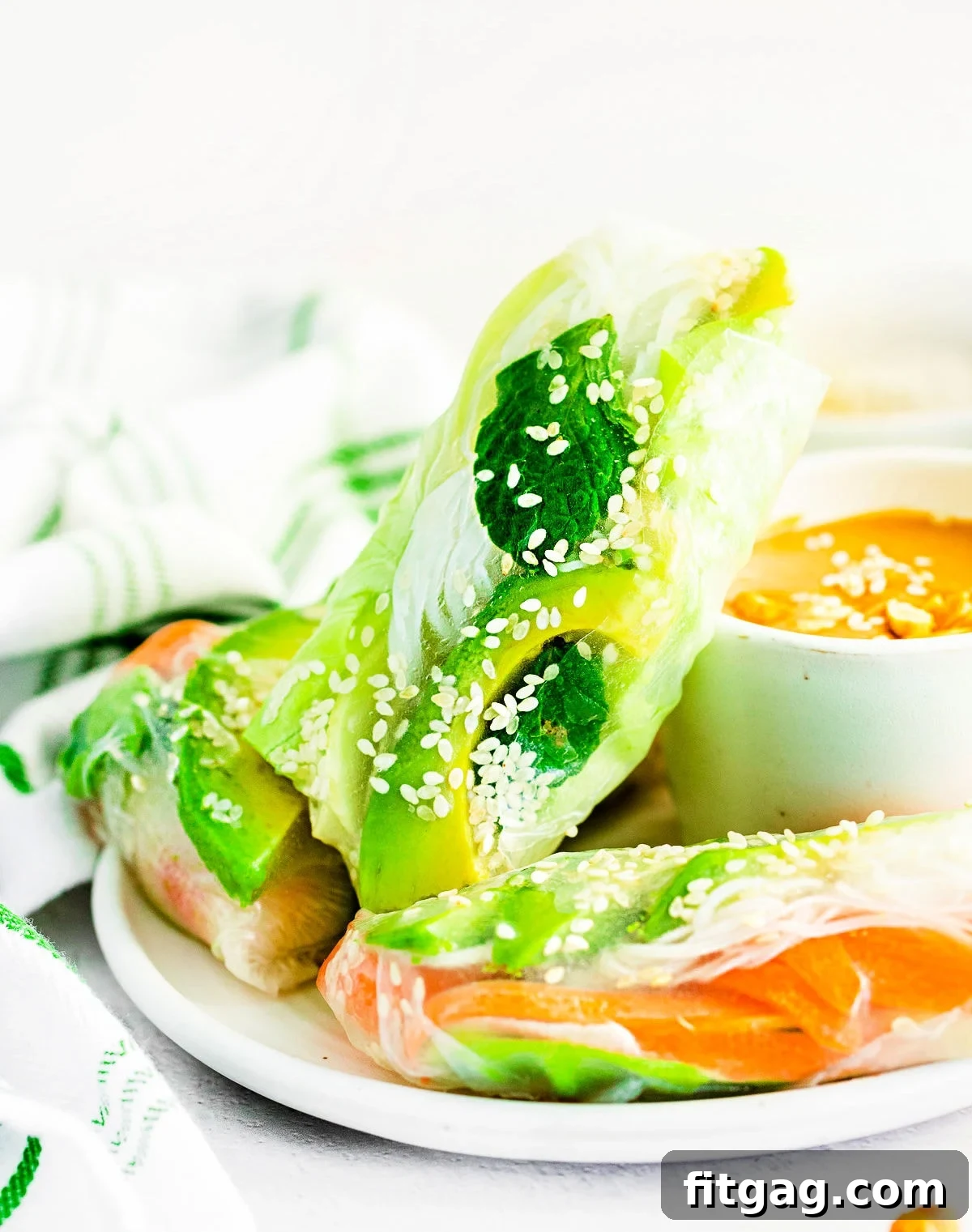
Imagine biting into a tiny, handheld rainbow – that’s precisely the experience you get with these fresh spring rolls. Each translucent rice paper wrapper encases a beautiful medley of shredded purple cabbage, thinly sliced bright orange carrots, crisp cucumber sticks, and creamy avocado. This vibrant combination offers a delightful crunch and an explosion of garden-fresh flavors, perfectly complemented by a rich, dreamy peanut dipping sauce. It’s a culinary masterpiece that appeals to all senses, and a fantastic option for vegetarians and anyone craving a healthy, satisfying bite.
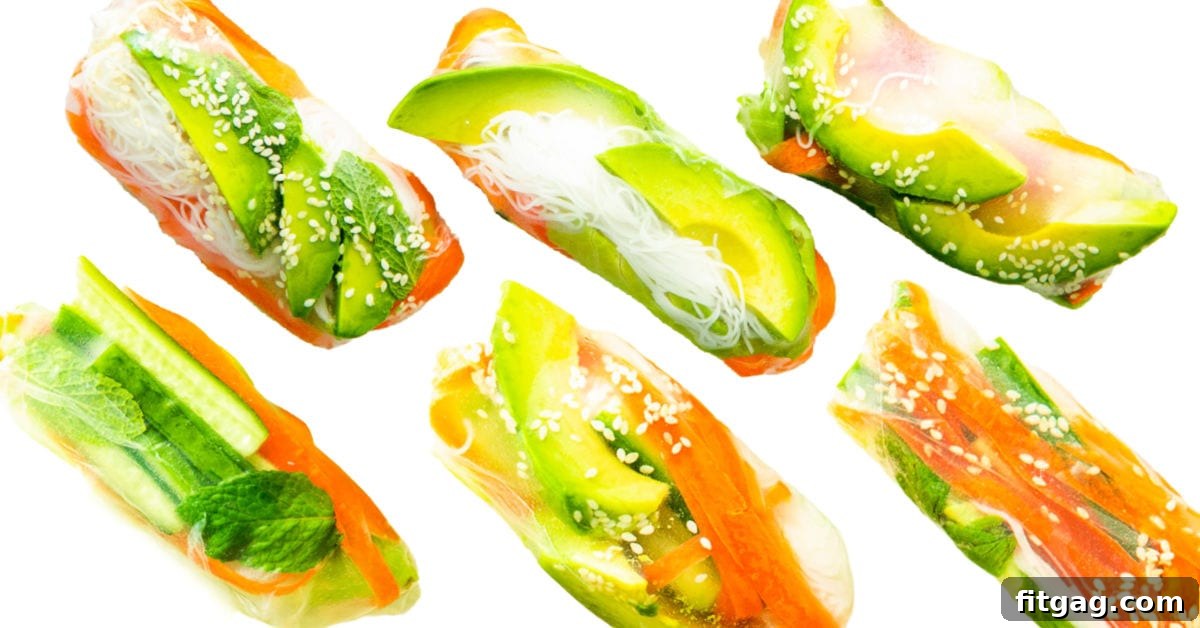
One of the many joys of this fresh spring roll recipe is its incredible versatility. The ingredients are entirely customizable, allowing you to tailor each roll to your personal preferences or dietary needs. Feel free to swap out or add any of your favorite vegetables, experimenting with different textures and tastes. For those seeking a protein boost, easily incorporate cooked shrimp, marinated tofu, or even thinly sliced chicken. A significant advantage of these spring rolls, especially during warmer months, is that they are not fried. This makes them wonderfully light, guilt-free, and incredibly refreshing – the perfect antidote to a hot summer day.
What Exactly Is a Spring Roll? Unveiling the Fresh Delicacy
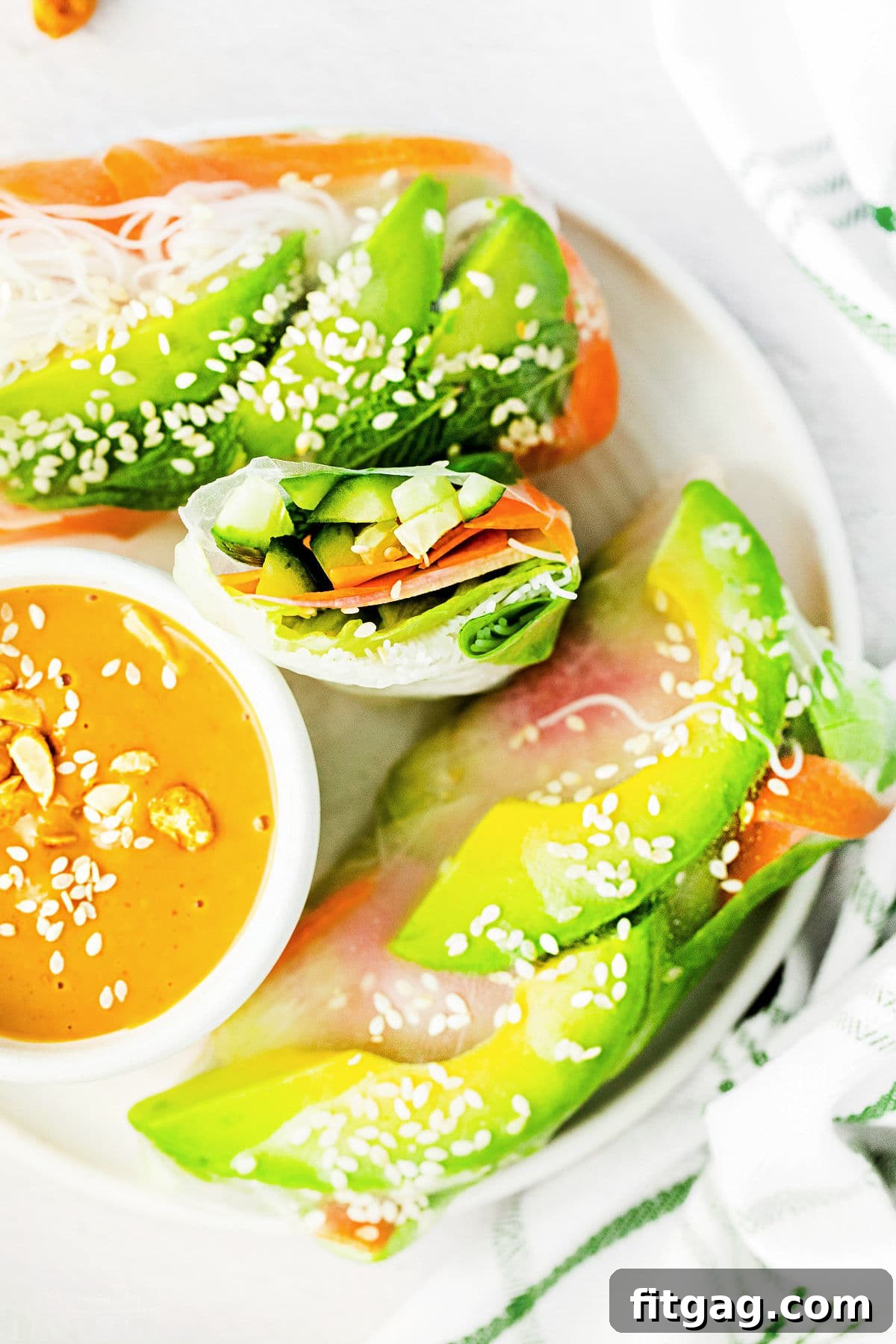
Spring rolls, often referred to as summer rolls or fresh rolls, are a beloved culinary creation, particularly prominent in Southeast Asian cuisine, especially Vietnamese. Unlike their fried counterparts, these rolls are typically served uncooked, emphasizing the fresh, vibrant quality of their ingredients. The defining characteristic of a spring roll is its wrapper: thin, circular sheets of rice paper. When dry, these wrappers are opaque and somewhat brittle, but a quick dip in warm water transforms them into a pliable, translucent film that beautifully showcases the colorful fillings within.
My initial encounter with a spring roll was at an engaging blogger event where a chef demonstrated the art of hydrating the rice paper and assembling the rolls. We were then given the creative freedom to construct our own unique combinations. I embarked on a “surf and turf” adventure, stuffing my rolls with juicy shrimp and tender ribeye strips, and the result was absolutely sensational. That experience solidified my love for these versatile wraps.
Today, I’m excited to share a more traditional vegetable-focused spring roll recipe, bursting with fresh, wholesome ingredients. This classic rendition is ideal for spring and summer, offering a light yet satisfying experience. The magic of the rice paper wrappers truly lies in their transparency once rehydrated, allowing the vibrant colors of the vegetables to shine through – a truly special visual treat that makes them as appealing to the eye as they are to the palate.
While often enjoyed fresh and uncooked, spring rolls can also be lightly baked or pan-fried for a different texture, though my preference firmly lies with the uncooked version. The fillings typically include an assortment of raw or lightly blanched vegetables, fresh herbs, and sometimes cooked proteins like shrimp, chicken, or tofu. This emphasis on fresh produce is precisely why they’ve earned alternative names like “summer rolls” or “garden spring rolls.” Regardless of what you call them, their deliciousness is undeniable.
Spring Roll vs. Egg Roll: Understanding the Key Differences
While spring rolls and egg rolls may share a similar cylindrical shape, their similarities largely end there. These two popular Asian appetizers offer distinct experiences in terms of ingredients, preparation, and texture. Understanding their differences will help you appreciate each delicacy for its unique qualities.
Egg Rolls: The Crispy, Fried Favorite
- Wrapper: Egg rolls are typically wrapped in a thicker, savory wheat flour wrapper, often enriched with egg, which gives them their characteristic golden, bubbly texture when cooked.
- Cooking Method: The hallmark of an egg roll is that it is always deep-fried until gloriously crispy and golden brown. This cooking method contributes significantly to its rich flavor and satisfying crunch.
- Fillings: Egg roll fillings are almost always cooked prior to rolling. They usually consist of a hearty mixture of finely shredded vegetables (like cabbage, carrots, and bean sprouts) combined with ground meat (commonly pork or chicken). The filling is seasoned with ingredients like soy sauce, ginger, and garlic, creating a savory and robust flavor profile.
- Texture: Expect a substantial, crispy exterior and a warm, tender, and flavorful cooked filling.
Spring Rolls (Fresh/Summer Rolls): The Light and Refreshing Choice
- Wrapper: As discussed, fresh spring rolls utilize thin, delicate rice paper wrappers made from rice flour, water, and salt. These wrappers become translucent and pliable when rehydrated.
- Cooking Method: Most commonly, fresh spring rolls are served uncooked. This highlights the freshness and natural flavors of the raw ingredients. While some regional variations might involve a very light pan-frying, the “fresh” aspect is central to their identity.
- Fillings: The fillings of fresh spring rolls primarily consist of raw, vibrant vegetables (such as lettuce, cucumber, carrots, cabbage, and avocado) and an abundance of fresh herbs (like mint, cilantro, and Thai basil). Cooked proteins such as shrimp, thin slices of pork, or marinated tofu are also popular additions. The emphasis is on freshness, light textures, and bright flavors.
- Texture: Expect a soft, slightly chewy wrapper, a refreshing crunch from the raw vegetables, and a burst of herbaceous flavor.
In essence, if you’re craving a rich, hearty, and crispy snack, an egg roll is your go-to. If you prefer a lighter, cooler, and herb-packed bite, the fresh spring roll is the perfect choice.
Gather Your Ingredients: Building the Perfect Fresh Spring Roll
The beauty of fresh spring rolls lies in their simple, wholesome ingredients. Prepping your vegetables ahead of time will streamline the rolling process, making it a fun and easy activity that even kids can enjoy helping with. Here’s a breakdown of what you’ll need for both the rolls and the delectable peanut dipping sauce:
What You’ll Need For The Spring Rolls:
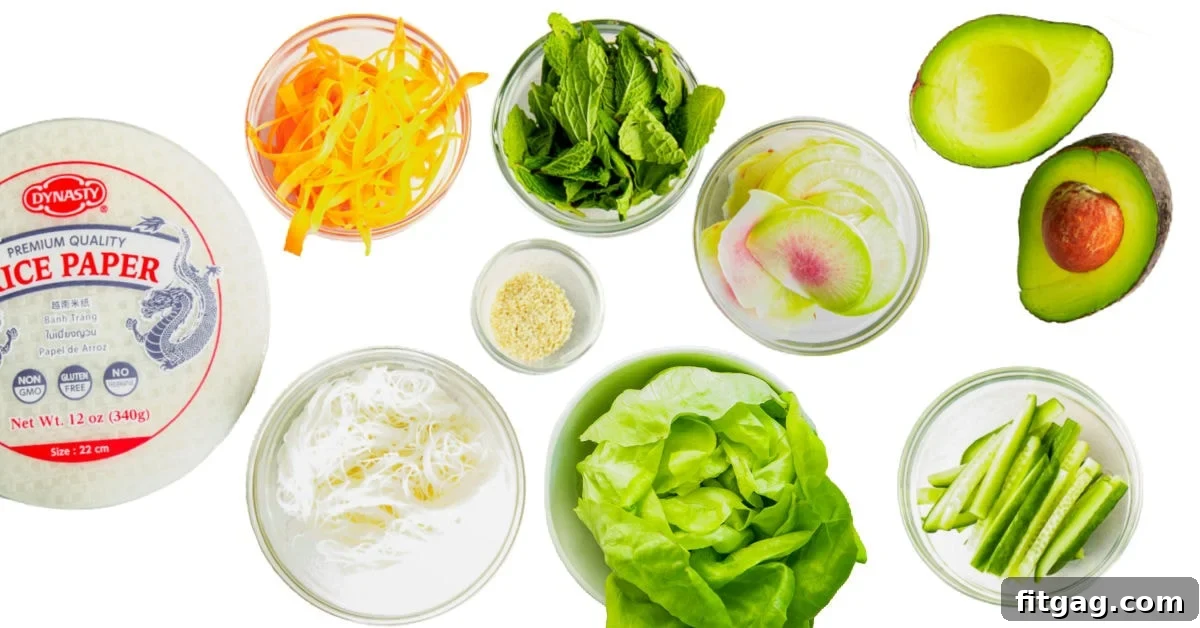
- Rice Paper Sheets: These are the essential, transparent wrappers for our rolls. Look for varieties specifically labeled for spring rolls, typically round and thin. Their magic lies in transforming from brittle to pliable when briefly soaked in warm water.
- Butter Lettuce: The tender, soft leaves of butter lettuce provide a fresh, slightly sweet base for the filling. Remember to remove any tough ribs for a smoother rolling experience.
- Rice Noodles: These thin vermicelli noodles add a wonderful chewy texture and a subtle, starchy contrast to the crisp vegetables. Cook them according to package instructions until al dente, then rinse with cold water to prevent sticking.
- Cucumber: With its high water content, cucumber delivers an incredibly refreshing and crispy element, adding a vital cooling effect to each bite. Cutting them into matchsticks ensures even distribution and easy rolling.
- Carrot: Carrots contribute a delightful sweetness, a vibrant pop of color, and a satisfying crunch. Thinly shaving them with a peeler or cutting them into fine matchsticks is key. To save time, pre-sliced carrot sticks or shredded carrots are excellent substitutes.
- Avocado: Sliced thinly, ripe avocado introduces a creamy, buttery richness that beautifully balances the crunch of the other vegetables. It also provides healthy fats, making the rolls more satisfying.
- Purple Cabbage: Shredded purple cabbage not only adds a fantastic crunch but also a striking, beautiful color contrast within the translucent wrapper. You can shred it yourself or opt for pre-shredded bags for convenience.
- Thai Basil Leaves: While optional, the distinctive anise-like, peppery flavor of Thai basil elevates these rolls, lending an authentic aromatic depth that truly captures the essence of Southeast Asian cuisine.
- Sesame Seeds: A sprinkle of sesame seeds provides a delicate nutty flavor and a subtle textural crunch, enhancing the overall experience.
What You’ll Need For The Mouthwatering Peanut Dipping Sauce:
No spring roll experience is complete without a stellar dipping sauce. This creamy peanut sauce is the perfect accompaniment, offering a balance of savory, sweet, tangy, and a hint of spice.
- Creamy Peanut Butter: The foundation of our sauce. Ensure you use creamy (not chunky) peanut butter for a smooth, velvety consistency that coats the rolls beautifully.
- Soy Sauce: This provides the essential umami and savory depth. I typically use a reduced-sodium variety. For a gluten-free option, Tamari is an excellent substitute. Hoisin sauce can also be used for a slightly sweeter and thicker profile.
- Rice Vinegar: Adding a touch of acidity, rice vinegar brightens the sauce and introduces a subtle, refreshing sweetness that cuts through the richness of the peanut butter.
- Grated Ginger: A small amount of freshly grated ginger infuses the sauce with a warm, zesty, and aromatic kick, truly bringing it to life. It can be omitted if you prefer a milder flavor.
- Grated Garlic: Freshly grated or minced garlic is crucial for a pungent, savory base. Avoid large chunks to maintain the sauce’s smooth texture.
- Optional Ingredients for Customization:
- Chili Garlic Sauce or Chili Paste: For those who appreciate a fiery kick, add a dash of chili garlic sauce or paste. Start with a small amount and adjust to your preferred spice level, as it can be quite potent.
- Toasted Sesame Oil: This is one of my all-time favorite ingredients for Asian-inspired sauces. It imparts a deeply nutty and complex aroma. Due to its strong flavor, begin with just a ½ teaspoon and add more sparingly if desired.
- Honey or Maple Syrup: To enhance the sweet notes in the sauce, a touch of honey or maple syrup works wonders. Start with a couple of teaspoons and adjust until you achieve your desired level of sweetness.
Pro Tip: If your peanut dipping sauce turns out too thick, simply thin it out with a little water or even a splash of milk (dairy or non-dairy) until it reaches your desired, dippable consistency.
Let’s Make ‘Em! Crafting Your Fresh Spring Rolls and Perfecting the Sauce
One of the best aspects of these fresh spring rolls and their accompanying peanut sauce is that they can be prepared in advance, making them an ideal choice for entertaining. Assemble them the morning of your event, store them in the refrigerator, and they’ll be perfectly fresh and ready to serve when your guests arrive. Simply arrange them on a beautiful platter, and you’re all set to party!
How To Assemble Fresh Spring Rolls: Step-by-Step Guide
- Soften the Rice Paper Wrappers: Begin by filling a large, shallow bowl (wide enough to comfortably fit the rice paper sheets) with warm water. Take one rice paper sheet and submerge it in the warm water for approximately 5 to 10 seconds. The exact time depends on the brand and thickness of your rice paper; you’re looking for it to become soft and pliable, but not overly soggy or sticky. It should still have a slight firmness, as it will continue to soften as you work with it.
- Fill the Roll with Freshness: Carefully remove the softened rice paper from the water and lay it flat on a clean, smooth, and slightly damp surface (a cutting board or a large plate works well). Now, strategically arrange a small amount of your chosen fillings in the center of the bottom third of the wrapper. I find it helpful to start with a layer of butter lettuce. This acts as a protective barrier between the delicate rice paper and other ingredients, preventing tears and providing a nice visual base. Follow with a small portion of rice noodles, then add a colorful mix of carrots, cucumbers, avocado, purple cabbage, and any optional Thai basil or sesame seeds. Avoid overfilling, as this will make rolling difficult.
- Master the Art of Folding: This step requires a gentle touch and a bit of practice. First, gently fold the left and right sides of the rice paper wrapper inward, covering the ends of your filling. Next, take the edge of the wrapper closest to you and carefully pull it up and over the filling. Begin to gently roll it forward, away from you, tucking the ingredients in as you go. Roll tightly enough to create a firm, compact roll that holds its shape, but be extremely careful not to apply too much pressure, which could tear the delicate rice paper. Continue rolling until you reach the opposite edge of the wrapper, much like you would roll a burrito.
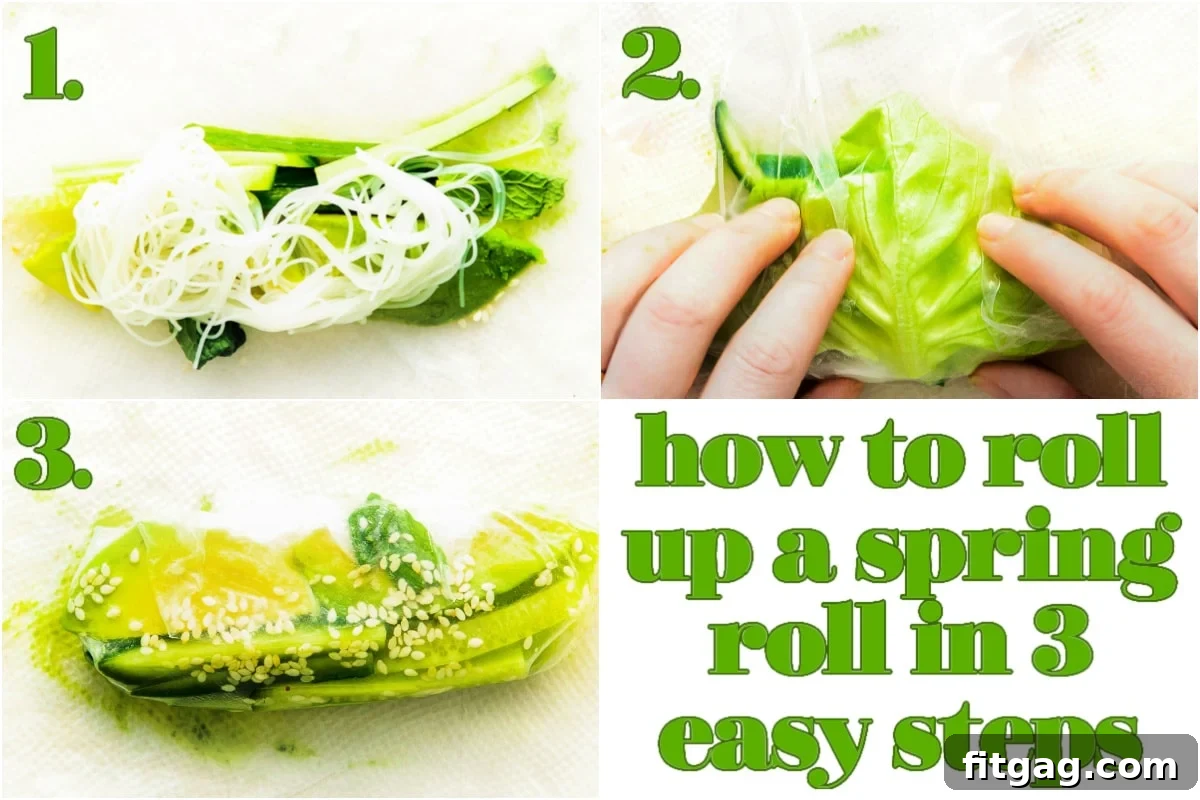
Expert Tip: You want your spring roll to be rolled snugly and securely, but not so tightly that the rice paper stretches or tears. Don’t worry if your first few aren’t perfect – practice truly makes perfect when it comes to rolling!
How To Prepare the Creamy Peanut Dipping Sauce:
- Whisk to Perfection: In a small mixing bowl, combine all the peanut sauce ingredients: creamy peanut butter, soy sauce, rice vinegar, grated ginger, and grated garlic. Whisk them vigorously until everything is thoroughly combined and smooth.
- Achieve Desired Consistency: The thickness of your peanut sauce can vary depending on your peanut butter and preferences. If the sauce appears too thick, add water one teaspoon at a time, whisking well after each addition, until you achieve a silky, pourable, yet still substantial consistency perfect for dipping. I typically find that one to two tablespoons of water are sufficient to reach the ideal texture.
- Store and Serve: Once prepared, transfer your peanut dipping sauce to an airtight container. Store it in the refrigerator until you are ready to serve. This allows the flavors to meld beautifully and keeps it fresh.
Frequently Asked Questions About Fresh Spring Rolls
How long will fresh spring rolls stay fresh?
While fresh spring rolls are undoubtedly at their absolute best when enjoyed immediately after preparation, they can be stored in the refrigerator for about 2 to 3 days. To prevent the delicate rice paper wrappers from sticking to each other, it’s crucial to individually wrap each leftover roll tightly in plastic wrap. Additionally, store them in an airtight container to maintain their freshness and prevent them from drying out. As for the delicious peanut dipping sauce, it is much more resilient and will stay fresh in an airtight container in the fridge for up to an entire week! Just try not to eat it all straight out of the container – though, no judgment here if you do!
Are these rolls gluten-free?
Yes, the fresh spring rolls themselves are naturally gluten-free, as rice paper wrappers are made from rice flour. For the peanut dipping sauce to also be gluten-free, ensure that you substitute regular soy sauce with a certified gluten-free soy sauce (like Tamari). Always check the labels of all your ingredients, especially soy sauce, to confirm they are indeed gluten-free.
Can I make these fresh spring rolls vegan?
Absolutely! This recipe is inherently vegetarian, and easily adaptable to be completely vegan. Simply ensure that all ingredients for the peanut dipping sauce, such as honey, are replaced with vegan alternatives like maple syrup. All the core roll ingredients (vegetables, rice noodles, rice paper) are plant-based, making this a fantastic vegan-friendly dish.
What’s the best way to prevent the rice paper from tearing or becoming too sticky?
The key to perfect rice paper handling is a swift and gentle touch. Don’t over-soak the wrappers; 5-10 seconds in warm water is usually enough until it’s pliable but still slightly firm. Work on a clean, smooth, and slightly damp surface (like a moistened cutting board or a non-stick mat) to prevent sticking. Rolling quickly and confidently helps, as the wrapper becomes stickier as it dries. If you’re struggling, try using slightly cooler water or working in smaller batches.
Can I prep ingredients for spring rolls ahead of time?
Yes, prepping ahead is highly recommended! You can wash and chop all your vegetables (carrots, cucumbers, cabbage, lettuce) and store them in airtight containers in the refrigerator a day or two in advance. Cook and chill your rice noodles. Slice your avocado just before assembling to prevent browning. The peanut sauce can also be made several days ahead and stored in the fridge, allowing the flavors to deepen even further.
Delicious Variations to Try: Customize Your Summer Rolls
The beauty of summer rolls lies in their adaptability. You can truly make them your own by experimenting with various fillings and flavor profiles. Here are some fantastic variations to inspire your culinary creativity:
- Add Protein Power:
- Shrimp: Cooked and chilled shrimp halves are a classic addition, offering a sweet, delicate flavor and lovely pink color.
- Tofu: Marinated and pan-fried or baked tofu provides a hearty, plant-based protein. Try marinating it in soy sauce, sesame oil, and a touch of ginger for extra flavor.
- Chicken: Shredded cooked chicken, perhaps seasoned with a light Asian marinade, is another delicious option for a more substantial roll.
- Explore More Vegetables and Herbs:
- Radish: Thinly sliced radishes add a peppery bite and vibrant color.
- Bell Peppers: Strips of red, yellow, or orange bell peppers contribute sweetness and crunch.
- Jalapeño: For a touch of heat, finely slice some jalapeño (remove seeds for less spice).
- Mango: Sliced ripe mango adds a surprising tropical sweetness that pairs wonderfully with the savory elements.
- Mint and Cilantro: Beyond Thai basil, fresh mint and cilantro leaves provide bright, refreshing, and aromatic notes.
- Green Onions: Sliced green onions offer a mild oniony flavor and a subtle crunch.
- Jicama: Thin sticks of jicama provide a unique watery crunch and a slightly sweet, earthy flavor.
- Experiment with Noodles: While rice vermicelli is traditional, consider glass noodles (bean thread noodles) for a slightly different texture.
- Boost Flavor with Marinades: Marinate your proteins or even some of your firmer vegetables (like carrots or jicama) in a light dressing before rolling to infuse them with extra flavor.
- Spicy Kick: If you love heat, add a thin strip of fresh chili or a sprinkle of chili flakes to the filling, in addition to customizing your dipping sauce.
More Easy Appetizer Recipes to Delight Your Guests
If you love preparing delicious and easy appetizers, here are some other fantastic recipes from our collection that are sure to impress:
- Classic Coleslaw
- Best Ever Charcuterie Board
- Fresh Pico de Gallo
- Savory Turkey Cranberry Pinwheels
- Crockpot Cocktail Meatballs
- Refreshing Watermelon Pizza
- Hummus Stuffed Veggie Tray
The Complete Fresh Spring Rolls Recipe
Print Recipe
Pin Recipe
Rating: 5 out of 5 stars from 1 vote
Spring Rolls
Fresh Spring Rolls are packed with veggies and so refreshing – the perfect appetizer or snack for summer! Light, full of flavor, and served with a mouthwatering peanut dipping sauce, everyone will be clamoring to get their hands on one of this spring roll recipe. Perfect for a summer picnic, garden party, bridal shower, and so much more.
Course: Appetizer
Cuisine: Asian, Thai
Keyword: spring roll recipe, spring rolls, summer rolls
Prep Time: 10 minutes
Cook Time: 0 minutes
Servings: 8
Calories: 189 kcal
Author: Trish – Mom On Timeout
Ingredients
For the Spring Rolls
- 8 rice paper sheets
- 2 ounces rice noodles (cooked according to the package)
- 1 cup butter lettuce (ribs removed)
- 1 avocado (sliced)
- 1 cup shredded purple cabbage
- 1 cucumber (cut into matchsticks)
- 1 carrot (thinly shaved or cut into matchsticks)
- ½ cup Thai basil leaves (optional)
- 1 tablespoon sesame seeds
For the Peanut-Soy Dipping Sauce
- ¼ cup creamy peanut butter
- 2 tablespoons soy sauce (Tamari or hoisin sauce can be used instead)
- 1 to 2 tablespoons rice vinegar
- ½ teaspoon grated ginger
- ½ teaspoon grated garlic
Optional Peanut Sauce Ingredients
- chili garlic sauce or chili paste (for a spicier peanut sauce, use sparingly and to taste)
- toasted sesame oil (this is one of my all-time favorite ingredients. it’s a very strong flavor so only use a 1/2 teaspoon to start and add more as needed)
- honey or maple syrup (for a sweeter sauce, start with a couple teaspoons and add more as needed)
Instructions
Spring Rolls
- Fill a large bowl (big enough to fit the rice paper sheets) with warm water. Dip one rice paper sheet into the warm water for about 5 to 10 seconds, or until it begins to soften.
- Carefully transfer the rice paper to a smooth surface and place a small amount of each ingredient in the center of the rice paper. I like to start with the lettuce so it acts as a barrier between the rice paper and the other veggies. I do lettuce, rice noodles, and then anything goes.
- Gently fold the sides of the rice paper toward the center, covering the filling. Next, fold or pull the edge closest to you up and over the filling – being careful not to tear the rice paper – and gently roll towards the opposite edge of the rice paper – just like you would roll a burrito.
- Refrigerate rolls until ready to serve.
Peanut Dipping Sauce
- Whisk together the sauce ingredients in a small mixing bowl. If needed, add water, 1 teaspoon at a time, to thin out the sauce until you’ve reached the desired consistency.
- Store peanut sauce in an airtight container in the refrigerator until ready to serve.
Nutrition
Calories: 189kcal | Carbohydrates: 23g | Protein: 6g | Fat: 9g | Saturated Fat: 2g | Polyunsaturated Fat: 2g | Monounsaturated Fat: 5g | Cholesterol: 2mg | Sodium: 421mg | Potassium: 309mg | Fiber: 3g | Sugar: 2g | Vitamin A: 1464IU | Vitamin C: 11mg | Calcium: 40mg | Iron: 1mg