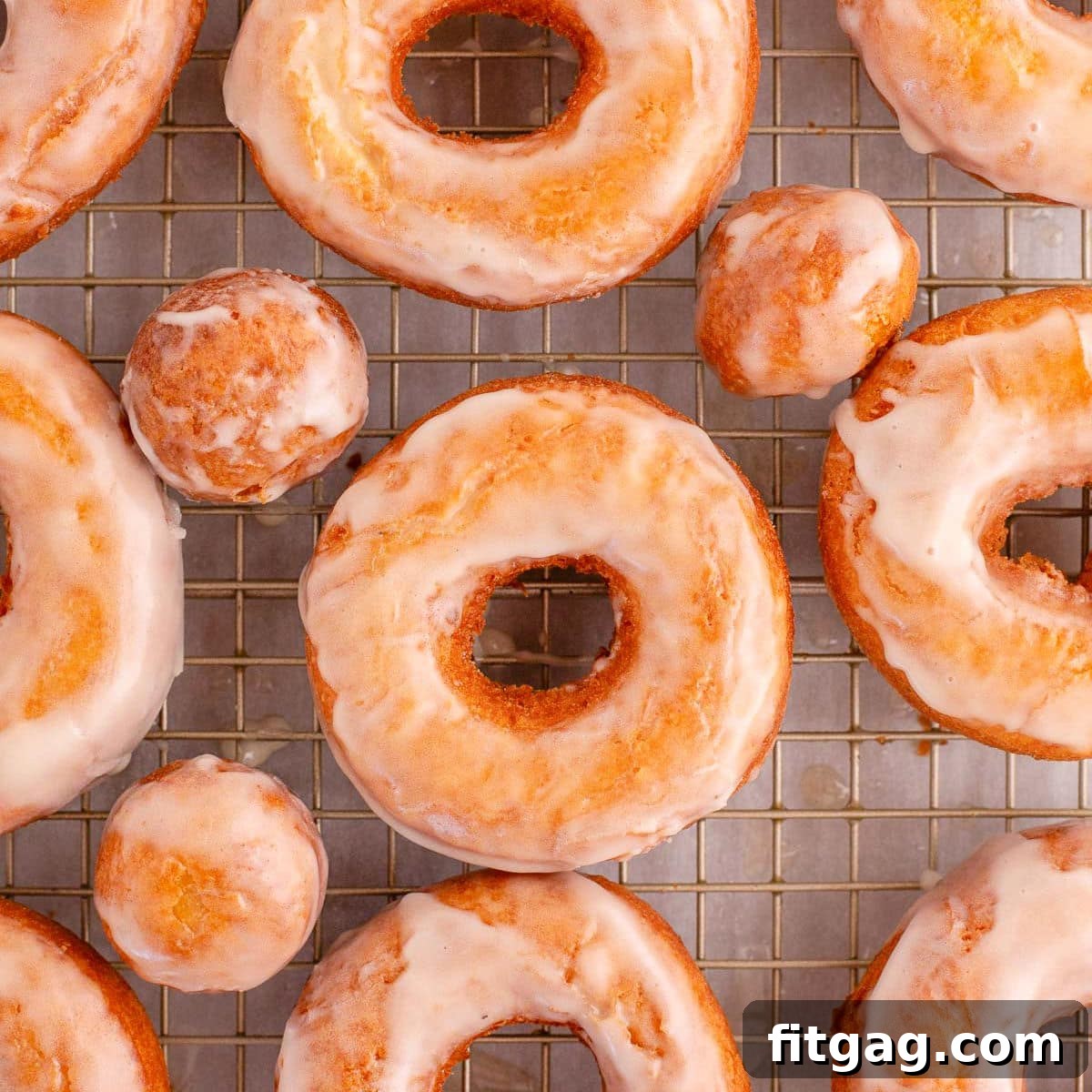
Homemade Sour Cream Cake Donuts: Your New Favorite Recipe
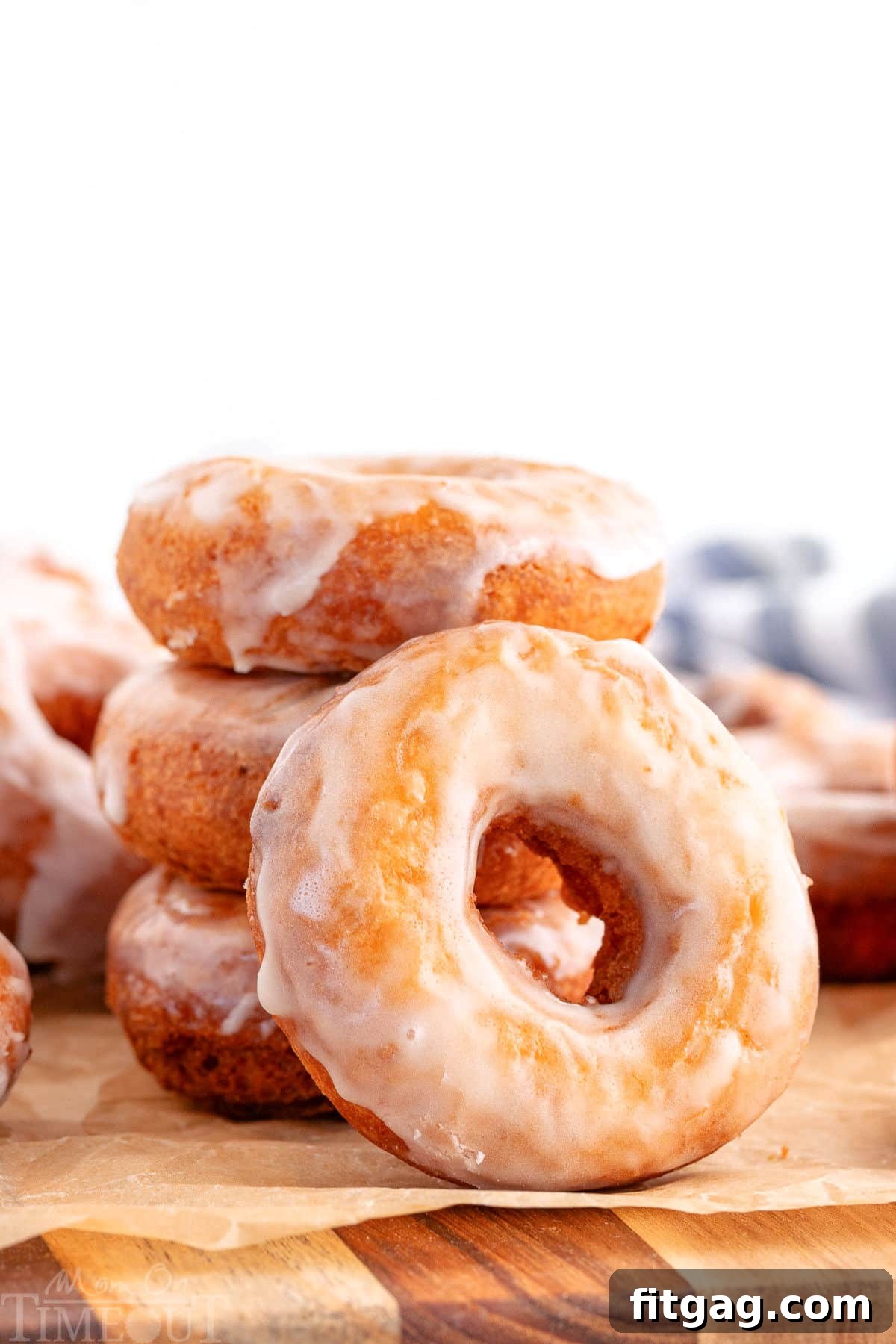
Prepare to elevate your breakfast game with these incredible homemade Sour Cream Cake Donuts! Forget the trip to your local donut shop; this recipe delivers tender, soft, and perfectly fried donuts, each bathed in a luscious vanilla glaze that will satisfy every craving. Ideal for leisurely weekend mornings, festive holidays, or any special occasion, these cake donuts are astonishingly easy to make and guaranteed to become a family favorite.
If you’re a true donut enthusiast, don’t stop here! Be sure to explore other delightful recipes like Classic Glazed Donuts, sweet Jelly Donuts, unique Banana Donuts, and our truly unforgettable Raspberry Cheesecake Donuts!
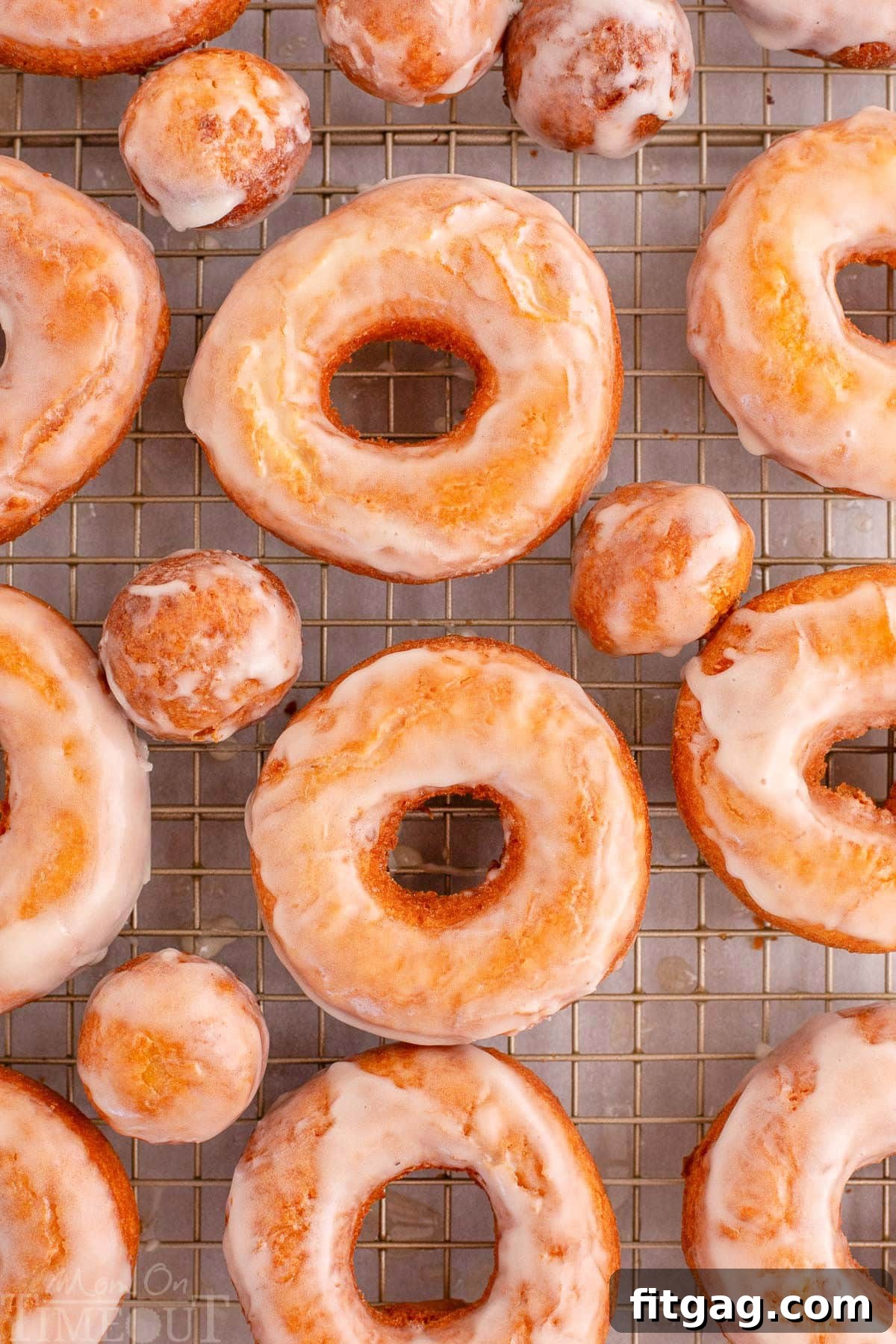
The Ultimate Sour Cream Cake Donut Recipe
If the thought of fresh, homemade donuts makes your mouth water, then these Sour Cream Donuts are about to become a cherished addition to your recipe collection. Crafted with delicate cake flour and the distinct tang of sour cream, these donuts boast an unparalleled soft, tender crumb that’s fried to a beautiful golden perfection. The simple yet exquisite vanilla glaze provides the ideal sweet finish, making every bite utterly irresistible. Whether you’re serving them up for a comforting breakfast, a delightful afternoon snack, or as a special celebratory treat, these donuts are sure to impress and delight everyone who tries them.
Achieving the perfect balance of rich flavor and airy fluffiness, this cake donut recipe is surprisingly straightforward, filling your home with the inviting aroma of a professional donut shop. The ingenious inclusion of sour cream is what truly distinguishes these donuts, imparting a unique tenderness and moistness that elevates them far beyond ordinary varieties. Paired with a meticulously prepared, silky smooth glaze, they transcend into a new realm of deliciousness, proving themselves truly irresistible.
Why You’ll Fall in Love with This Donut Recipe
These Sour Cream Donuts are everything you’ve dreamed of in a homemade treat! Soft, incredibly tender, and generously dipped in a sweet vanilla glaze, they are perfect for starting your day, enhancing your brunch spread, or simply enjoying as a delightful indulgence at any moment. There’s so much to adore about these delicious donuts:
- Unmatched Soft and Fluffy Texture: The secret to their incredible texture lies in the careful combination of fine cake flour and rich sour cream. This pairing creates a donut that is wonderfully tender on the inside, with a light, almost ethereal quality that melts in your mouth. Unlike denser yeast donuts, cake donuts offer a delicate crumb that is simply delightful.
- Remarkably Easy to Make: Don’t be intimidated by the idea of making donuts from scratch! This recipe is designed for simplicity, making it accessible even for novice bakers. There are no complicated techniques, no lengthy proofing times, just straightforward steps that yield professional-quality results right in your own kitchen. You’ll be amazed at how easily these delicious treats come together.
- Perfectly Glazed Perfection: The homemade vanilla glaze isn’t just an afterthought; it’s an essential component that adds a sublime sweet finish to the crispy fried donuts. The thin, delicate coating provides a glistening sheen and a burst of classic vanilla flavor, making them utterly hard to resist. For those who love to customize, feel free to get creative! Roll them in granulated sugar for a classic finish, sprinkle them with colorful sprinkles for a festive touch, or whip up a rich chocolate glaze for a decadent twist.
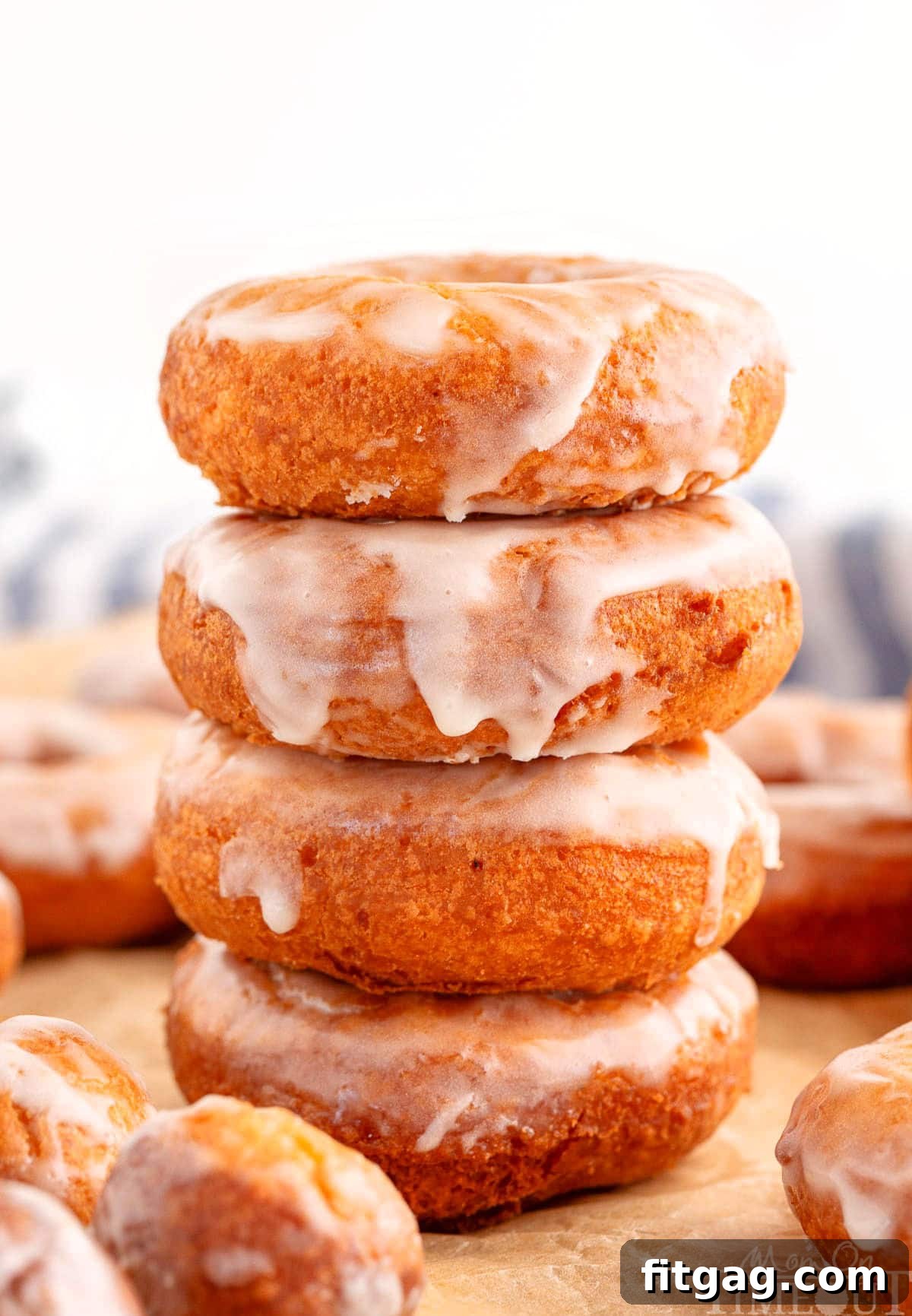
Understanding Cake Donuts: A Delicious Distinction
When it comes to the world of donuts, there are two primary categories: yeast donuts and cake donuts. The fundamental difference lies in their leavening agents. Unlike yeast donuts, which rely on yeast and require significant time for the dough to rise (or “proof”), cake donuts achieve their rise and signature texture through chemical leavening agents, primarily baking powder and baking soda. This means you can enjoy fresh, warm donuts much faster!
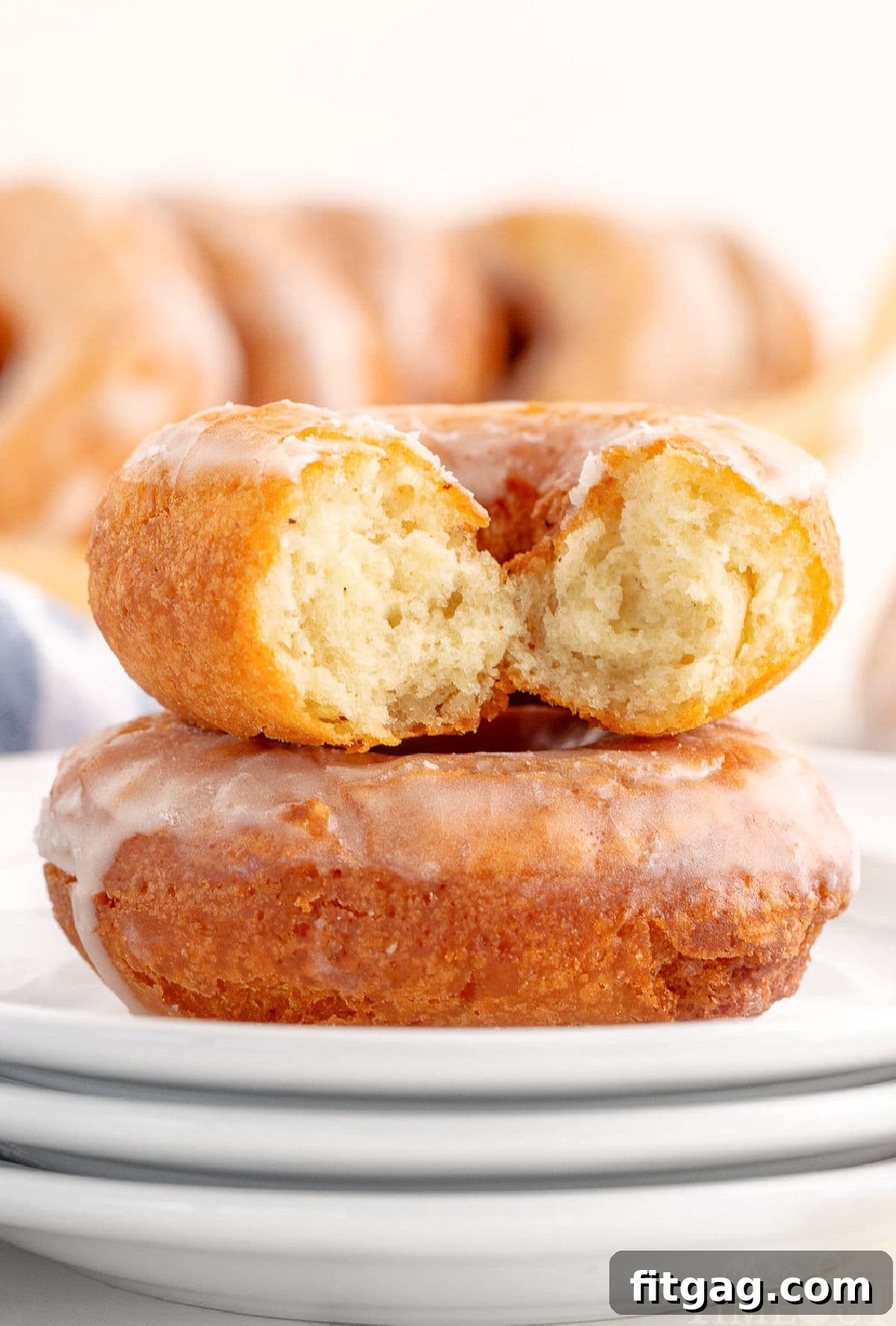
Because the dough for cake donuts is similar in consistency and composition to a cake batter – richer and thicker than yeast dough – the resulting donuts are incredibly soft, moist, and indeed, “cake-like.” They typically have a slightly denser, crumbly interior compared to the airy, chewy texture of a yeast donut, offering a delightful contrast. This unique texture, combined with their quick preparation time, makes cake donuts a beloved treat for many. They absorb glazes and toppings beautifully, making them a versatile canvas for various flavors and decorations.
Essential Ingredients and Smart Substitutions for Your Cake Donuts
One of the many joys of this sour cream cake donut recipe is that most of the ingredients are pantry staples, making it incredibly convenient when a sudden sweet craving strikes. These non-yeasted donuts are renowned for their quick and easy preparation. Here’s a detailed look at the key ingredients you’ll need and some helpful substitutions you can consider:
For the Dough: Crafting the Perfect Crumb
- Cake Flour: For the ultimate light and tender donut, cake flour is highly recommended. It’s milled more finely than all-purpose flour and generally contains a lower protein content (around 7-9% compared to all-purpose flour’s 10-12%). This lower protein level minimizes gluten development, resulting in a softer, more delicate, and melt-in-your-mouth texture that is characteristic of premium cake donuts.
- Accurate Measurement is Key: For the best and most consistent results, weighing your flour with a kitchen scale is always preferred. If you’re using measuring cups, employ the “scoop and sweep” method: lightly stir the flour in its container to loosen it, then gently scoop the flour into the measuring cup, slightly overfilling it. Avoid packing the flour. Finally, use a straight edge (like the back of a knife) to level off the excess flour from the top of the cup. This prevents over-measuring, which can lead to dry donuts.
- Tip: All-Purpose Flour Substitute: If cake flour isn’t readily available, you can create a reasonable substitute using all-purpose flour. For every cup of all-purpose flour, remove 2 tablespoons of flour and replace it with 2 tablespoons of cornstarch. The cornstarch helps to tenderize the gluten in the all-purpose flour, mimicking some of the soft and delicate crumb qualities of cake flour.
- Leavening Agents (Baking Powder and Baking Soda): These are the powerhouse ingredients that give your donuts their wonderful rise and airy structure without yeast. Baking powder is a complete leavener, containing both acid and base, which activates when wet and again when heated. Baking soda, on the other hand, requires an acidic ingredient (like the sour cream in this recipe) to react and produce carbon dioxide gas, creating lift and lightness. Together, they ensure a beautifully risen and tender donut.
- Ground Nutmeg: This spice is a traditional, quintessential addition to old-fashioned style donuts, lending a warm, comforting, and subtly spicy aroma and flavor that truly elevates the overall profile. While it can be omitted if you prefer, it’s highly recommended for that classic donut shop taste. Feel free to experiment with other preferred warm spices like a pinch of cinnamon, ginger, allspice, or cardamom. For an extra layer of freshness, consider using freshly grated nutmeg – the difference is remarkable!
- Granulated Sugar: Beyond simply adding sweetness to the dough, granulated sugar plays several vital roles. It contributes to the beautiful browning of the donuts during frying, helps create a softer and more tender crumb by interfering with gluten development, and provides a pleasant textural contrast to the tangy sour cream and rich butter.
- Unsalted Butter: Butter is crucial for adding richness, flavor, and moisture to the donut dough. When creamed with sugar, it creates tiny air pockets, which contribute to a lighter and more tender donut. Using unsalted butter allows you to control the exact amount of salt in the recipe. If you only have salted butter, simply reduce the added salt by one-eighth of a teaspoon to maintain balance. Ensure your butter is softened to room temperature for optimal creaming.
- Eggs: Eggs are multifunctional in this recipe, providing essential structure and stability to the dough through their protein content. They also contribute moisture, richness, and help bind the ingredients together. Since there’s no yeast involved, the temperature of your eggs (room temperature or cold) won’t significantly impact the outcome, offering flexibility.
- Sour Cream: This is the star ingredient that gives these donuts their distinctive character. Sour cream is incredibly important for adding significant moisture and richness to the dough, resulting in exceptionally soft and moist donuts. Its pleasant tang also provides a lovely counterbalance to the sweetness of the glaze, preventing the donuts from being overly saccharine. For substitutions, plain Greek yogurt or buttermilk can work well as alternatives, offering similar acidity and moisture.
- Vanilla Extract: A good quality vanilla extract is paramount for enhancing and rounding out all the other flavors in the donut dough and the glaze. Always opt for real, authentic vanilla extract over artificial imitation for the best taste.
- Frying Oil: The choice of oil for frying is crucial for achieving a perfectly crispy exterior without imparting unwanted flavors. You’ll need a flavorless oil with a high smoke point to ensure the donuts fry evenly and don’t burn. Excellent options include vegetable oil, canola oil, peanut oil, or avocado oil. Ensure you have enough oil to submerge the donuts for even cooking.
Step-by-Step Guide: How to Make Irresistible Sour Cream Donuts
This Cake Donut recipe holds a special place as one of our absolute favorites – it’s remarkably simple to prepare and truly surpasses the offerings of many a local donut shop. Infused with rich, tangy sour cream and fried until they achieve a crispy, golden-brown exterior, these donuts are then generously dipped in a silky smooth glaze, promising a professional donut-shop experience right in the comfort of your own home!
Let’s walk through the process of making these delightful donuts. For a comprehensive, printable version of the recipe with exact measurements, please scroll down to the end of this post where you’ll find the complete recipe card.
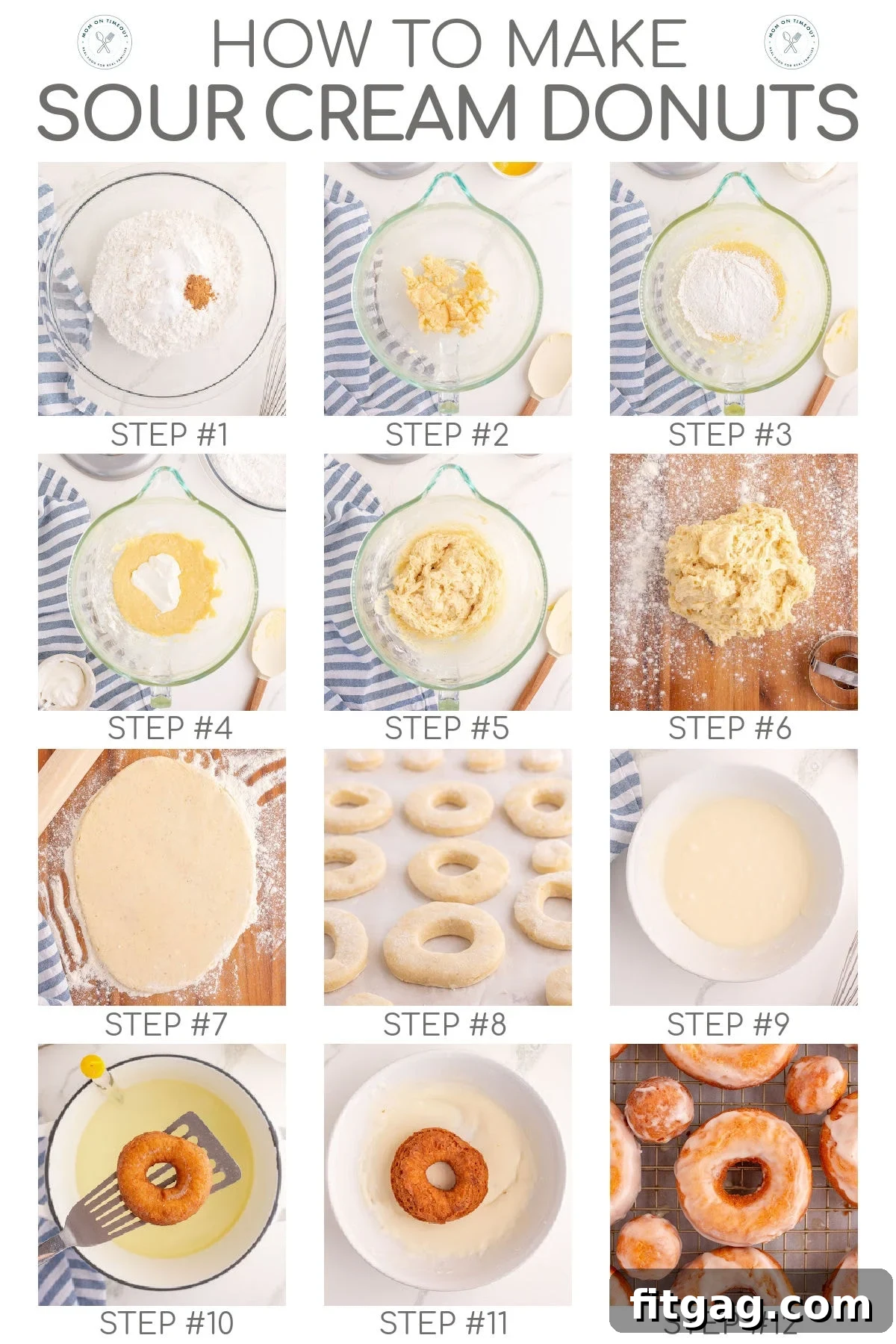
- Combine Dry Ingredients: In a medium-sized bowl, thoroughly whisk together the cake flour, baking powder, baking soda, salt, and ground nutmeg. Ensure these ingredients are well combined to guarantee even leavening and flavor distribution throughout the dough.
- Cream Butter and Sugar: In the bowl of a stand mixer fitted with the paddle attachment (or a large mixing bowl with a hand mixer), cream together the softened unsalted butter, granulated sugar, and vanilla extract. Beat on medium speed for 1 to 2 minutes until the mixture becomes light, fluffy, and pale in color. This process incorporates air, contributing to the donut’s light texture.
- Incorporate Eggs: Add the lightly beaten eggs to the creamed mixture. Mix on medium speed for about 30 seconds, or until they are fully incorporated and the mixture is smooth. Remember to stop and scrape down the sides of the bowl and the paddle attachment to ensure everything is evenly mixed.
- Alternate Wet and Dry Ingredients: Begin by adding one-third of your dry flour mixture to the wet ingredients. Mix on low speed until just incorporated; it’s okay if a few streaks of flour remain – avoid overmixing. Next, add half of the sour cream and mix on low speed until just combined. Repeat this process: add another third of the flour mixture, then the remaining sour cream, mixing gently each time. Finish by incorporating the final third of the flour. Mix only until no dry streaks of flour are visible, scraping down the bowl and paddle as needed to ensure a cohesive dough. Overmixing develops too much gluten, which can lead to tough donuts.
- Chill the Dough: Cover the donut dough tightly with plastic wrap and refrigerate it for at least one hour. Chilling is a critical step; it allows the dough to firm up, making it much easier to handle, roll, and cut without becoming overly sticky. This also helps prevent the donuts from absorbing too much oil during frying.
- Prepare the Glaze: While the dough chills, prepare your vanilla glaze. In a separate bowl, combine the melted and cooled unsalted butter with the vanilla extract, whisking briefly. Then, gradually add the powdered sugar and 2 tablespoons of whole milk, whisking until the glaze is smooth, lump-free, and has a pourable yet thick consistency. If it’s too thick, add milk a teaspoon at a time; if too thin, add more powdered sugar. Cover the glaze and set it aside at room temperature.
- Heat the Oil: Just before you plan to roll and cut the dough, begin heating 2-3 inches of a flavorless oil (like vegetable or canola) in a heavy-bottomed pot or Dutch oven over medium-high heat. Use a deep-fry thermometer to monitor the oil temperature, aiming for a steady 350°F (175°C). Maintaining the correct temperature is vital for perfectly cooked donuts.
- Roll and Cut Donuts: Turn the chilled dough out onto a lightly floured surface. Gently gather the dough and turn it in on itself 2 to 3 times to form a loose ball – avoid overworking it. Using a heavily floured rolling pin, roll the dough evenly to a thickness of approximately ½-inch. Use a 3-inch donut cutter (or a 3-inch round cookie cutter for the outer shape and a 1-inch cutter for the center hole) to cut out your donut shapes. Flour the cutter lightly after each use to prevent sticking. Carefully transfer the cut donuts and donut holes to a parchment-lined baking sheet. Gather any dough remnants, gently press them together (without kneading), reroll, and cut to get a total of about 12 donuts and their holes.
- Fry the Donuts: Carefully transfer the cut donuts from the baking sheet into the hot oil, frying them in small batches of 3-4 to avoid overcrowding the pot and dropping the oil temperature. Use a thin metal spatula or a spider strainer to gently place them into the oil. Fry each side for approximately 60 seconds, or until golden brown. Gently flip the donuts once they’re golden on the first side and fry for an additional 60 seconds on the other side.
- Drain and Glaze: Once fried to a perfect golden color, carefully remove the donuts from the hot oil using a metal spider strainer or a slotted metal spatula. Place them immediately onto a wire rack set over a baking sheet lined with paper towels to catch any excess oil. Allow the donuts to cool slightly for a few minutes while still warm.
- Final Glazing: While the donuts are still warm, dip the top side of each donut into the prepared vanilla glaze. You can also spoon the glaze generously over the top of each donut for a more rustic look. If you prefer a fully coated donut, gently turn it to coat the other side. Place the glazed donuts back on the wire rack and allow the glaze to set slightly before serving. These donuts are best enjoyed warm or at room temperature, shortly after glazing.
Storage Guidelines for Freshness
While these homemade sour cream cake donuts are undeniably at their absolute best when enjoyed fresh and warm, you can certainly store any leftovers to savor later. Proper storage ensures they remain delicious for as long as possible. If reheating is needed, a quick zap in the microwave for a few seconds will bring back some of their original warmth and softness.
- Room Temperature: Glazed donuts can be stored in an airtight container at room temperature for up to 2-3 days. To prevent them from sticking together, you can place parchment paper between layers. While still delicious, their texture will be softer than freshly made.
- Refrigerator: Storing glazed donuts in the refrigerator is generally not recommended as the cold can make them dense and dry out the glaze. However, unglazed donuts can be stored in an airtight container in the fridge for up to 5 days, offering a good option if you plan to glaze them just before serving.
- Freezer: For longer storage, you can freeze unglazed donuts. Arrange them in a single layer on a baking sheet and freeze until solid, then transfer them to a freezer-safe airtight container or bag. They will keep well for up to 1 week. Beyond this period, they tend to lose their fresh integrity and moistness. To enjoy, thaw them at room temperature or warm them gently in the microwave for a few seconds.
- Reheat: To revive refrigerated or thawed donuts, pop them in the microwave for just a few seconds until slightly warm. Alternatively, warm them in a preheated oven at 350°F (175°C) for about 5 minutes. If you froze them unglazed, add your desired topping or glaze after reheating to ensure it’s fresh and vibrant.
Essential Tools for Donut Making Success
Having the right tools can make the donut-making process much smoother and more enjoyable, especially when working with hot oil. Here are some key pieces of equipment you’ll find helpful:
- Stand Mixer: While not strictly essential, a stand mixer greatly simplifies the dough-making process, especially when creaming butter and sugar and mixing the thick dough. A hand mixer or even manual mixing with a sturdy spoon and some elbow grease will also work perfectly well.
- Deep-Fry Thermometer: This is an invaluable tool for ensuring your oil maintains the perfect temperature for frying. Consistent oil temperature is crucial for donuts that are golden brown on the outside and cooked through on the inside without being greasy.
- Spider Strainer: A metal spider strainer is incredibly handy for safely lowering the donuts into the hot oil and carefully removing them once they’re perfectly fried. Its wide, shallow basket allows for easy maneuvering and draining.
- Rolling Pin: A good quality rolling pin is essential for rolling out the dough to an even thickness, which in turn ensures that all your donuts cook uniformly and have a consistent texture.
- Donut Cutters: Specialized donut cutters make quick and easy work of shaping your donuts, giving them that classic ring shape. However, if you don’t have one, a 3-inch round cookie cutter and a smaller ½-inch round cutter (for the hole) will work just as effectively.
Exciting Variations to Elevate Your Donuts
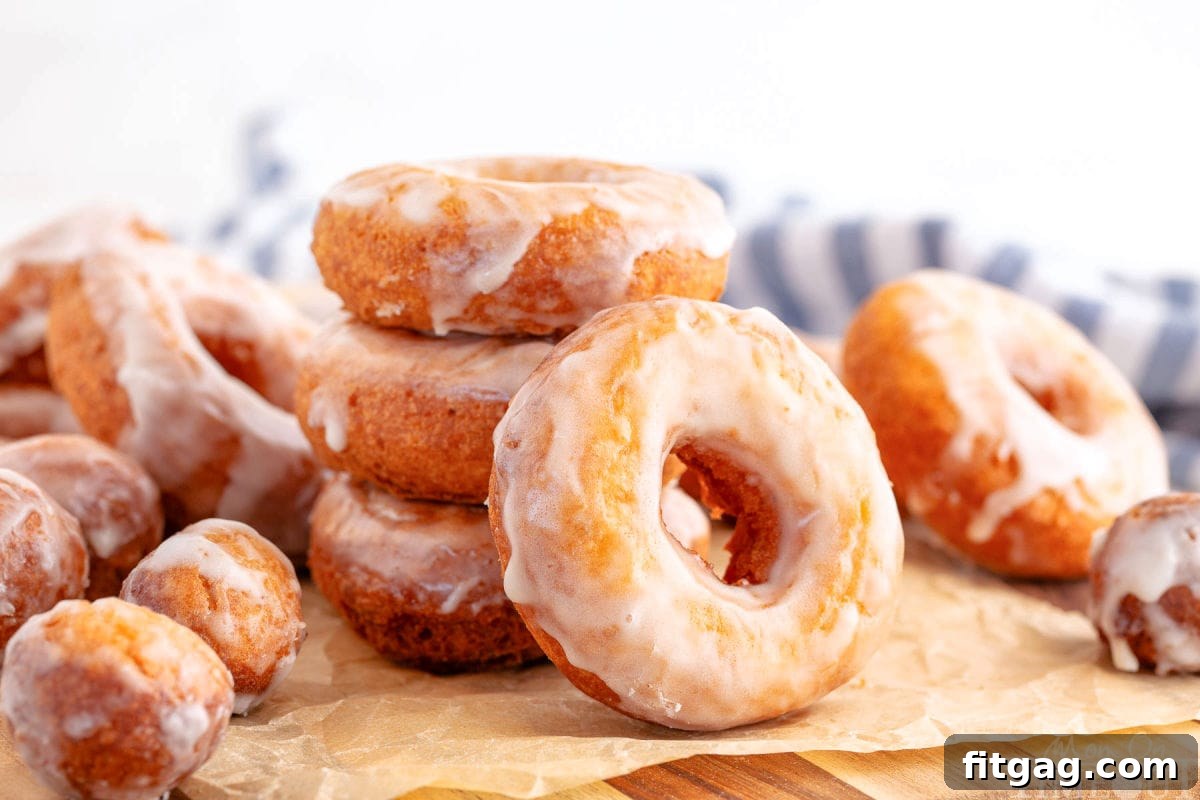
While the classic vanilla glaze is a simple and delicious choice, these sour cream cake donuts are wonderfully versatile, lending themselves to a myriad of exciting variations. Don’t hesitate to get creative and customize them to your liking!
- Experiment with Glazes: Beyond vanilla, explore other delightful glaze options. You’ll find detailed recipes for a rich chocolate glaze and a comforting maple glaze in the recipe card below. A vibrant strawberry glaze, made with fresh berries, would also be a truly delicious and refreshing twist!
- Sugar-Coated Delights: For a different kind of sweetness, skip the liquid glaze altogether and roll the warm donuts in various sugar mixtures. A simple toss in granulated sugar provides a satisfying crunch, while powdered sugar offers a delicate, melting finish. For an old-fashioned favorite, combine sugar with a generous pinch of cinnamon for a fragrant cinnamon-sugar coating – truly irresistible!
- Sprinkles and Toppings: After glazing, immediately adorn your donuts with colorful sprinkles for a festive look, or chopped nuts for added texture. Drizzle with melted chocolate or caramel for an extra layer of indulgence.
Frequently Asked Questions About Cake Donuts
Here are answers to some common questions that bakers often have about making these delightful sour cream cake donuts:
What if I don’t have a donut cutter?
No donut cutter? No problem at all! While donut cutters certainly streamline the shaping process, you can achieve perfectly good donut shapes using standard round cookie cutters. Simply use a 3-inch round cutter for the main donut shape and a smaller ½-inch or 1-inch round cutter for the center hole. This method works just as well and ensures your donuts have that classic ring appearance.
How do I know when the oil is ready for frying?
Achieving the correct oil temperature is crucial for perfectly cooked donuts that are not greasy. The ideal temperature range for frying these cake donuts is between 350°F to 375°F (175°C to 190°C). The best way to monitor this accurately is by using a reliable deep-fry thermometer. If you don’t have a thermometer, a quick trick is to drop a small piece of donut dough into the hot oil. If it immediately floats to the surface and begins to sizzle gently, the oil is ready. If it sinks or barely sizzles, the oil needs more time to heat up. If it browns too quickly, the oil is too hot.
What other glazes can I make?
The possibilities for glazes are virtually endless! Beyond the classic vanilla, you can easily create a variety of flavors. As mentioned, I’ve provided specific recipes for a rich chocolate glaze and a comforting maple glaze in the dedicated recipe card below. Other fantastic ideas include a tangy lemon glaze (using lemon juice instead of milk), a fruity berry glaze (with pureed berries), or even a coffee-flavored glaze for a sophisticated touch. Get creative with extracts and purees to find your favorite!
Can I bake these donuts instead of frying them?
This particular recipe is specifically designed for frying, which contributes significantly to their tender interior and delightfully crisp exterior. The high heat of the oil creates a unique texture that cannot be fully replicated by baking. While there are baked cake donut recipes available, using this specific dough for baking would yield a very different result in terms of texture and taste, likely much denser and less “donut-like.” For best results and the authentic experience, frying is highly recommended.
How can I get perfectly shaped donuts every time?
For uniform, well-shaped donuts, ensure your dough is evenly rolled to ½-inch thickness. Flour your donut cutter or cookie cutters frequently between cuts to prevent sticking. When gathering scraps, avoid excessive kneading; simply press them gently together to minimize gluten development. Chilling the dough thoroughly also helps it hold its shape better during cutting and frying.
Trish’s Expert Tips for Donut Perfection
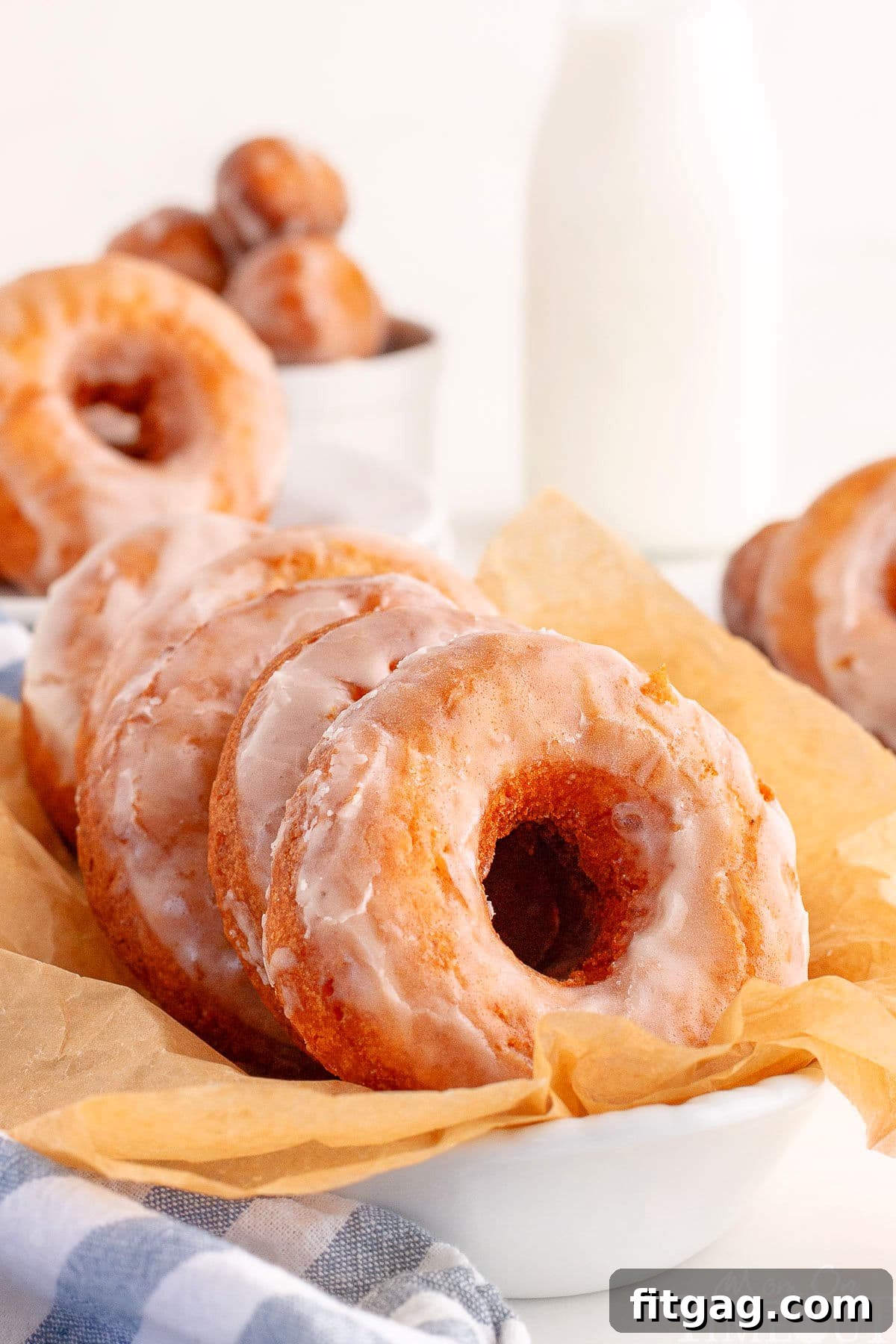
Achieving bakery-quality sour cream cake donuts at home is entirely within reach with a few key tips and tricks:
- The Importance of Chilling the Dough: Do not skip the chilling step! Chilling the dough for at least an hour allows the fats to solidify and the gluten to relax. This makes the dough significantly easier to roll out and cut without it becoming overly sticky or tearing. If the dough is used immediately after mixing, it can be too soft and sticky, requiring more flour for handling. Excess flour can lead to a dry, tough, and less tender donut. Chilled dough also helps the donuts hold their shape better when they hit the hot oil.
- Mastering Oil Temperature with a Thermometer: Using a deep-fry thermometer to maintain the oil temperature between 350-375°F (175-190°C) is arguably the most crucial tip. If the oil is too hot, the donuts will brown too quickly on the outside, appearing cooked while remaining raw and doughy in the middle. Conversely, if the oil is too cool, the donuts will absorb excessive oil, resulting in a greasy, heavy, and unappetizing texture. Consistency is key!
- The Dough Test (If No Thermometer): If you find yourself without a thermometer, you can still gauge the oil temperature. Drop a small piece of donut dough or a donut hole into the hot oil. If it floats to the surface and sizzles gently right away, your oil is likely ready. If the dough sinks to the bottom and takes a long time to rise or sizzle, the oil needs to heat up further. If it immediately turns dark brown, the oil is too hot.
- Adjusting Fry Times: Keep in mind that exact frying times can vary slightly based on the thickness of your rolled dough and the actual oil temperature. It’s always a good practice to test one donut hole or a small scrap piece of dough first. Fry it for the recommended 2 minutes (1 minute per side), then remove it and carefully cut it open to ensure it is cooked through in the center. Adjust your frying time slightly for the rest of the batch if needed.
- Creative Glazing and Topping Ideas: While these donuts are perfectly glazed in a quick vanilla glaze, don’t limit yourself! Donuts are a fantastic canvas for various toppings. Beyond the glazes detailed in the recipe card, consider rolling them in plain granulated sugar, powdered sugar, or a spiced cinnamon-sugar mixture for an old-fashioned feel. You can also experiment with different frostings, drizzles of melted chocolate, or a scattering of toasted nuts or colorful sprinkles for a fun, personalized touch.
- Avoid Overcrowding the Pot: Fry donuts in small batches, typically 3-4 at a time, depending on the size of your pot. Overcrowding will significantly lower the oil temperature, leading to greasy, poorly cooked donuts. Giving them space allows the oil to maintain its heat and ensures even cooking.
- Proper Draining for Best Texture: After frying, immediately transfer the donuts to a wire rack placed over a baking sheet lined with paper towels. The wire rack allows air to circulate around the donuts, preventing the bottoms from becoming soggy, while the paper towels absorb any excess oil, ensuring a light and crispy texture.
More Delicious Breakfast Treats to Try
If you loved these sour cream cake donuts, be sure to explore more delightful recipes to brighten your mornings:
- Fluffy Waffle Recipe
- Irresistible Blueberry Lemon Cream Cheese Muffins
- The Best Fluffy Buttermilk Pancakes
- Easy Cherry Cheese Danish Recipe
- Bright and Zesty Lemon Sweet Rolls

Print Recipe | Pin Recipe
Sour Cream Cake Donuts
These homemade Sour Cream Cake Donuts are better than your local donut shop and so easy to make! Tender, soft, fried to golden perfection and coated in a sweet vanilla glaze, this cake donut recipe is sure to satisfy any donut craving! Perfect for cozy weekends at home, special occasions and holidays!
Course: Breakfast
Cuisine: American
Keyword: cake donut, cake donut recipe, cake donuts, sour cream donut, sour cream donuts
Prep Time: 10 minutes
Cook Time: 10 minutes
Chill Time: 1 hour
Servings: 12 donuts
Calories: 431 kcal
Author: Trish – Mom On Timeout
Equipment
- Stand or Hand Mixer
- Dutch Oven (or heavy-bottomed pot)
- Rolling Pin
- Donut cutter, 3-inch (or 3-inch and 1-inch round cookie cutters)
- Baking Sheet
- Wire Rack
- Deep-fry thermometer
- Spider Strainer
Ingredients
Donuts
- 2 ½ cups cake flour (300 grams)
- 1 ½ teaspoons baking powder
- ½ teaspoon baking soda
- ½ teaspoon salt
- ¼ teaspoon ground nutmeg
- 4 tablespoons unsalted butter, softened (½ stick)
- ½ cup granulated sugar
- 1 ½ teaspoon vanilla extract
- 2 large eggs, lightly beaten
- ¾ cup sour cream
- ½ cup all-purpose flour, for shaping and dusting
Vanilla Glaze
- 1 cup powdered sugar (120 grams)
- 1 tablespoon unsalted butter, melted and cooled
- ½ teaspoon vanilla extract
- 2 tablespoons whole milk
For Frying
- 3-4 cups vegetable oil (or other high smoke point, flavorless oil)
Instructions
Make Donuts
- In a small bowl, thoroughly whisk together the dry ingredients: cake flour, baking powder, baking soda, salt, and ground nutmeg. Ensure they are well combined.
- In the bowl of a stand mixer fitted with the paddle attachment (or a large mixing bowl with a hand mixer), cream the softened unsalted butter, granulated sugar, and vanilla extract on medium speed for 1 to 2 minutes, until the mixture is light, fluffy, and pale.
- Add the lightly beaten eggs, mixing on medium speed for about 30 seconds until fully incorporated. Scrape down the sides of the bowl and the paddle attachment to ensure even mixing.
- Add one-third of the dry flour mixture to the wet ingredients and mix on low speed until just incorporated, with a few streaks of flour possibly remaining. Next, add half of the sour cream and mix on low until just combined. Repeat this process with another third of the flour mixture, then the remaining sour cream, mixing gently after each addition. Finish with the final third of the flour, mixing on low until no dry streaks of flour are visible. Avoid overmixing.
- Cover the dough tightly with plastic wrap and chill in the refrigerator for at least one hour. This makes the dough easier to handle and prevents it from absorbing too much oil during frying.
Prepare Glaze
- Prepare the vanilla glaze. In a bowl, combine the melted and cooled unsalted butter with the vanilla extract, whisking until combined. Gradually add the powdered sugar and 2 tablespoons of whole milk, whisking until the glaze is smooth, lump-free, and has a pourable yet thick consistency. Cover and set aside until ready to use.
Cut and Fry Donuts
- Just before you are ready to shape the dough, begin heating 2-3 inches of vegetable oil (or your chosen frying oil) in a Dutch oven or a heavy-bottomed pot over medium-high heat. Use a deep-fry thermometer to heat the oil to a steady 350°F (175°C).
- Turn the chilled dough out onto a lightly floured surface. Gently gather the dough and turn it in on itself 2 to 3 times to form a loose ball, taking care not to overwork it.
- Using a heavily floured rolling pin, roll the dough evenly to a thickness of approximately ½-inch. With a 3-inch donut cutter (or a 3-inch and 1-inch cookie cutter), cut out the donuts, flouring the cutter after each use to prevent sticking. Place the cut donuts and their holes onto a parchment-lined baking sheet. Gently gather any dough remnants, shake off excess flour, press the pieces together, and re-roll to ½-inch thickness. Cut and reroll as needed to yield a total of 12 donuts and their corresponding holes.
- Fry the donuts in small batches of 4 to 5, depending on the size of your pot, to avoid overcrowding and dropping the oil temperature. Use a thin metal spatula or spider strainer to carefully transfer the donuts from the baking sheet into the hot oil. Fry for about 60 seconds until golden brown, then gently flip and fry for an additional 60 seconds on the other side.
- Carefully remove the fried donuts from the hot oil with a metal spider strainer or slotted spatula and place them on a wire rack set over a baking sheet lined with paper towels to drain excess oil. Continue frying until all donuts and holes are cooked.
- Allow the donuts to cool slightly on the wire rack for a few minutes while they are still warm. Then, dip the top side of each donut into the prepared vanilla glaze, or spoon the glaze generously over the top. To glaze the entire donut, turn it to coat the other side. Place the glazed donuts back on the wire rack to allow the glaze to set. Serve warm or at room temperature.
Notes
Storage Information
These homemade donuts are truly best enjoyed fresh. However, if you have leftovers, they can be stored and gently reheated.
- Room Temperature: Store leftover glazed donuts in an airtight container at room temperature for up to 2-3 days.
- Refrigerator: While not ideal for glazed donuts (which can become dense and develop a sticky glaze), unglazed donuts can be stored in an airtight container in the refrigerator for up to 5 days. This is perfect if you plan to glaze them just before serving.
- Freezer: Unglazed donuts can be frozen for up to 1 week in an airtight freezer bag or container. Beyond this, their texture and moistness may diminish. To reheat from frozen, thaw at room temperature or warm in the microwave for a few seconds.
- Reheat: For warm donuts, microwave for a few seconds, or bake in an oven at 350°F (175°C) for about 5 minutes. If storing unglazed, add your desired topping or glaze after reheating for optimal freshness.
Chocolate Glaze
- 1 1/2 cups powdered sugar
- 1/4 cup unsweetened cocoa powder
- 2 tablespoons milk
- 2 teaspoons vanilla extract
- Sift the powdered sugar and cocoa powder into a medium bowl to remove any lumps.
- Slowly add the milk and vanilla extract. Whisk together until the glaze is smooth and uniform.
- If the glaze is too thick, add additional milk one or two drops at a time until the desired consistency is reached. If it becomes too thin, add a little more powdered sugar, a teaspoon at a time.
- Dip slightly cooled donuts into the chocolate glaze and top with desired sprinkles or toppings immediately. Allow the glaze to set before serving.
Maple Glaze
- ¼ cup butter
- ¼ cup maple syrup (pure, not imitation)
- 2 tablespoons milk
- 1 teaspoon maple extract
- 1 ⅓ cups powdered sugar
- In a small saucepan, heat the butter, pure maple syrup, and milk together over low heat until the butter is completely melted and all ingredients are fully combined.
- Remove from heat and stir in the maple extract for enhanced flavor.
- Gradually whisk in the powdered sugar, adding about 1/3 cup at a time, until it is fully incorporated and the glaze is smooth and thick.
- Dip slightly cooled donuts into the warm maple glaze and return them to a cooling rack.
- Allow the glaze to set completely before serving these delicious maple-flavored donuts.
Nutrition
Calories: 431kcal | Carbohydrates: 42g | Protein: 5g | Fat: 27g | Saturated Fat: 8g | Polyunsaturated Fat: 11g | Monounsaturated Fat: 6g | Trans Fat: 0.3g | Cholesterol: 52mg | Sodium: 162mg | Potassium: 118mg | Fiber: 1g | Sugar: 19g | Vitamin A: 285IU | Vitamin C: 0.1mg | Calcium: 50mg | Iron: 1mg