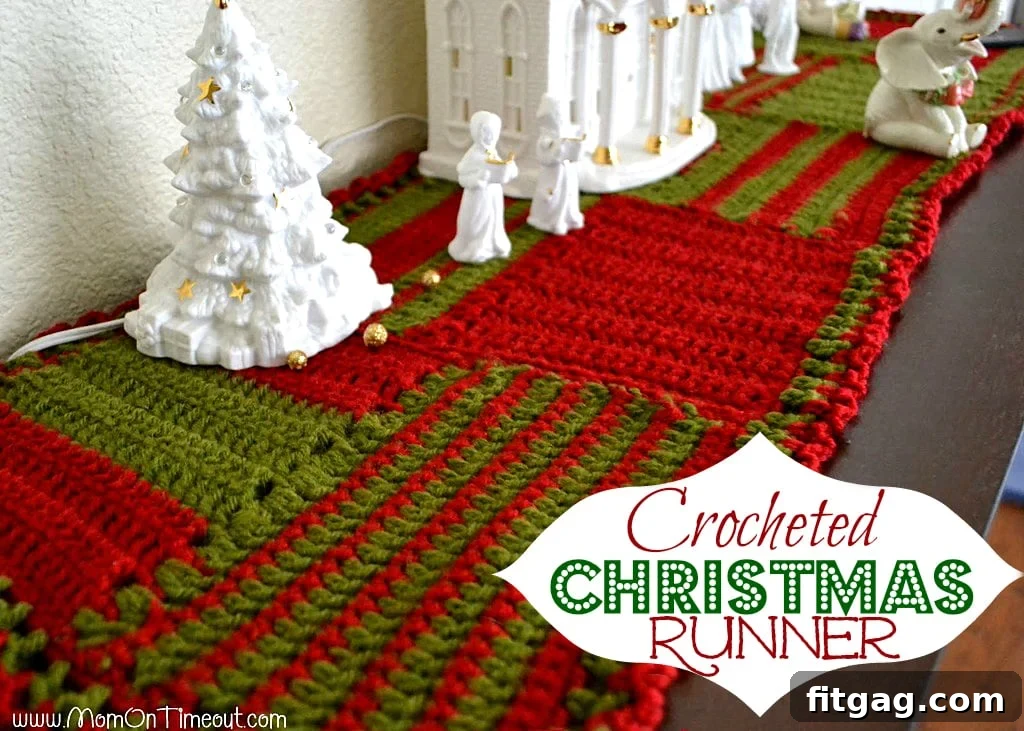
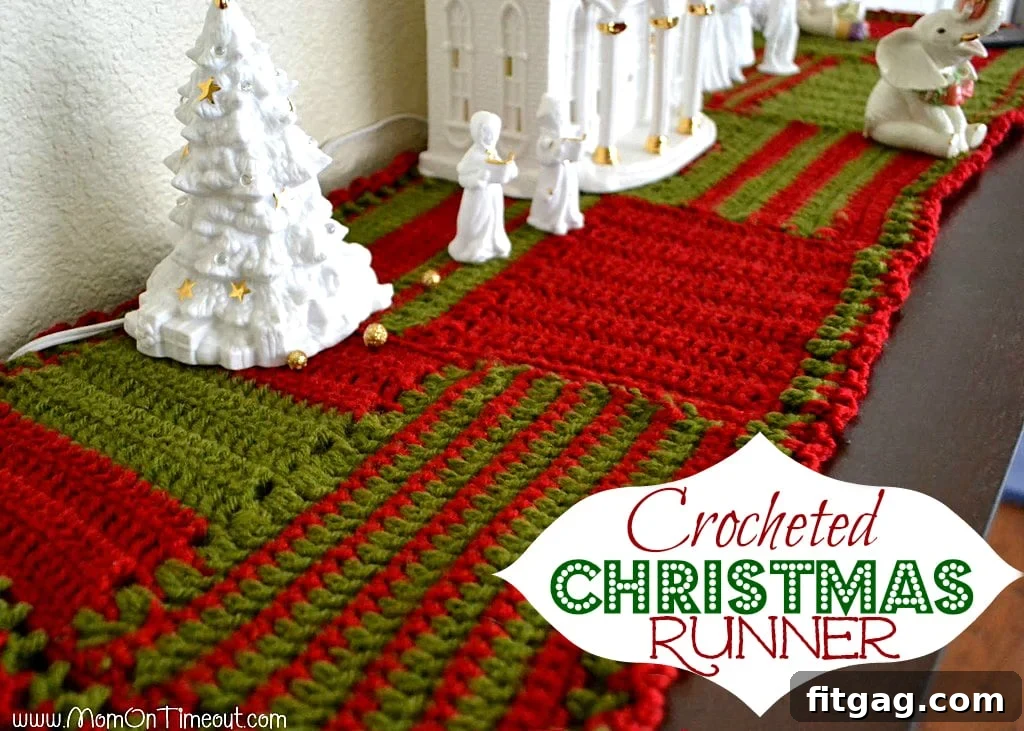
Craft a Beautiful Crocheted Christmas Table Runner: Your Ultimate Guide for Handmade Holiday Decor
There’s a unique charm in handmade holiday decorations, isn’t there? For me, the art of crochet isn’t just a hobby; it’s a cherished connection to my past. My Nana introduced me to this wonderful craft when I was just eight or nine years old, a skill that has brought immense joy and a sense of accomplishment throughout my life. While the hustle and bustle of daily life sometimes push creative pursuits to the back burner, this holiday season, I made a conscious decision to rekindle my passion. I started with a few small ornaments for the kids, and soon enough, the idea of a festive table runner began to take shape.
A table runner is more than just a decorative piece; it’s a canvas for expressing holiday cheer and a focal point for your festive gatherings. Knowing I wanted something truly special for my own home, I envisioned a cozy, custom-made Christmas runner that would perfectly complement our seasonal decor. This project became a delightful journey, combining simple stitches with creative color play to produce something truly unique. And the best part? It’s incredibly rewarding to say, “I made this myself!”
Why This Christmas Runner is Your Perfect Holiday Project
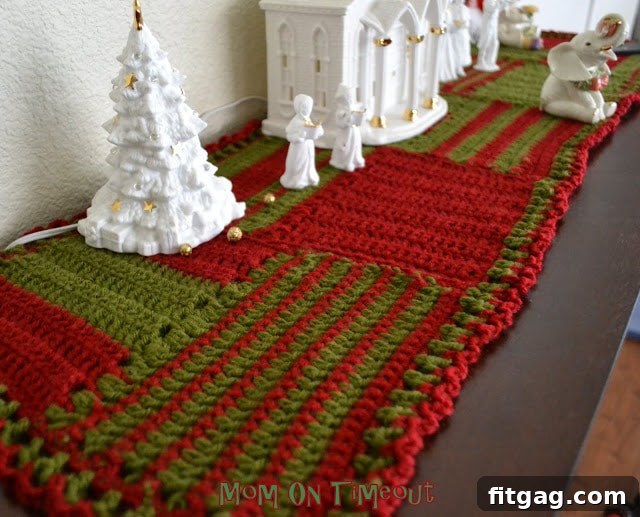
I’ve crafted similar table runners before, but never one specifically designed to capture the magic of Christmas. This particular pattern is a true gem, especially if you’re looking for a project that’s both satisfying and manageable. It’s built upon the fundamental stitches of single crochet (sc) and double crochet (dc), making it incredibly accessible for beginners. The beauty of this design lies in its simplicity and adaptability. The runner itself is wonderfully flexible, allowing you to easily adjust its dimensions.
Want a wider runner to drape across a large dining table? Simply add more starting chains. Need a longer piece to span a buffet or mantelpiece? Just crochet more blocks. This customizability ensures that your finished runner will perfectly fit your space and personal style. It’s not just a pattern; it’s a foundation for your own creative expression, inviting you to experiment with colors and textures.
Your Weekend Crochet Escape: Quick & Rewarding
This Christmas table runner project truly is the ideal weekend craft. From gathering your materials to weaving in the last ends, it comes together surprisingly quickly. Even as a seasoned crocheter, I appreciate a project that offers instant gratification, and this one certainly delivers. It’s also incredibly forgiving, which is fantastic news for anyone new to crochet. Don’t worry about perfection; embrace the handmade charm! The pattern is straightforward, focusing on repetitive stitches that allow you to get into a comfortable rhythm.
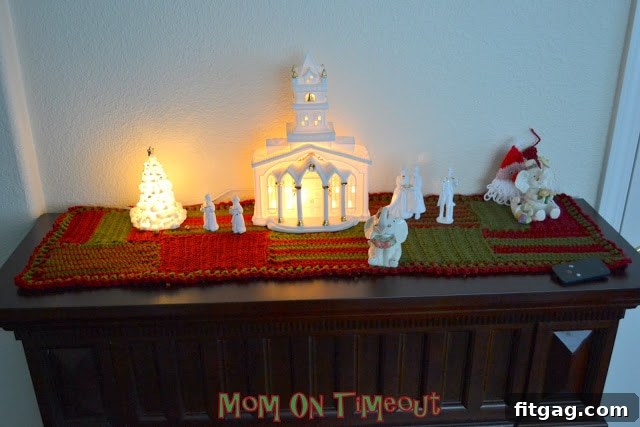
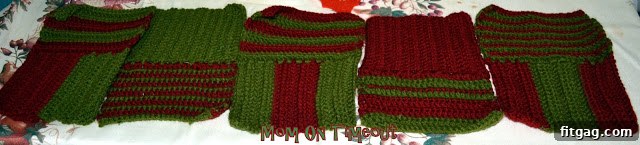
For my runner, I decided to make five individual blocks, each with its own unique red and green pattern, which I then stitched together. This modular approach makes the project less daunting and allows for creative customization. However, the number of blocks you create is entirely up to you and the desired length of your finished runner. Whether you need a short accent piece or a long, flowing centerpiece, you can easily adjust the block count to suit your needs. Imagine crafting a series of these to create a coordinated look throughout your home, perhaps smaller ones for end tables or a longer one for a festive hallway console!
Essential Materials You’ll Need:
- Yarn:
- 1 skein of classic Christmas red (or your preferred accent color)
- 1 skein of vibrant Christmas green (or your preferred main color)
- Pro Tip: Opt for worsted weight acrylic yarn. It’s affordable, durable, easy to work with, and comes in a vast array of colors. Plus, it’s easy to care for!
- Crochet Hook: Size J (6.0 mm)
- Hook Size Note: Feel free to go up or down a hook size if you want to alter the fabric’s drape or achieve a specific gauge. A larger hook will create a looser, more open fabric, while a smaller hook will result in a denser weave.
- Other Essentials:
- Yarn needle (for weaving in ends and sewing blocks together)
- Scissors
- Stitch markers (optional, but very helpful for beginners!)
Finished Measurements: Approximately 38.5″ x 12″ (when made with 5 blocks). Remember, these measurements are easily adjustable!
Step-by-Step Crochet Pattern: Your Festive Table Runner
This pattern focuses on creating individual blocks that are then joined. This method is excellent for managing your project and allows for diverse color combinations within a single piece.
Block Construction (Make 5 or as many as needed):
Each block consists of two sections: a foundational rectangle (Section A) and an added border (Section B) that gives it a unique, textured look.
Section A: The Central Rectangle
- Starting Chain: Using the color of your choice (e.g., green), chain (ch) 20.
- Customization Tip: To make your runner wider, simply add more chains here. Just ensure you add an even number of chains to maintain symmetry.
- Row 1: Double crochet (dc) in the 3rd chain from your hook (this counts as your first dc). Continue to dc in each chain across the row. You should have a total of 19 double crochet stitches.
- Rows 2-7: Chain 3 (counts as first dc), turn your work, and then double crochet (dc) in each double crochet stitch across the row.
- At the end of Row 7, fasten off your yarn.
- Color Play: These rows offer a fantastic opportunity for color experimentation! You can keep all seven rows in the same color for a solid block, alternate colors every two rows for stripes, or even create a unique pattern. I personally enjoyed doing each block differently to add variety to my runner. Don’t be afraid to experiment with red, green, or even a third festive color here!
Section B: Adding the Textured Border
This section builds around the edges of your completed Section A, creating a distinct frame.
- Join Yarn: Join your chosen color (e.g., red) with a slip stitch (sl st) into any corner of Section A, ensuring the right side of your work is facing you. You will be working along one of the sides where the previous rows ended or began, essentially crocheting into the sides of your dc stitches.
- Row 1 (Double Crochet): With the new color, chain 3 (counts as first dc). Now, work double crochet stitches evenly spaced along the side of Section A.
- Guidance: The exact number of dc stitches here isn’t critical, but aim for a neat, even edge. I found that approximately 26 dc stitches worked well along my side. This creates the “first row of dc” for Section B.
- Alternating Rows: You will need a total of 12 rows for Section B, consisting of 6 rows of double crochet (dc) and 6 rows of single crochet (sc).
- Row 2 (Single Crochet): With the same color, chain 1, turn your work, and single crochet (sc) in each stitch across the row.
- Repeat Pattern: Repeat Row 1 (dc row) and Row 2 (sc row) six times in total.
- Important Note: While I’ve described alternating rows, the key is to ensure you have a total of 12 rows in Section B, with an even split of 6 dc rows and 6 sc rows. You can choose to alternate colors every row or every two rows, creating different striped effects.
- Fasten Off: Once all 12 rows of Section B are complete, fasten off your yarn securely.
Assembling Your Crocheted Christmas Table Runner
Now that you have your individual blocks, it’s time to bring them together to form your festive runner.
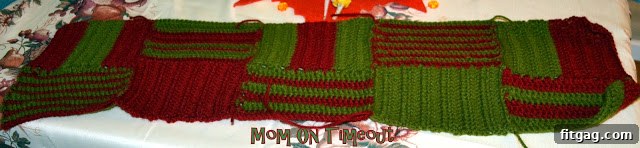
- Block Arrangement: Lay out your 5 (or more) completed blocks in the order you desire. This is your chance to finalize your color pattern and ensure you’re happy with the overall look.
- Sewing Blocks Together: Using your yarn needle and a coordinating color of yarn (red or green works well), sew the blocks together. A simple whip stitch or mattress stitch works beautifully for creating a seamless join.
- Tip for Neat Seams: Align the stitches carefully on both blocks before sewing. This will ensure your seams are straight and virtually invisible. Take your time with this step, as neatly joined blocks contribute significantly to the professional finish of your runner.
Adding the Decorative Edging
An edging provides a polished, finished look to your runner and can add another layer of festive detail.
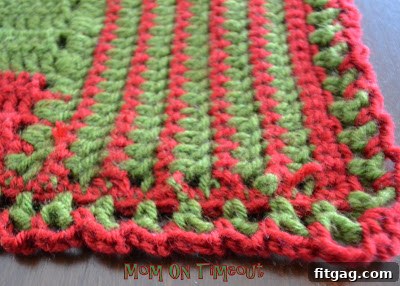
- Row 1 (Single Crochet Edging): With your chosen edging color (e.g., green or a contrasting red), join your yarn with a slip stitch anywhere on the outside edge of the joined runner. Ensure the right side of the runner is facing you. Work single crochet (sc) stitches evenly spaced all the way around the entire edge of the runner. When you reach the beginning stitch, join with a slip stitch. Fasten off this color.
- Even Spacing: For corners, work 3 sc into the corner stitch to ensure a flat, neat turn.
- Row 2 (Chain Loop Edging): With your new chosen color (e.g., red for contrast), chain 3. Skip 1 single crochet stitch from the previous row and make a single crochet into the second single crochet. *Chain 3, skip 1 single crochet, and single crochet into the second single crochet.* Repeat from * around the entire runner. Join with a slip stitch at the end of the row. This creates lovely little loops.
- Row 3 (Loop Filling Edging): With your chosen color (you can use the same as Row 2 or a new one), chain 3. Now, single crochet into the loop that the chain 3 created in Row 2. *Chain 3, single crochet into the next chain 3 loop.* Repeat from * around the runner. Join with a slip stitch and fasten off. This row fills the loops, giving a scalloped effect.
- Row 4 (Optional Repeat): If you desire a more pronounced or layered edging, you can repeat Row 3. This is entirely up to your aesthetic preference.
Finishing Touches for a Professional Look
The final steps are crucial for a beautifully finished piece:
- Weave in Ends: This is arguably the least favorite part of any crochet project, but it’s essential! Use your yarn needle to carefully weave in all loose ends into the body of your runner. Take your time to ensure they are secure and invisible.
- Blocking (Optional but Recommended): For a truly professional finish, consider blocking your runner. This process shapes your crochet piece and evens out your stitches. You can wet block (spritz with water, shape, and pin to a blocking mat until dry) or steam block (gently steam the piece, then shape and let dry). Blocking will make your runner lie flatter and enhance its overall appearance.
- Care Instructions: Since this is a handmade item, gentle care is best. Most acrylic yarns are machine washable on a gentle cycle with cold water, then laid flat to dry. Always check your yarn label for specific care instructions.
Displaying Your Beautiful Handmade Creation
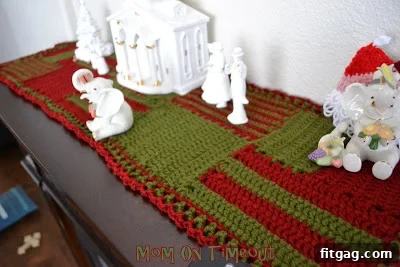
With the last stitch secured and all ends woven in, the moment arrived to place this festive runner in its designated spot. I carefully draped it over our “fireplace” mantel, and the transformation was immediate. The vibrant red and green blocks instantly brought a cozy, cheerful holiday spirit into the room. It looks absolutely beautiful, and I am genuinely quite happy with the outcome. There’s an unmatched satisfaction in seeing a vision come to life through your own hands. This runner isn’t just a decoration; it’s a testament to patience, creativity, and the enduring joy of crafting.
Now that this delightful Christmas runner is complete, my mind is already buzzing with ideas for my next crochet adventures! Perhaps some matching coasters, a festive garland, or even a smaller version for a coffee table. The possibilities are endless when you embrace the art of crochet, especially during the holiday season.
Frequently Asked Questions (FAQ) About Crocheted Runners
- Can I use different yarn weights for this pattern?
While this pattern is designed for worsted weight yarn, you can certainly experiment with other weights. Keep in mind that changing yarn weight will significantly alter the finished dimensions of your blocks and runner. If you use a lighter weight (e.g., DK), your runner will be smaller, and you might need to use a smaller hook. For a bulkier runner (e.g., chunky yarn), you’ll need a larger hook, and your piece will be much larger. Always make a small swatch to check your gauge before committing to a full project with different yarn.
- How can I make my runner longer or shorter?
To adjust the length, simply crochet more or fewer blocks! Each block is an individual unit, so you can easily customize the overall length to fit your table or mantel. If you want a more subtle adjustment, you could also add or remove a few rows from Section A of each block, but changing the number of blocks is the easiest method.
- What if my edges aren’t straight?
Crocheting straight edges can be a challenge for beginners. Make sure you are consistently placing your hook in the correct stitch (often the top of the turning chain or the last stitch of the previous row). Counting your stitches at the end of each row is a great habit to develop, as it helps identify errors early. Blocking the finished runner will also help to even out any minor imperfections in your edges.
- Can I use more than two colors?
Absolutely! This pattern is a fantastic opportunity to play with color. You could use a different color for each block, or even incorporate three or more colors within Section A or B of a single block. Variegated or self-striping yarns could also create unique effects. Let your creativity guide you!
- How do I care for my crocheted runner?
For most acrylic yarns, gentle machine washing on a cold cycle is acceptable, followed by laying flat to dry. Avoid high heat, as it can damage acrylic fibers. If you used wool or other natural fibers, hand washing and flat drying are usually recommended. Always refer to your yarn’s specific care instructions.